




End Mills
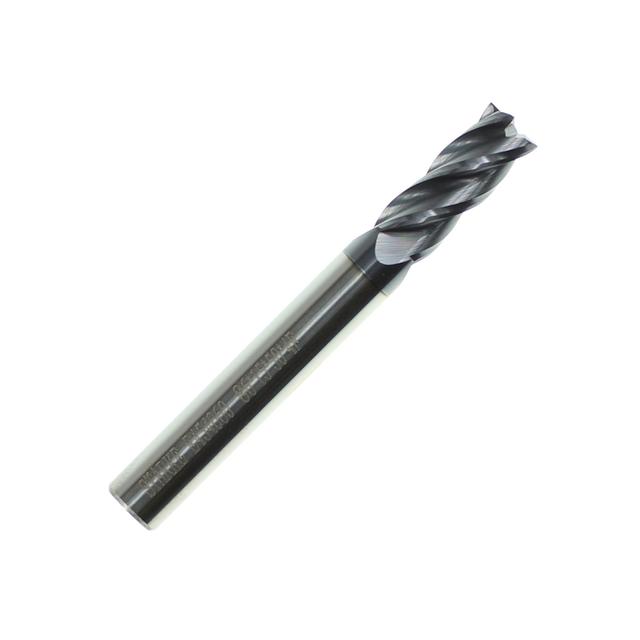
Eco-Mill 4 Flute Coated Carbide General Purpose End Mills
STARKE Eco-Mill E454 4 flute TiALN coated carbide end mills for steel, stainless steel, cast iron and non-ferrous materials up to 45 HRC, in diameters from 1mm to 25mm.
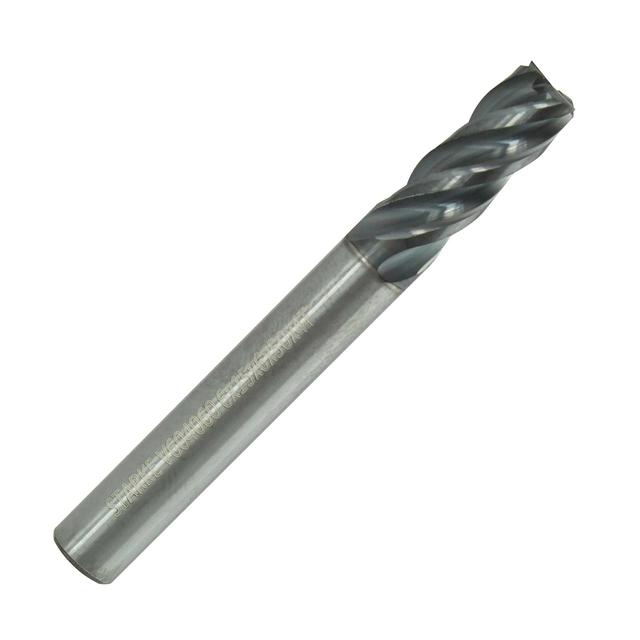
V60 4 Flute High Performance Variable Helix Milling Cutters
V60 Mill Coated Carbide 4 Flute End Mill from STARKE is a ALCRSiN high performance milling cutter.
- Premium grade carbide substrate 1st choice for machining stainless, inconels, titanium and steels.
- Variable helix angle designed to rough and finish with 1 tool.
- Chatter free design which allows for increased cutting depths and feed rates.
- Replaces the V554 series. Now has an improved coating to machine to a higher HRC.
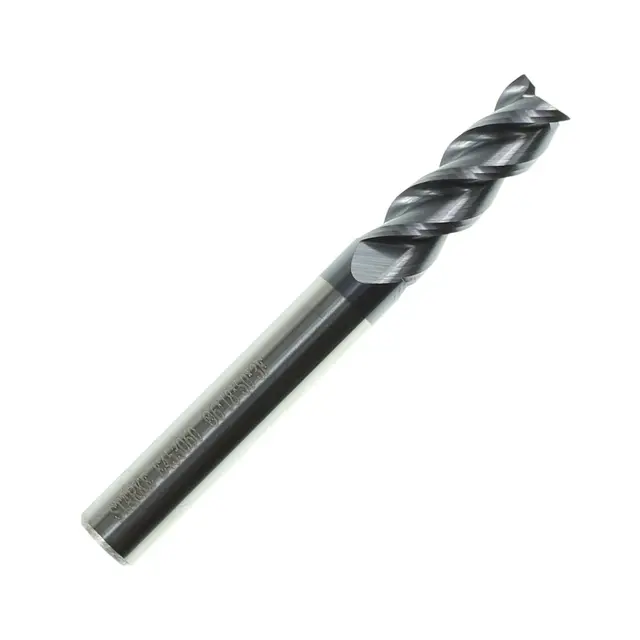
Eco-Mill 3 Flute Coated Carbide General Purpose Milling Cutters
ECO-MILL coated carbide 3 flute end mill from STÄRKE, a TiALN coated general purpose milling cutter.
Suitable for cutting steel, stainless steel, cast iron and non-ferrous material including aluminium and copper.
Cut up to 45 HRC
Can be used wet or dry to increase tool life.
Micrograin carbide
Centre cutting
Available diameter sizes between 1mm and 20mm
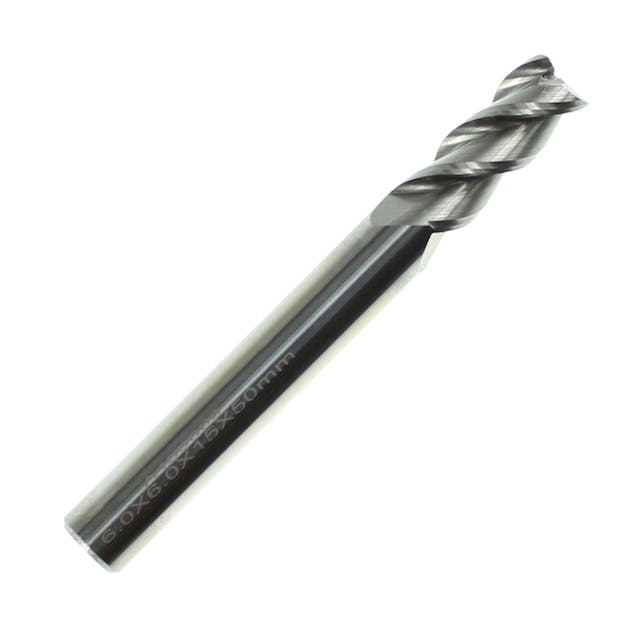
Ali-Mill 3 Flute 45 Degree Carbide Slot Drills for Aluminium
ALI-MILL Solid Carbide 3 Flute 45 Degree End Mill from STÄRKE is 1st choice for machining aluminium and non ferrous material.
- Polished flutes for superior surface finish.
- The special Hi-Helix geometry enables better chip removal.
- Micrograin carbide
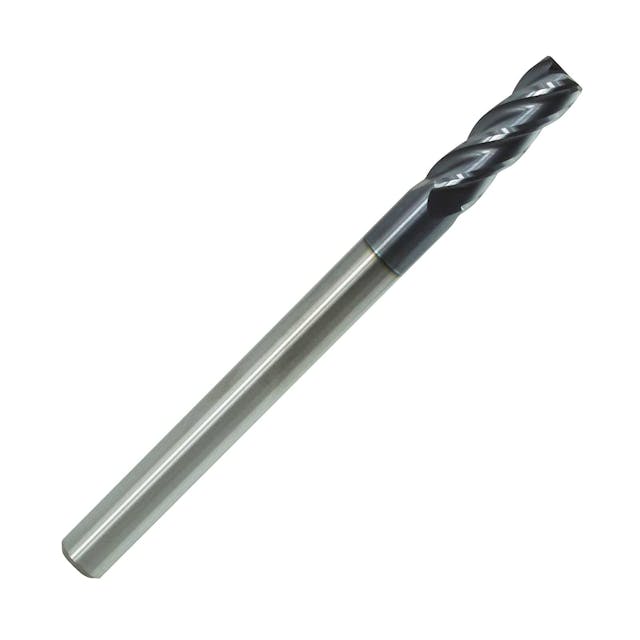
4 Flute Coated Carbide Long Series General Purpose End Mill (STARKE Eco-Mill)
- Micrograin Carbide
- TIALN coated to machine up to 45 HRC
- Excellent general purpose cutter for machining steel, stainless steel, aluminium alloys, cast iron and copper
- Centre cutting
- Sizes available: 3mm, 4mm, 5mm, 6mm, 8mm, 10mm, 12mm, 16mm
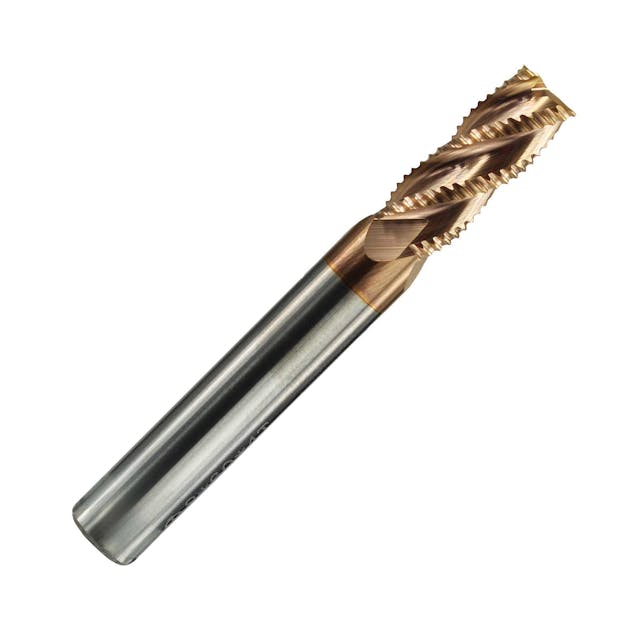
STARKE Coated Carbide 4 Flute Roughing End Mill
- Cut up to 55 HRC
- Can be used wet or dry to increase tool life.
- Micrograin carbide
- Available diameter sizes between 6mm and 20mm
£15.85 excl. VAT
£19.02 incl. VAT
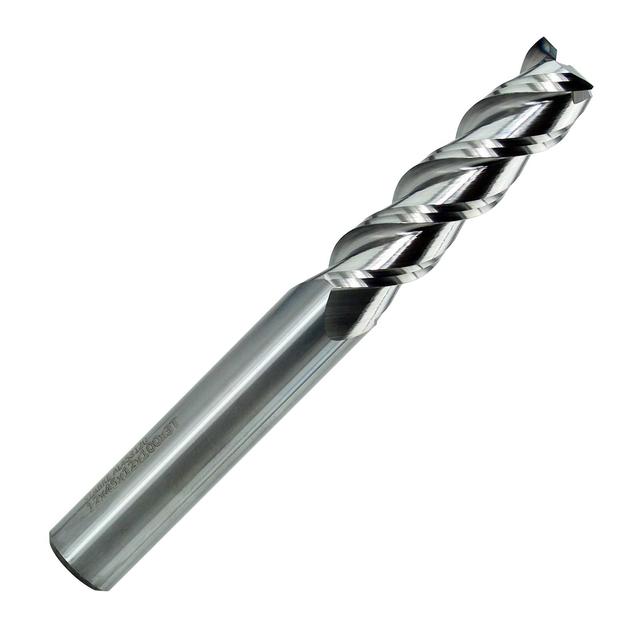
Ali-Mill 3 Flute Long Series carbide Slot Drill for Aluminium (STARKE AL453)
- Suitable for machining aluminium and other non-ferrous materials
- Mirror polishied flutes
- Excellent surface finishe and superior chip removal
- Micrograin carbide
- Hi-helix geometry
- Sizes available: 3mm, 4mm, 6mm, 8mm, 10mm, 12mm, 16mm, 20mm
£9.81 excl. VAT
£11.77 incl. VAT
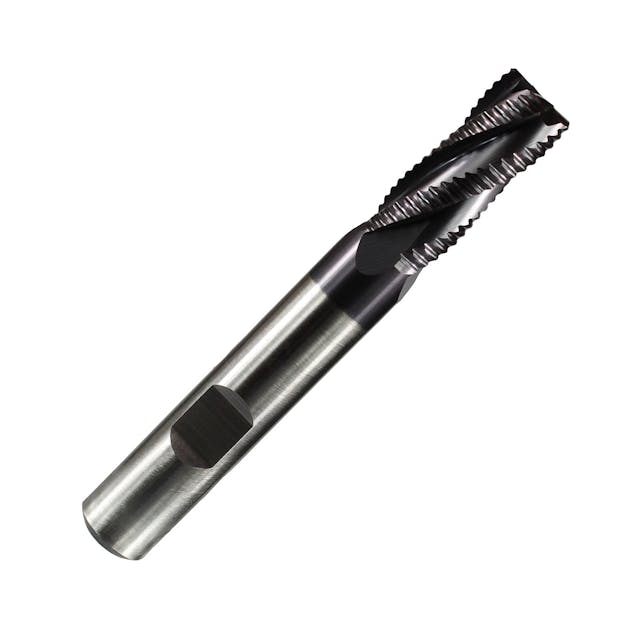
HSCR Series Tialn Coated Fine Pitch Roughing HSS Milling Cutters
- 3 & 4 flute HSSE end mill ripper
- HSS 8% Cobalt gives improved tool life and performance in comparison to conventional HSS
- 1st choice for economical machining
- TIALN coated for increased tool life
£21.46 excl. VAT
£25.75 incl. VAT
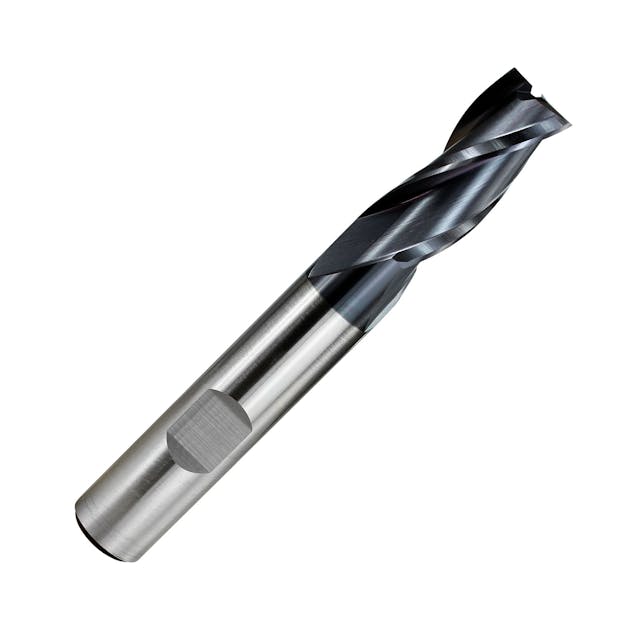
HSC Series 3 Flute Tialn Coated HSS Milling Cutters
- 3 flute HSSE slot drill
- HSS 8% Cobalt gives improved tool life and performance in comparison to conventional HSS
- 1st choice for economical machining
- TIALN coated for increased tool life
£10.01 excl. VAT
£12.01 incl. VAT
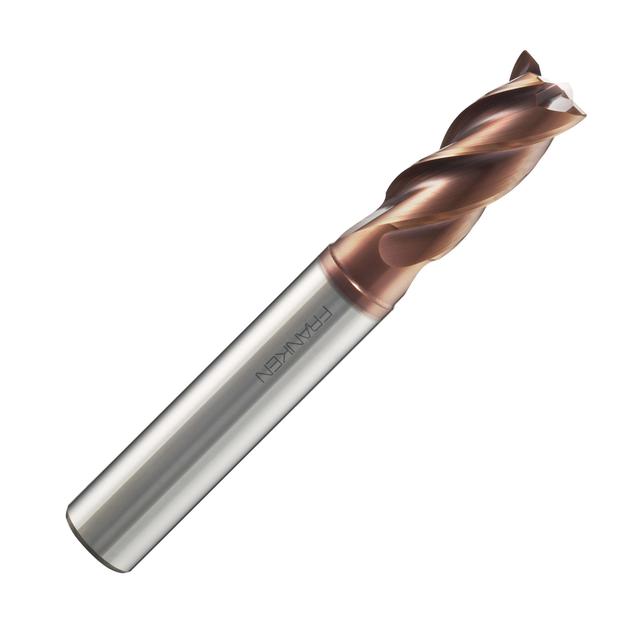
FRANKEN 4 Flute Long Length High Performance End Mill
FRANKEN 4 Flute Long Length High Performance End Mill
- Solid micrograin carbide
- TiALN coated
- Centre cutting
- Variable helix geometry
- Rough and finish with 1 tool
- Chamfered for corner protection
- Suitable for steel, stainless steel, cast iron, titanium and HRSA
£24.80 excl. VAT
£29.76 incl. VAT
£21.69excl. VAT
£26.03incl. VAT
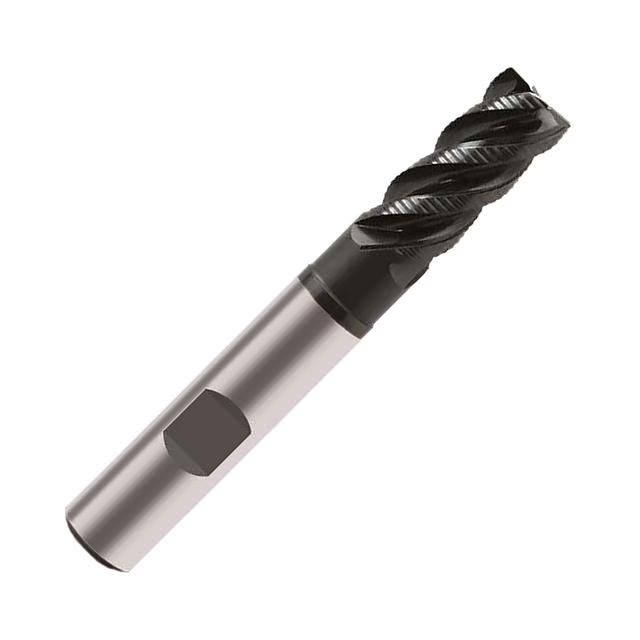
PM75S Series High Performance Powder Metal Fine Pitch Ripper
Clarkson PM75 Multiple Helix high Performance Fine Pitch Ripper for General purpose machining in steels up to HRc40 Cast Iron Stainless steel Inconel. ASP60 premium powder metallurgy substrate with unique VX coating for longer tool life and superior surface finish.
- Multiple helix technology for reduced vibration
- Excellent performance in unstable machining conditions
- Higher cutting speed than equivalent HSSCo tools
- Reduced chatter
- Improved tool harmonics
- Exceptional performance in unstable cutting conditions
- Increased chip flow
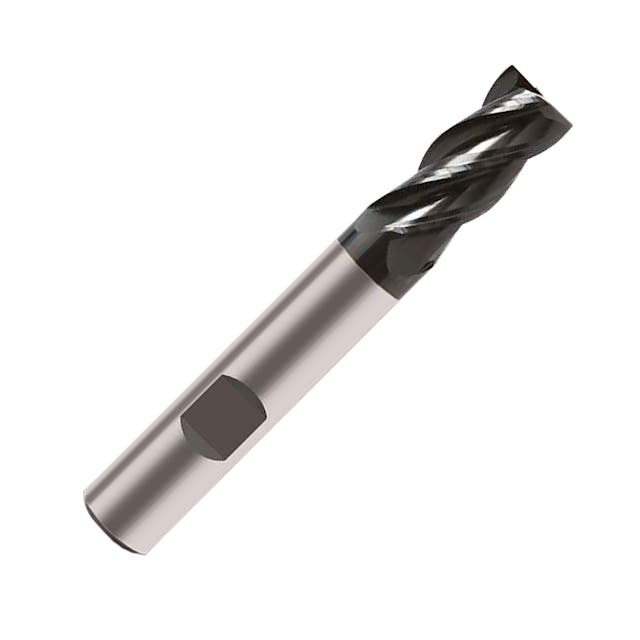
PM75E Series High Performance Powder Metal 4 Flute Milling Cutters
Clarkson PM75 Multiple Helix high Performance 4 Flute End Mill for General purpose machining in steels up to HRc40 Cast Iron Stainless steel Inconel. ASP60 premium powder metallurgy substrate with unique VX coating for longer tool life and superior surface finish.
- Multiple helix technology for reduced vibration
- Excellent performance in unstable machining conditions
- Higher cutting speed than equivalent HSSCo tools
- Reduced chatter
- Improved tool harmonics
- Exceptional performance in unstable cutting conditions
- Increased chip flow
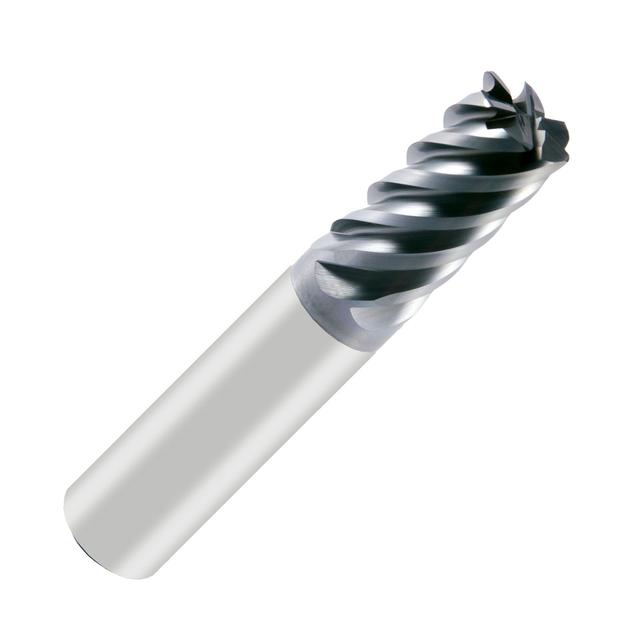
MasterMill VX Series 4 Flute High Performance End Mill
MasterMill VX 178323 Series 4 Flute High Performance End Mill
- Solid micrograin carbide
- Chamfered for corner protection
- Minimized tool deflection
- Reduced tool vibration
- Multi layer VX coating
- Variable helix geometry
- Suitable for high perfromance machining of Steel, Stainless steel, Titanium and nickel alloy
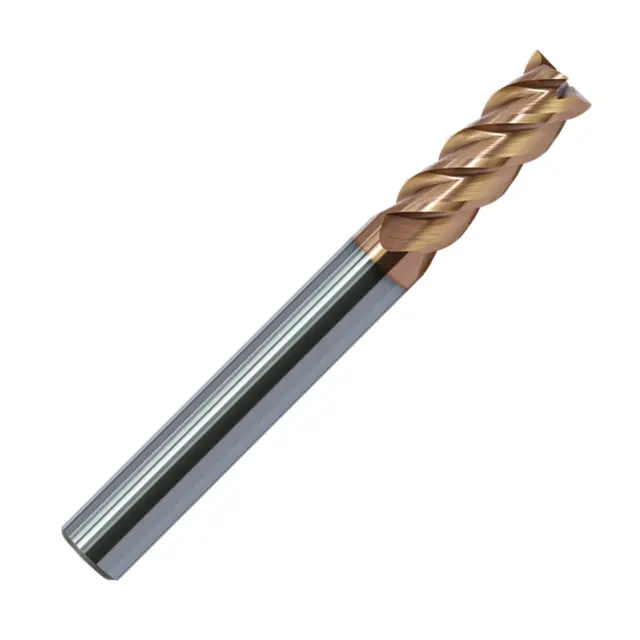
ZCC-CT HM-4E Series 4 Flute Hardened Steel Milling Cutters
ZCC-CT HM-4E 4 Flute End Mill with Straight Shank For Hardened Steels
- Excellent tool design covers large chip pocket, good stability and machining efficiency
- Optimized cutting geometry (Rake angle) assures edge stabitlity and sharpness
- Ultra fine grain carbide
- KMG555 Nano-ALTiN coating base for hard machining at high temperatures
- For machining upto 68HRC
£14.53 excl. VAT
£17.44 incl. VAT
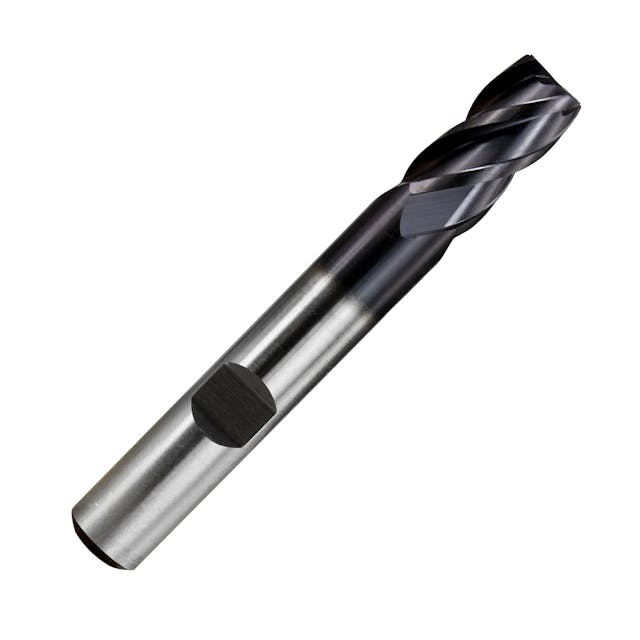
HSC Series 4 Flute Tialn Coated HSS Milling Cutters
- 4 flute HSSE end mill
- HSS 8% Cobalt gives improved tool life and performance in comparison to conventional HSS
- 1st choice for economical machining
- TIALN coated for increased tool life
£10.01 excl. VAT
£12.01 incl. VAT
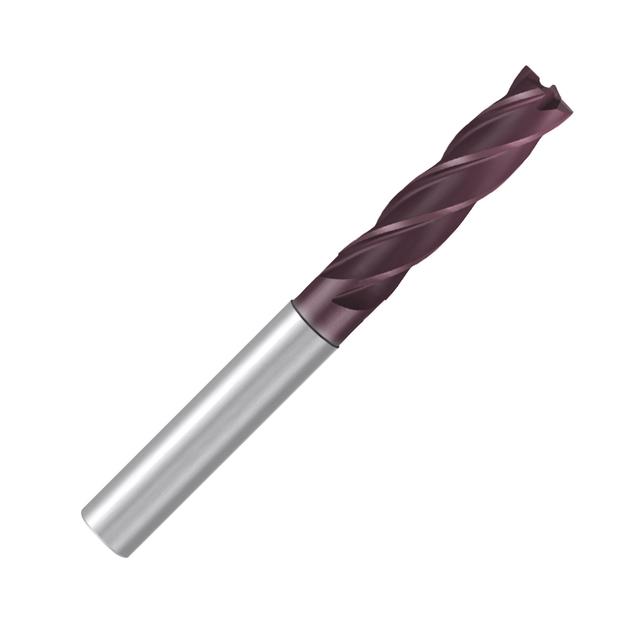
FRANKEN Extra Long Length High Performance End Mill 4XD
FRANKEN Extra Long Length High Performance End Mill 4XD
- Solid micrograin carbide
- TiALN coated
- Extra long (4XD)
- Centre cutting
- Variable helix geometry
- Rough and finish with 1 tool
- Chamfered for corner protection
- Suitable for steel, stainless steel, cast iron, titanium and HRSA
£47.00 excl. VAT
£56.40 incl. VAT
£41.04excl. VAT
£49.25incl. VAT
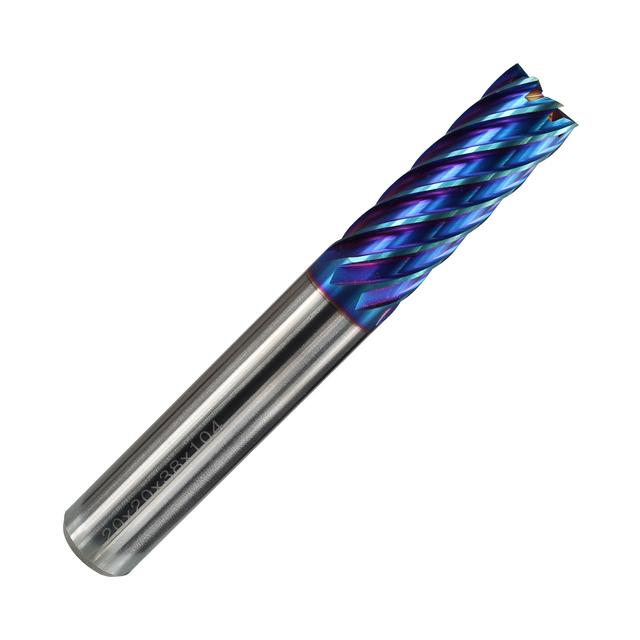
Pulsar Blue 6 & 8 Flute 45 Degree Helix Long Series End Mill for Hardened Steel
Pulsar Blue 6 & 8 Flute Long End Mill for Hardened Steel
- Premium nanograin carbide
- Suitable for dry cutting
- Suitable for machining upto 70HRC
- High speed cutting
- 45 degree helix
- Excellent workpiece finish
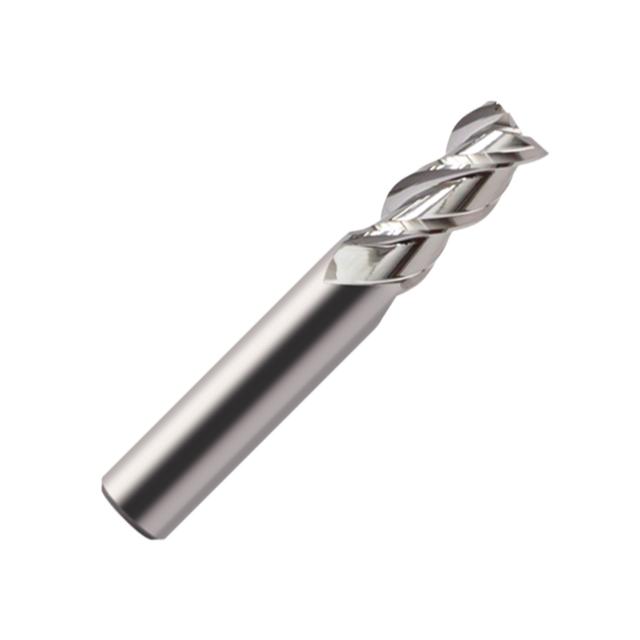
Alu-XP 3 Flute 45 Degree Carbide End Mill for Aluminium
Alu-XP 3 Flute 45 Degree Carbide End Mill for Aluminium
- Excellent surface finishes.
- Superior chip removal
- Micrograin solid carbide substrate
- Mirror polished Flutes
- Suitable for high speed machining of aluminium and other non-ferrous materials
- Corner protected.
- Long series
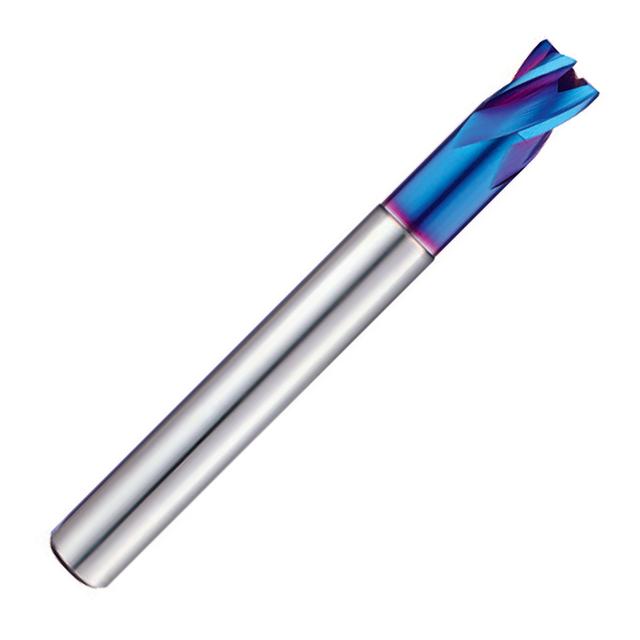
Pulsar Blue 4 Flute Extended Neck End Mill for Hardened Steel
Pulsar Blue 4 Flute Extended Neck End Mill for Hardened Steel
- Premium nanograin carbide
- Suitable for dry cutting
- Suitable for machining upto 70HRC
- High speed cutting
- 30 degree helix
- Excellent workpiece finish
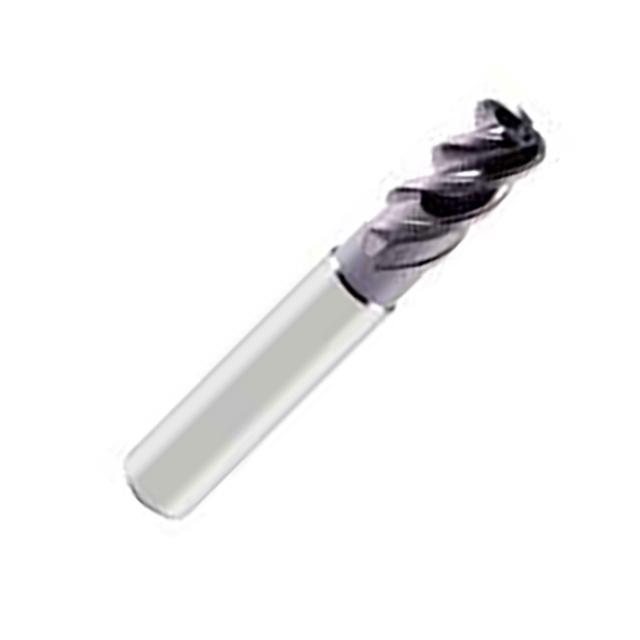
Mastermill VXD Series 4 Flute Double Core High Performance End Mill
- Solid micrograin carbide
- Reduced tool vibration
- Multi layer VX coating
- Variable helix geometry
- Suitable for high perfromance machining of Steel, Stainless steel, Titanium and nickel alloy
- Exceptional performance in Titanium, Inconel and other HRSA material
- Double core geometry reduces tool deflection and improves dimensional stability
- Optimized edge preparation protects against chipping problems in high speed machining
- 4 Flute Double Core with unique flute design for excellent chip evacuation and high rigidity
- Increased stability and chip flow reduces tool defelection, improving dimensional stability and workpiece accuracy
- Chip clogging minimized when used for slotting.
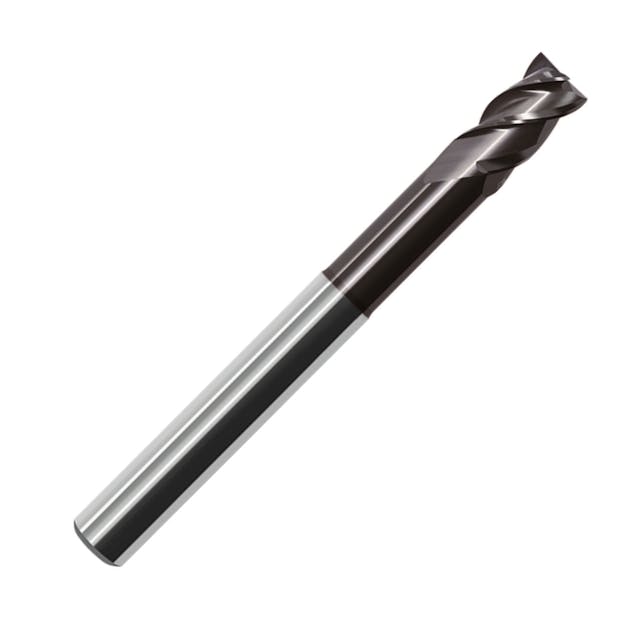
ZCC-CT UM-4EFP 4 Flute Short Cutting Edge Variable Helix End Mill
ZCC-CT UM-4EFP Series 4 Flute Short Cutting Edge AlCrN Coated High Performance Variable Helix Solid Carbide End Mill
- Optimised geometry with unequal 38 degree and 41 degree helix angles and unequal pitch.
- Working processes: Square shoulder milling, groove milling, face milling, counter sinking, circular milling and centre cutting.
- End mills and torus Mills.
- HSC/HPC machining.
- AlCrN (Aluminium Chromium Nitride) coated solid carbide for exceptional tool life.
£22.36 excl. VAT
£26.83 incl. VAT
£19.01excl. VAT
£22.81incl. VAT
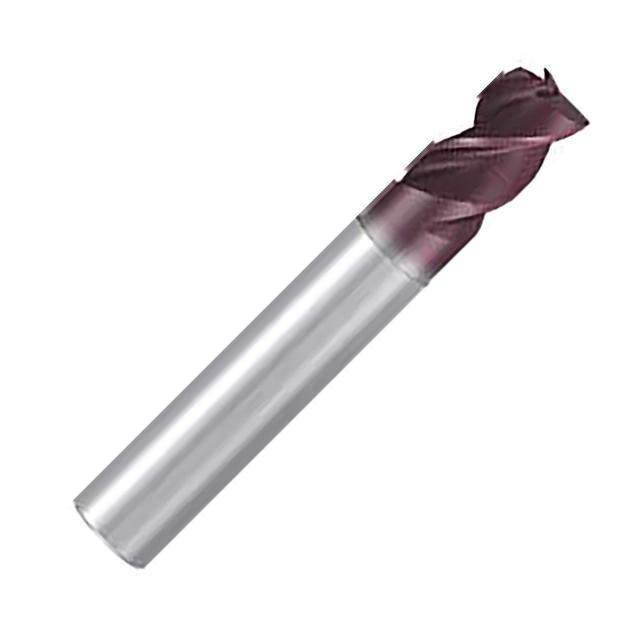
FRANKEN 3 Flute High Performance Long Length End Mill
FRANKEN Top-Cut 3 Flute High Performance Long Length End Mill
- Solid micrograin carbide
- TiALN coated
- Centre cutting
- Variable helix geometry
- Rough and finish with 1 tool
- Chamfered for corner protection
- Suitable for steel, stainless steel, cast iron, titanium and HRSA
£20.80 excl. VAT
£24.96 incl. VAT
£18.18excl. VAT
£21.82incl. VAT
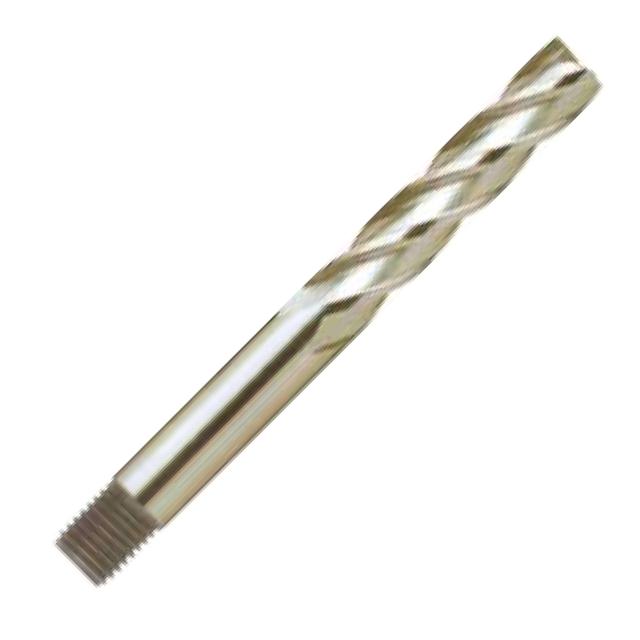
Clarkson HSS Co8 Long Length Threaded Shank End Mill
Clarkson HSS Co8 Long Length Threaded Shank End Mill
- HSS 8% cobalt
- 4-8 flutes
- Uncoated
- Threaded shank
- Suitable for a wide range of materials
£8.05 excl. VAT
£9.66 incl. VAT
£10.12excl. VAT
£12.14incl. VAT
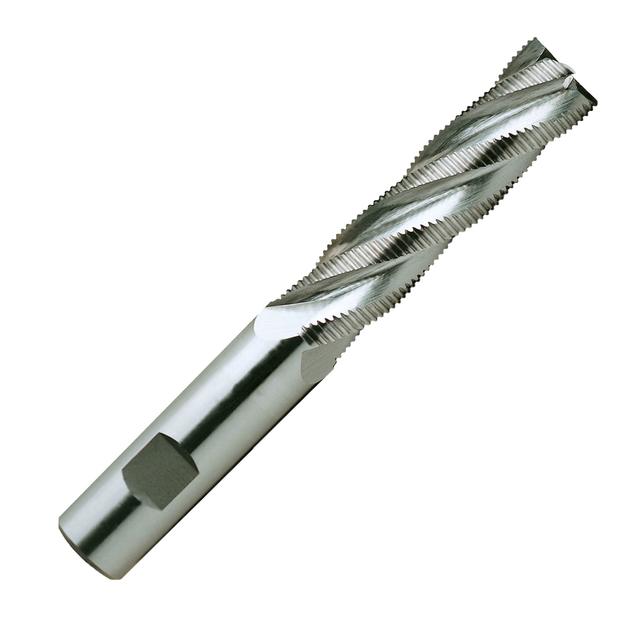
CLARKSON TiALN Coated HSS Co8 Multi Flute Long Length Fine Pitch Ripper
CLARKSON TiALN Coated HSS Co8 Multi Flute Long Length Fine Pitch Ripper
- HSS 8% cobalt
- Fine pitch
- TiALN coated
- Weldon (flatted) shank
- Suitable for a wide range of materials
Frequently Asked Questions
A drill cuts exclusively axially advancing along its own axis to create a hole. An end mill is designed to cut primarily in the radial direction (sideways, perpendicular to the tool axis), though most designs also allow axial cutting. This makes end mills the standard tool for milling operations: creating flat surfaces, pockets, slots, profiles and contoured forms.
The key structural difference is in how the cutting edges are arranged. A drill has two cutting lips at the tip optimised for axial penetration. An end mill has cutting flutes along its side (peripheral cutting edges) and on centre-cutting designs, cutting edges across part or all of the tool face as well. The peripheral cutting edges do the primary work in side milling and profiling as the face cutting edges enable the tool to plunge into material (though end mills are not efficient plunging tools for deep holes, drills or ramp entries are preferred).
End mills also differ from drills in their shank configuration as drills typically have a parallel or tapered shank for holding in a chuck whereas end mills have a precision parallel shank for holding in a collet chuck, side-lock holder, shrink-fit holder or hydraulic chuck - all of which provide the concentricity and grip strength required for accurate, vibration-free milling.
Clarkson: A long-established UK precision cutter brand with a deep range primarily in HSS and HSSE (8% cobalt high-speed steel, plus solid carbide selections. Clarkson tools are widely used in general engineering workshops, tool rooms and maintenance environments.
Europa Tool: UK-established cutting tool manufacturer with solid carbide and HSSE offerings covering square, corner radius and ball nose profiles.
ZCC-CT: Chinese precision tool manufacturer with a significant carbide end mill range covering 3-flute, 4-flute and higher flute counts.
STARKE: Precision carbide tools including the Eco-Mill coated carbide range in 4-flute square and 2-flute ball nose configurations. The Eco-Mill E454 is the most accessible entry point in the category.
Emuge-Franken: German precision toolmaker with a high-performance carbide range.
Substrates available across the category include carbide (solid carbide), HSSE (HSS with 8% cobalt), and HSS.
TiAlN stands for Titanium Aluminium Nitride. It is a Physical Vapour Deposition (PVD) coating applied to the carbide substrate after grinding, forming a thin, hard film (typically 2 to 4 micrometres thick) on the tool surface.
TiAlN has several properties that extend tool life in demanding cutting conditions. Its hardness (approximately 3,300 HV) is significantly greater than uncoated carbide (approximately 1,600 HV), so the cutting edge resists abrasive wear for longer. Its oxidation resistance is very high because TiAlN forms a thin aluminium oxide (Al₂O₃) layer at elevated temperatures, which acts as a thermal barrier between the heat generated at the cutting zone and the carbide substrate. This allows TiAlN-coated tools to run faster and hotter than uncoated tools without the substrate softening and losing its edge geometry.
The practical result is that a TiAlN-coated end mill such as the Starke E454 Eco-Mill or HSCR roughing series can be run dry or with minimal coolant in many applications and will outlast an uncoated equivalent significantly when cutting steel, stainless steel and cast iron. The E454 is described as suitable for cutting steel, stainless steel, cast iron and non-ferrous materials including aluminium alloys and copper and as capable of cutting materials up to 45 HRC hardness (a range that uncoated carbide would struggle with).
TiAlN is not ideal for aluminium at high speeds because the aluminium in the coating has an affinity for workpiece aluminium which can lead to built-up edge. For high-speed aluminium milling uncoated polished carbide (as in the Ali-Mill series) is preferred.
This is one of the most common selection questions in the end mill category. The short answer is: carbide is usually better for CNC machining, but HSS and HSSE remain the right choice in specific circumstances.
HSS (High Speed Steel) end mills: have lower hardness than carbide but much greater toughness so it can absorb impact and vibration without fracturing. On old manual machines with spindle backlash, worn leadscrew play, or poor rigidity, an end mill experiences repeated micro-impacts that will chip a carbide edge (a HSS cutter survives these conditions far better). HSS is also inexpensive enough to be used as a consumable on short-run or one-off jobs where the cost of a carbide cutter would be disproportionate.
HSSE (8% Cobalt HSS) end mills: the addition of 8% cobalt increases hardness and hot hardness significantly over standard HSS, enabling faster cutting speeds, better performance on harder steels, stainless steel and alloy steels. HSSE sits between HSS and carbide in performance terms since it is harder and faster-running than HSS, less brittle than carbide and substantially less expensive per cutter than solid carbide in larger diameters.
Solid carbide end mills: are the standard for CNC machining centres with good spindle rigidity and accurate workholding. Carbide's higher hardness allows faster surface speeds and longer tool life per part on most CNC-appropriate materials.
For manual milling machines HSSE is typically the optimal choice because it is faster than plain HSS & more tolerant than carbide. For CNC use carbide unless the machine has rigidity problems, the workpiece material is particularly abrasive or difficult or the operation involves interrupted cuts that would chip a carbide edge.
Flute count fundamentally determines the balance between chip clearance capacity and surface finish quality, and it also sets the feed rate parameters.
2-flute end mills have the largest gullets (maximum space between flutes). This is why 2-flute configurations are used for aluminium (large, stringy chips) and for slotting in any material where chip re-cutting would be a risk. In steel milling 2-flute tools run at a higher chip load per tooth (since only two teeth share the work), which means the feed rate per tooth must be appropriately set.
4-flute end mills are the standard configuration for general steel milling. Four cutting edges share the work so the feed rate per tooth can be reduced while maintaining a productive table feed rate. This reduces the load on each individual edge and extends tool life. Four flutes also provide better support for the cutting action which reduces deflection and improving surface finish compared to a 2-flute on the same material.
5-flute, 6-flute & 8-flute end mills are high-performance finishing tools. More cutting edges mean more contact with the workpiece per revolution, which produces finer surface finish at the same table feed rate (or the same finish at a higher feed rate). The trade-off here though is reduced chip clearance (these tools are not suitable for deep slotting and require high-pressure coolant in enclosed operations to flush chips). They are designed for shallow-depth, high-speed finishing passes rather than heavy roughing. The 6 and 8-flute tools in the category are typically used at 20–40% radial depth of cut on finishing operations in steel and hardened steel.
A rougher or ripper end mill has a serrated or wavy cutting edge profile instead of the straight flute edges of a standard end mill. Each serration breaks the chip into a short segment rather than allowing a long, continuous chip to form.
The engineering benefit is a dramatic reduction in cutting force for a given material removal rate. A standard end mill removing 1cm³/min generates a continuous chip that must be sheared along the entire engaged cutting length simultaneously. A rougher generates many short chip segments (each of which requires a much lower peak shear force), the result of this is that a rougher can remove material at rates significantly higher than a standard end mill of the same diameter without exceeding the machine's power capacity or causing excessive vibration (typically 3-5x the metal removal rate of an equivalent standard cutter).
The HSCR series from STARKE is the primary roughing series in the range: HSSE (8% cobalt), TiAlN coated, 3-flute (6mm & 8mm) and 4-flute (10mm to 25mm). Available in diameters 6mm to 25mm. The TiAlN coating and HSSE substrate give improved tool life over standard HSS roughers while remaining more cost-effective than solid carbide roughers for interrupted-cut roughing operations.
The trade-off with roughers is surface finish because the serrated edge leaves a characteristic wave pattern on the workpiece walls. Roughers are always followed by a finishing pass with a standard end mill to achieve the required surface quality.
Five profiles are available in this end mills category:
Square end mills: flat bottom with sharp 90-degree corners. The standard profile for pockets, shoulders, slots, and any feature requiring a clean right-angle transition at the base.
Ball nose end mills : hemispherical tip radius equal to half the tool diameter. Used for 3D contouring, blended radii and ramp entries.
Square with chamfer: a small 45-degree chamfer at the corner between the face and the outer diameter. The chamfer strengthens the corner (the most vulnerable point of a square end mill) while leaving the wall-to-floor transition essentially square. Used where a light chamfer on the component is acceptable or where corner chipping is a recurring problem on a square-corner tool.
Corner radius end mills: a specified radius ground at the corner (typically 0.5mm to several millimetres depending on diameter). Stronger than square corner, produces a blended radius at the base of pockets rather than a sharp right angle. Corner radius tools last significantly longer per edge than equivalent square end tools in steel because the corner is the most thermally and mechanically stressed point of the cutting edge and the radius distributes this stress over a larger area.
Rougher/ripper end mills: as described above, serrated peripheral edge for high-volume roughing. No clean finish.
Three length categories are stocked:
Short length: minimum overall length for maximum rigidity. Short tools deflect the least under cutting forces and tolerate the highest feed rates for a given diameter. Used wherever the feature geometry permits short tool overhang (primarily shallow pockets, surface milling and shoulder milling where the feature depth is within the cutting length of the short variant).
Standard length: the most common configuration, offering a balance of cutting reach and stiffness. Suitable for the majority of general milling operations where feature depths are within the standard cutting length.
Long length: extended flute length for deeper features. The increased length reduces the effective stiffness of the tool (deflection increases with the cube of overhang length) so feed rates and depth of cut must be reduced to compensate. For features deeper than the cutting length of a standard tool a long series is necessary. For very deep features (deep ribs, thin walls, mould cavities), extra-long series tools (available in the general-purpose category) are the solution.
The practical rule is to select the shortest tool that reaches the required depth of cut with the specified programming clearance above the workpiece or fixture. Increasing tool length unnecessarily introduces deflection, chatter and tool breakage risk, particularly on smaller diameters.