




-mounting-scroll-chuck-(a).jpg&w=640&q=75)
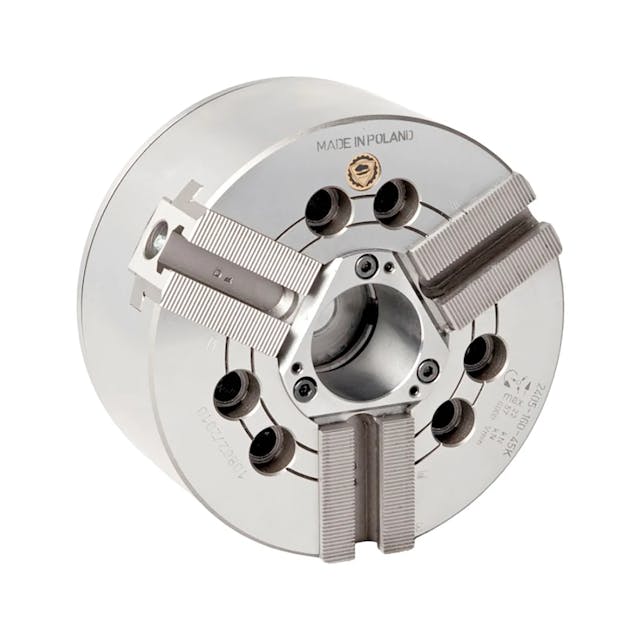
Supplied with one set of hard top jaws, one set of hard master jaws and one wrench. Bison scroll chucks are manufactured entirely within Bison Bial's factory in Poland, and are world renowned for offering superb quality and maximising tool life.
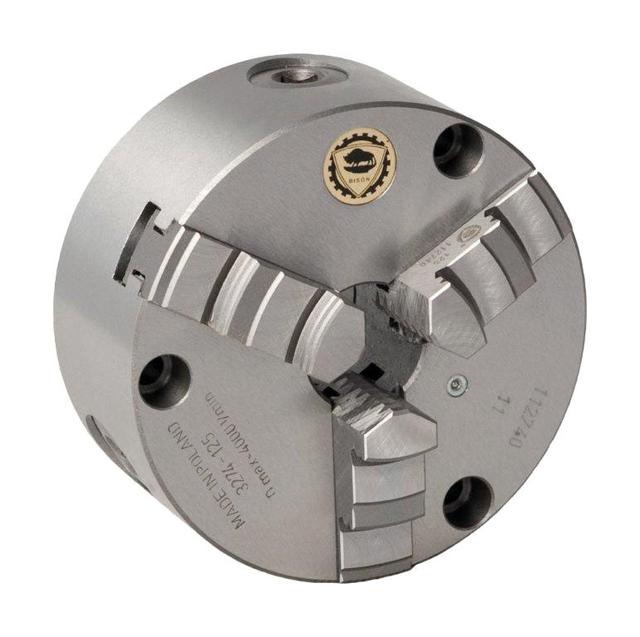
Supplied with one set of hard inside-outside solid jaws, one set of hard outisde solid jaws and one wrench. Bison scroll chucks are manufactured entirely within Bison Bial's factory in Poland, and are world renowned for offering superb quality and maximising tool life. Bison flexible front-mount scroll chucks feature mounting holes on the front face in addition to a recessed back for rear mounting. Front mount chucks are ideal for mounting directly onto to milling machine tables.
.jpeg&w=640&q=75)
Supplied with one set of hard top jaws, one set of hard master jaws and one wrench. Bison scroll chucks are manufactured entirely within Bison Bial's factory in Poland, and are world renowned for offering superb quality and maximising tool life.
.jpeg&w=640&q=75)
.jpg&w=640&q=75)
.jpg&w=640&q=75)
-din-55027-(a).jpg&w=640&q=75)
-din-55027-(a).jpg&w=640&q=75)
-din-55029-(a).jpg&w=640&q=75)
-din-55029-(a).jpg&w=640&q=75)
.jpg&w=640&q=75)
.jpg&w=640&q=75)
Our Workholding section covers five distinct product areas.
For milling machines and machining centres in single station, double station & 5-axis configurations.
Including scroll chucks, power chucks and soft jaws.
Both revolving live centres and dead centres for between-centres turning.
The Hainbuch Modular Clamping System
A precision collet-based workholding platform for CNC lathes.
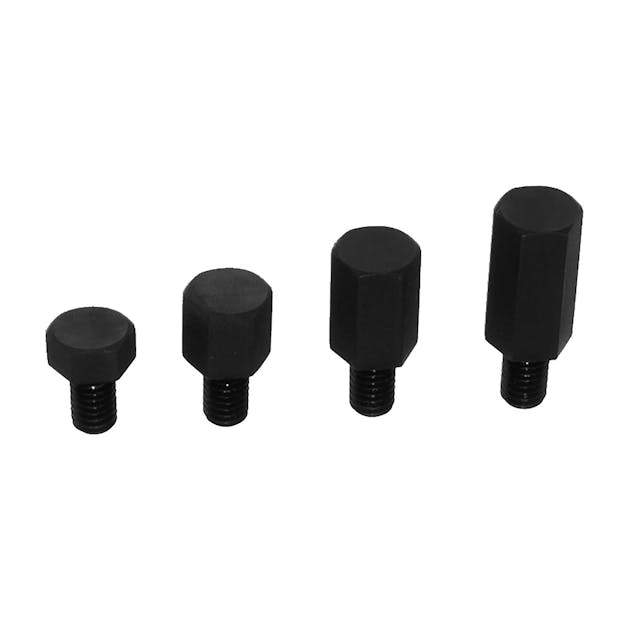
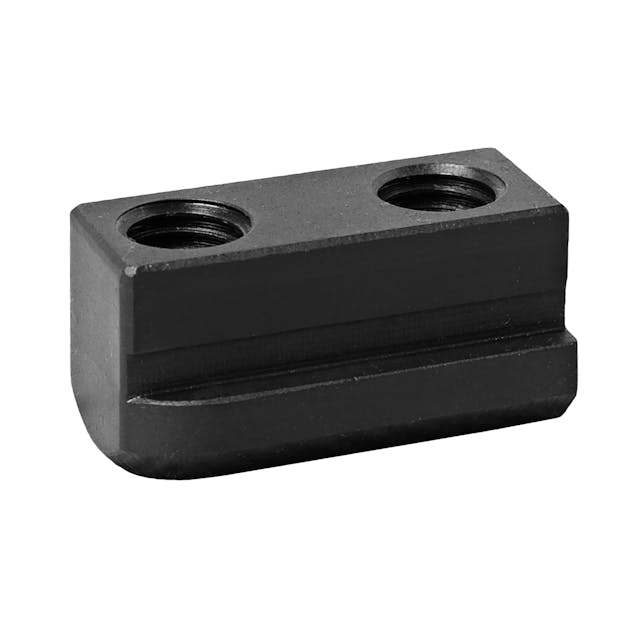
Covering the ancillary items needed to mount and configure all of the above.
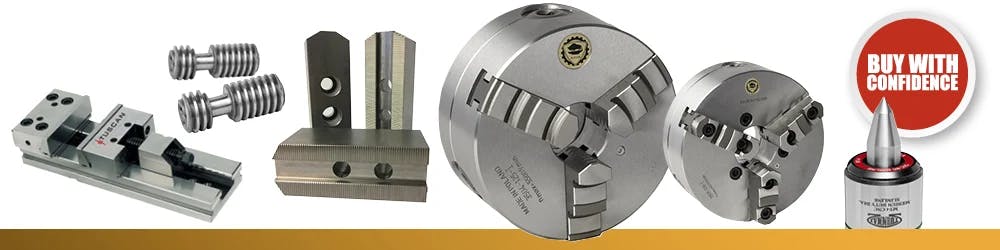
Brands stocked are Bison Workholding (Poland) for lathe chucks and centres, Hainbuch (Germany) for the modular clamping system and Tuscan/unbranded for machine vices.
Hainbuch is a German manufacturer specialising in precision workholding for CNC lathes. Their modular clamping system is fundamentally different from a conventional scroll chuck or power chuck.
Instead of jaws gripping the outside of a workpiece it uses a segmented collet-style clamping head that grips either the outside diameter or the bore of the workpiece with uniform radial force across its full contact length.
The system is built around three standard chuck body sizes: SK52, SK65 & SK80.
The key advantages over conventional chucks are:
Runout accuracy: because the clamping head contacts the workpiece uniformly around the full circumference and along the contact length, runout is dramatically better than jaw chucks. Typical runout for Hainbuch collet chucks is less than 0.003mm versus 0.05–0.10mm for a production scroll or power chuck.
Clamping head swapping: the clamping head (the part specific to the workpiece diameter and profile) can be changed in seconds without removing the chuck body from the spindle. This is the modular element so one chuck body serves hundreds of different workpiece sizes with a dedicated clamping head for each. This reduces setup time dramatically compared to boring soft jaws or re-adjusting hard jaws.
Profile options: clamping heads are available for round, square and hexagonal profiles. This allows bar stock of different cross-sections to be held in the same chuck body system by swapping only the clamping head.
Serrated vs smooth: clamping heads come in smooth bore (for gripping pre-machined surfaces without marking) and serrated (for gripping raw bar stock or forgings where the teeth can bite into the surface for maximum pull-out force). Both variants are available across all three chuck sizes.
Diameter range: clamping heads are available in 0.5mm increments from 3mm through to large diameters, covering effectively all bar stock sizes used in CNC turning. SK52, SK65 and SK80 designations indicate the maximum chuck capacity, not the clamping head bore as each chuck body works with any clamping head within its capacity range.
The Hainbuch system is the preferred choice for precision turning where tight tolerances, fast changeover, and consistent runout are all important. The initial cost is higher than a conventional jaw chuck but for a production environment running multiple different part families the system quickly pays back in reduced setup time and improved part quality.
Soft jaws are replacement top jaws machined from mild steel (typically Grade 080 M15) that are designed to be bored or shaped to a specific workpiece profile in the chuck itself. Because they are bored while mounted and spinning in the chuck the bore they create is perfectly concentric with the chuck's rotation axis, loading a round workpiece that matches the bore diameter can achieve runout of under 0.01mm and far better than hard jaws allow.
The MSJ series soft jaws stocked are made in the UK to ISO 9001 standards machined all over with chamfered edges and ground serrations for positive engagement with the master jaw serrations. They are supplied for Kitagawa-style power chucks which are among the most widely used power chuck platforms globally.
Three variants are available:
MSJ Standard: standard height and length; the general-purpose option
MSJ-L Extra Long: longer jaw body for gripping longer workpiece features or extending reach
MSJ-H Extra High: taller jaw body for gripping larger-diameter workpieces or where more material is needed for boring a larger profile
All variants are made from Grade 080 M15 steel that is capable of being heat-treated if you want to harden the bored profile after machining. This is relevant when the soft jaws will be used for very high volume production where jaw wear could become an issue.
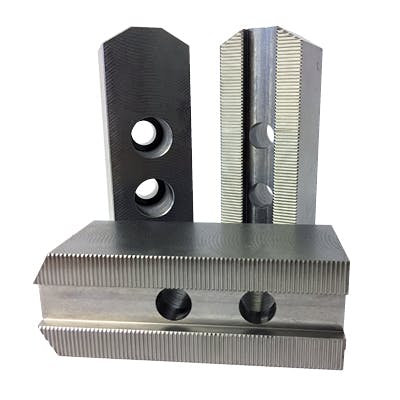
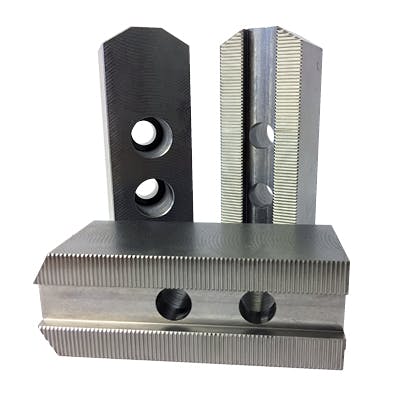
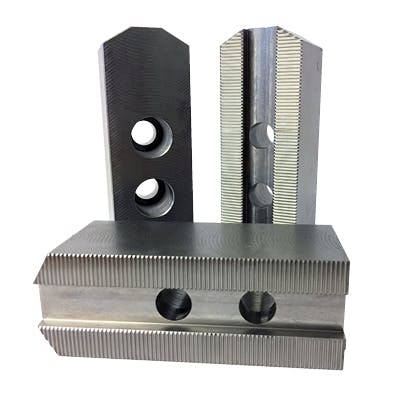
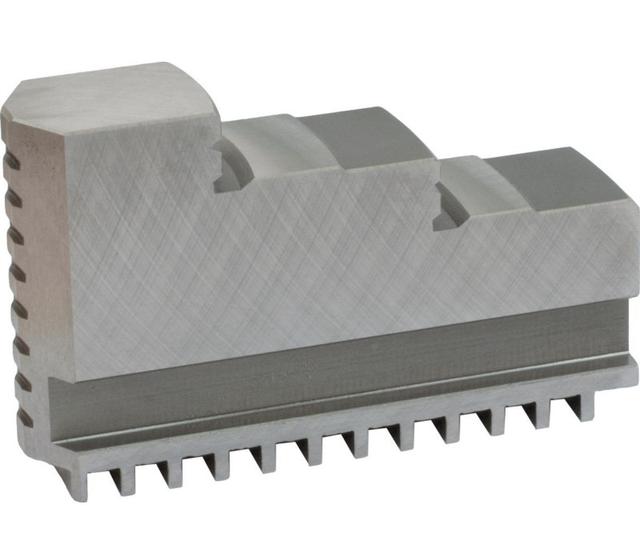
Solid jaws are a single piece of hardened steel (simple, robust and accurate), ideal for general production work where the same part is gripped repeatedly. They are quick to fit and offer a rigid, repeatable clamping face.
Two-piece jaws use a hardened steel base with a separate, softer top jaw that can be machined to the exact profile of the part. This is the set-up to reach for when you are holding awkward or finished components that must not be marked, you bore or profile the soft jaw to cradle the part, giving full support and zero damage to finished faces.
Most precision vices accept both types, so a common approach is to keep a set of solid jaws for rough work and a set of soft two-piece jaws ready to be machined for each tricky job. The soft jaws are consumable, you cut them for the job, then replace or re-face them next time.
A 3-jaw self-centring chuck is the default for round and hexagonal bar, all three jaws move in together, centring the work automatically. It is fast to load and the go-to for the majority of turned parts, which is why most lathes ship with one fitted as standard.
A 4-jaw independent chuck has each jaw adjusted separately. That makes it slower to set up but it will hold square, rectangular & irregular work and it allows you to dial in a part to run true to within a few thou which is vital for precision work, eccentric turning and re-machining parts that must run concentric to an existing feature.
A 6-jaw chuck is a specialist tool for thin-walled or delicate work. The extra jaws spread the clamping force, reducing distortion on tubes and rings. For most shops, a 3-jaw for everyday work and a 4-jaw for the awkward or high-precision jobs covers the ground.
The mount type is how the chuck bolts to your lathe spindle and it must match your spindle nose, there is no useful workaround for a mismatch! Plain back mounting to DIN 6350 uses a separate backplate that you machine to suit your spindle register; it is the most universal and the backplate is machined in place to give a true-running fit.
Type A (DIN 55026), Type C bayonet (DIN 55027) and Type D camlock (DIN 55029) are the modern quick-change spindle noses. Camlock Type D is the most common on contemporary lathes (the chuck locates on the spindle register and is locked with cam studs). Bayonet Type C is a twist-and-lock system and Type A uses a short taper with bolts.
Check your lathe spindle specification before ordering. If you are not certain our team of in-house time-served engineers can identify the mount from your machine details.
Buying a lathe chuck with the wrong mount is a frustrating and avoidable mistake.
It does and the choice is driven by how the chuck will be used.
A cast iron body damps vibration well and is the traditional choice for heavy turning because it absorbs the shocks of interrupted cuts and holds its accuracy over a long service life. Cast iron is also gentler on the spindle bearings when the chuck is fitted and removed regularly.
A steel body is tougher and more resistant to impact damage which suits environments where chucks are handled roughly or swapped frequently. Steel bodies are often found on chucks intended for higher spindle speeds, as they are better balanced and less prone to distortion at speed.
Both will serve well when made to a good standard. The body material is a secondary consideration behind the quality of the scroll, the jaws and the bearing surfaces. As a general rule we advise, cast iron for heavy general turning, steel where speed and frequent handling are the priority.
This comes up most often in the Hainbuch range, where clamping segments are available with a smooth face or a serrated grip. Serrated segments bite into the workpiece, giving very high holding force against both axial pull and rotation which is ideal for roughing and heavy cuts where the priority is that the part does not move.
The trade-off is that serrated jaws mark the work, so they are the wrong choice on finished or delicate surfaces. Smooth segments grip by friction alone, holding the part without marking it, which is what you want for second-operation work on parts that already have finished diameters.
A well-equipped station often keeps both: serrated for rough bar work where you will machine the gripped surface away and smooth for finishing and second operations. The choice is driven entirely by whether the gripped surface is finished or will be cut away.
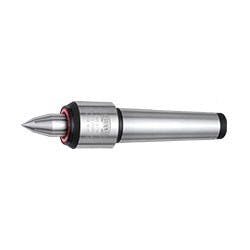
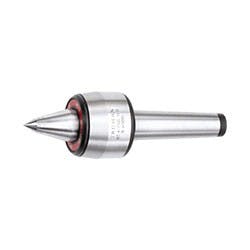
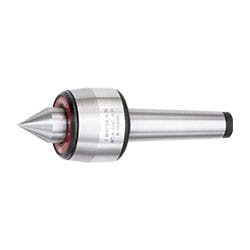
A lathe centre supports the free end of a workpiece held between centres or in a chuck, giving rigidity to long or slender parts that would otherwise deflect under the cutting load. A dead centre is a plain hardened point that sits static in the workpiece centre hole, it's simple, accurate & cheap, but the workpiece spins on it, so it relies on lubrication and is only suited to low speeds.
A live centre has its own bearings, so the point rotates with the workpiece. That eliminates the friction and heat of a dead centre, allowing much higher spindle speeds and heavier cuts without burning the centre hole. For anything beyond low-speed manual work, a live centre is the practical choice.
In this category you will find heavy duty live centres with Morse taper shanks sized to the machine taper. Match the Morse taper to your tailstock, and choose a heavy duty centre for large or long work where the cutting loads would overwhelm a standard centre. The accuracy figure tells you how true the point runs, which matters most for precision between-centres turning.
The Morse taper is the standard by which centres, collets and many tool shanks are held in lathe spindles and tailstocks. It is a self-holding taper where the male shank wedges into the female socket and is held by friction, released with a knock-out bar through the spindle.
Tapers run from MT0 up to MT7, with MT2, MT3, MT4 and MT5 the common workshop sizes.
The taper must match exactly, for example an MT3 centre will not seat in an MT4 socket and forcing it or using an adapter sleeve compromises accuracy and security. Check your machine’s tailstock and spindle taper in the handbook or by measuring an existing centre that fits and order to match.
Sleeves and morse taper adapters exist to step up a smaller shank to a larger socket but use them only when you must because every adapter adds runout and reduces rigidity.
For regular use, a centre or collet in the correct native taper is always preferable.
More than most machinists credit. The cutting tool gets the blame for poor finish, chatter and out-of-tolerance parts but the root cause is very often a vice that is not seating true, a chuck whose scroll is worn or a workpiece that is deflecting under load because it is overhung.
A good vice or chuck transfers the cutting force cleanly into the machine bed or spindle, keeping the part still and true. A poor one introduces movement and every micron of movement at the workpiece shows up directly in the finished part as chatter marks, tapered bores, oval diameters and poor repeatability between parts.
If you are chasing a finish or a tolerance and the tooling is right, look at the workholding before anything else. A dial indicator on the clamped part under a gentle push will tell you in seconds whether the set-up is rigid enough and if the needle moves, no amount of cutter adjustment will fix it.
Workholding is precision equipment and rewards regular care.
Keep the slideways and jaws clean, swarf trapped under a jaw is the most common cause of a part not seating true and a quick wipe before each clamping saves hours of chasing errors later. On a vice, periodically check that the fixed jaw is still square to the slideway and parallel to the base.
On a scroll chuck the jaws and scroll wear together, so always refit jaws to the same slot they came from (they are numbered for exactly this reason). Swapping jaws between slots destroys the bedded-in fit and reintroduces runout. Keep the chuck lightly oiled and free of abrasive swarf in the scroll mechanism.
Store chucks and centres carefully because a dropped chuck may look fine but run out of true and a centre that is dinged on the taper will not seat properly.
Check runout with a dial indicator when a chuck goes back on the machine; a few minutes of verification after fitting is the cheapest accuracy you will ever buy.
Start with the work, not the catalogue. Decide the range of part sizes and shapes you will actually machine and buy workholding that covers that range well because a single good quality vice or chuck that fits your common parts is worth more than three mediocre ones that none of them suit.
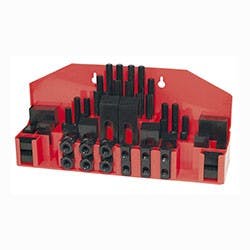
On a mill, a precision 125mm or 150mm vice with a set of solid jaws and a set of soft jaws, plus parallels and a clamping kit for table work, will see you through the majority of jobs.
On a lathe, a 3-jaw chuck in the correct mount for your spindle, a 4-jaw for awkward work, and a live centre to match your tailstock taper covers the essentials.
Add Hainbuch when you have precision second-operation work that justifies it and build the kit around your most common bar diameters.
If you tell us the machine and the kind of work you do, one of our in-house engineers will put together a sensible, no-nonsense kit that will serve you well from day one.