


Threading Inserts


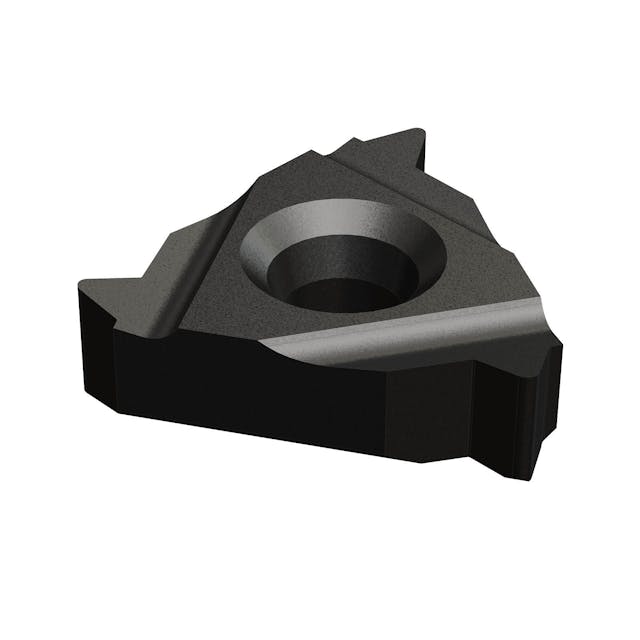
ISO Metric External Right Hand Thread Turning Insert - General Purpose Grade PTX
- ISO Metric
- External right hand
- PTX grade is a general purpose grade suitable for a wide range of materials
- ALTiN coating
£17.72 excl. VAT
£21.26 incl. VAT
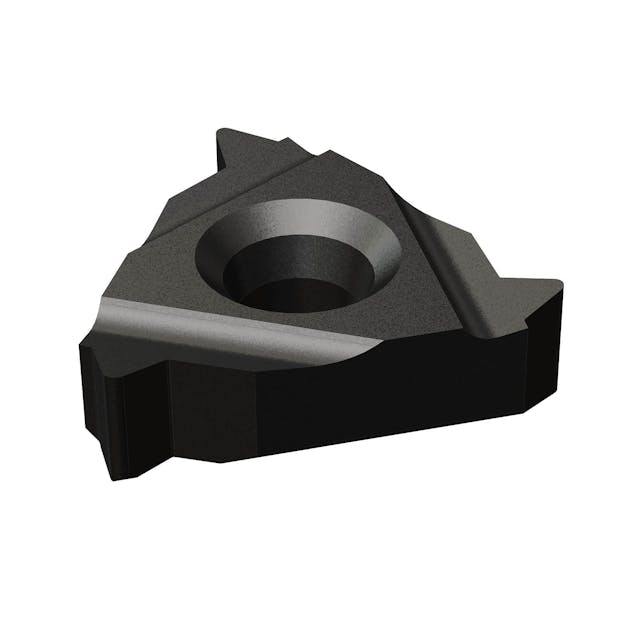
ISO Metric Internal Right Hand Thread Turning Insert - General Purpose Grade PTX
- ISO Metric
- Internal right hand
- PTX grade is a general purpose grade suitable for a wide range of materials
- ALTiN coating
£16.11 excl. VAT
£19.33 incl. VAT
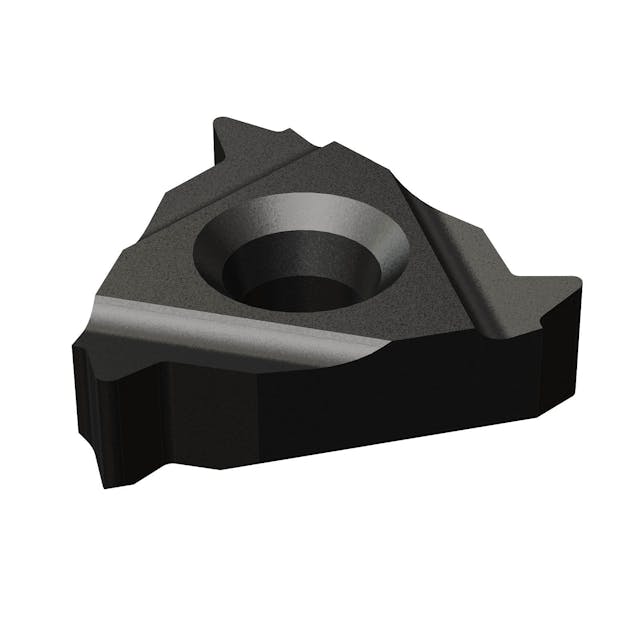
Whitworth External Right Hnad Thread Turning Insert - General Purpose Grade PTX
- Whitworth (W)
- Internal right hand
- PTX grade is a general purpose grade suitable for a wide range of materials
- ALTiN coating
£17.72 excl. VAT
£21.26 incl. VAT
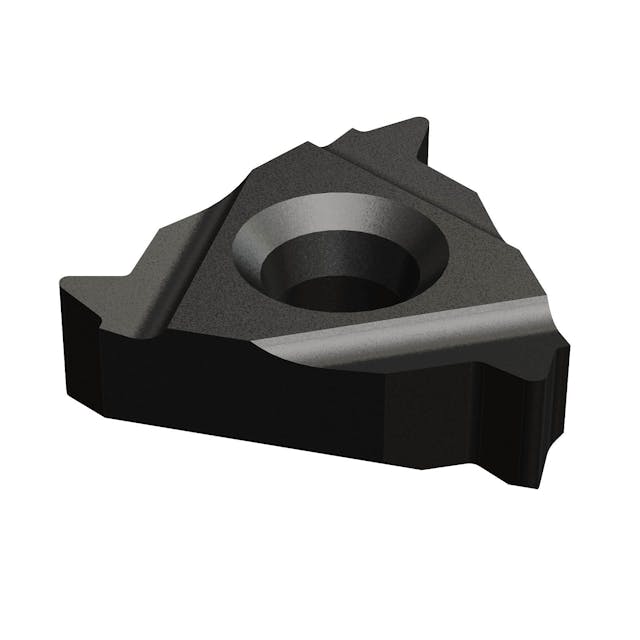
Whitworth External Right Hnad Thread Turning Insert - General Purpose Grade PTX
- Whitworth (W)
- External right hand
- PTX grade is a general purpose grade suitable for a wide range of materials
- ALTiN coating
£17.72 excl. VAT
£21.26 incl. VAT
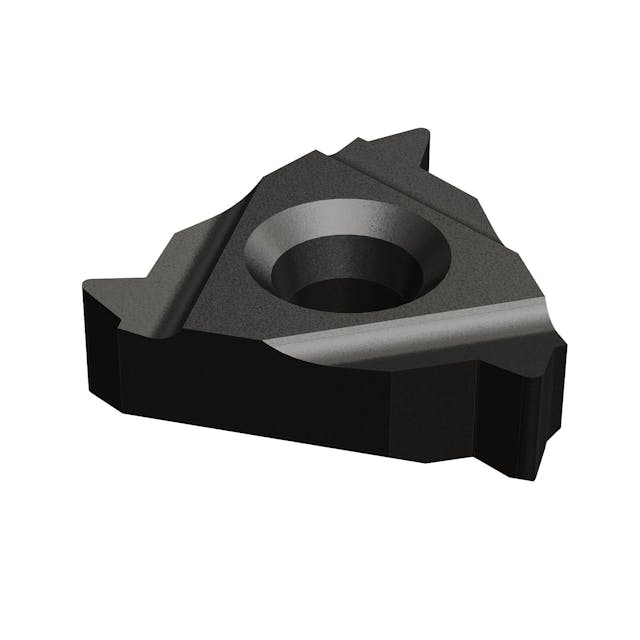
Unified (UN) External Right Hand Thread Turning Insert - General Purpose Grade PTX
- Unified (UN)
- External right hand
- PTX grade is a general purpose grade suitable for a wide range of materials
- ALTiN coating
£17.72 excl. VAT
£21.26 incl. VAT
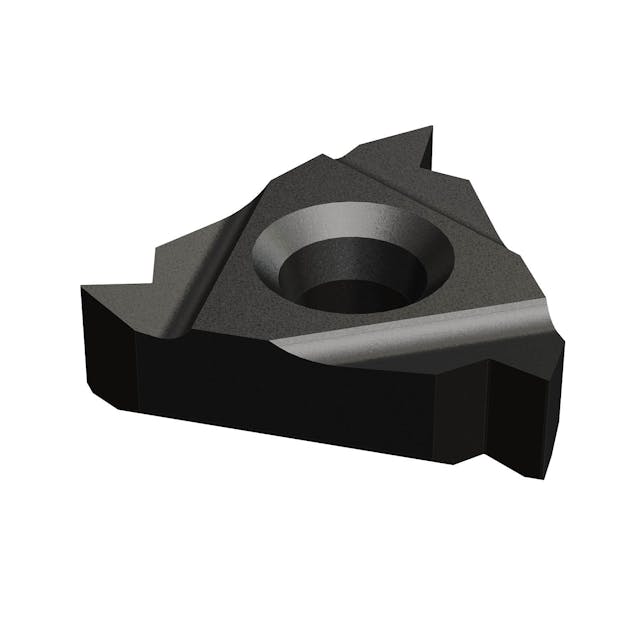
60° Partial Profile External Right Hand Thread Turning Insert - General Purpose Grade PTX
- 60° degree partial profile
- External right hand
- PTX grade is a general purpose grade suitable for a wide range of materials
- ALTiN coating
£16.11 excl. VAT
£19.33 incl. VAT
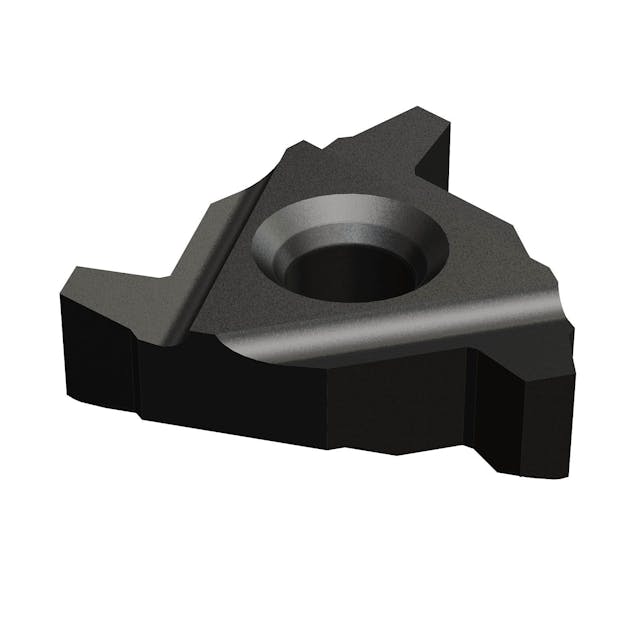
ACME External Right Hand Thread Turning Insert - General Purpose Grade PTX
- ACME general purpose
- External right hand
- PTX grade is a general purpose grade suitable for a wide range of materials
- ALTiN coating
£19.78 excl. VAT
£23.74 incl. VAT
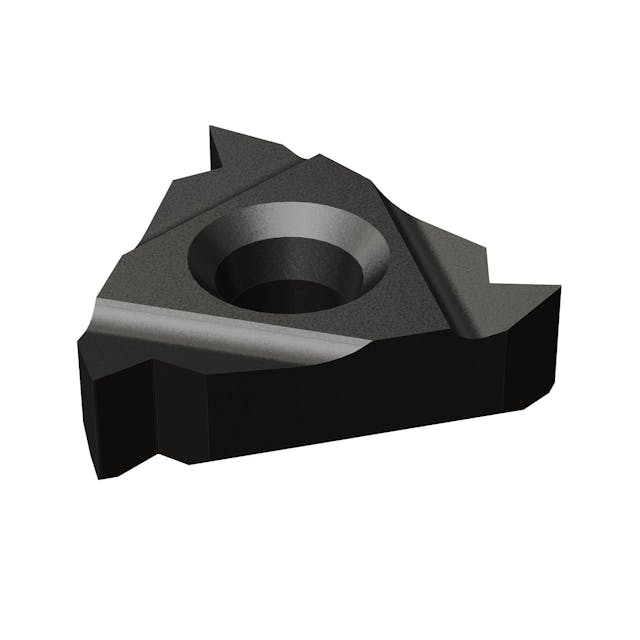
60° Partial Profile Internal Right Hand Thread Turning Insert - General Purpose Grade PTX
- 60° degree partial profile
- Internal right hand
- PTX grade is a general purpose grade suitable for a wide range of materials
- ALTiN coating
£14.47 excl. VAT
£17.36 incl. VAT
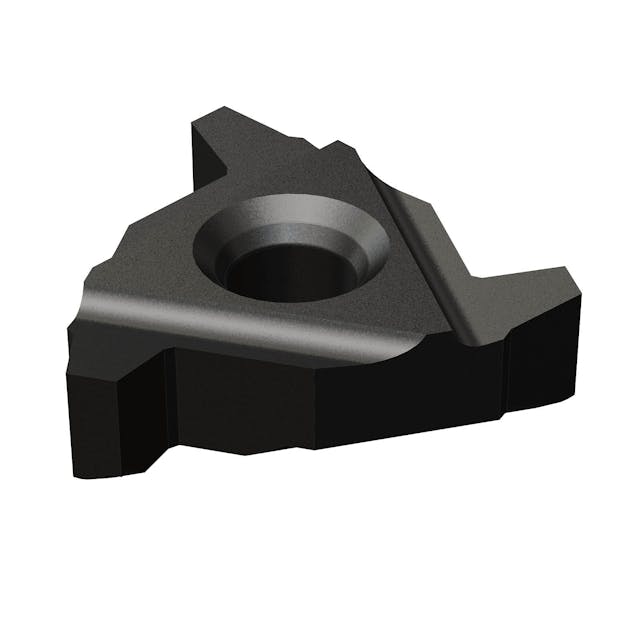
ACME Internal Right Hand Thread Turning Insert - General Purpose Grade PTX
- ACME general purpose
- Internal right hand
- PTX grade is a general purpose grade suitable for a wide range of materials
- ALTiN coating
£19.78 excl. VAT
£23.74 incl. VAT
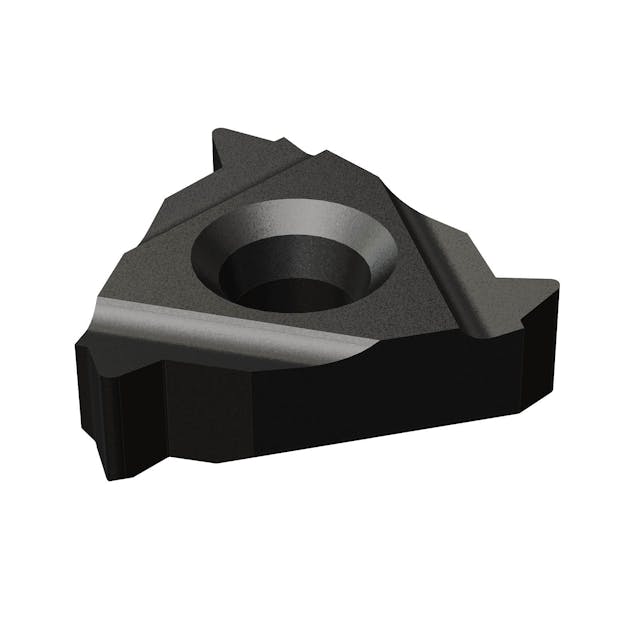
Unified (UN) Internal Right Hand Thread Turning Insert - General Purpose Grade PTX
- Unified (UN)
- Internal right hand
- PTX grade is a general purpose grade suitable for a wide range of materials
- ALTiN coating
£17.72 excl. VAT
£21.26 incl. VAT
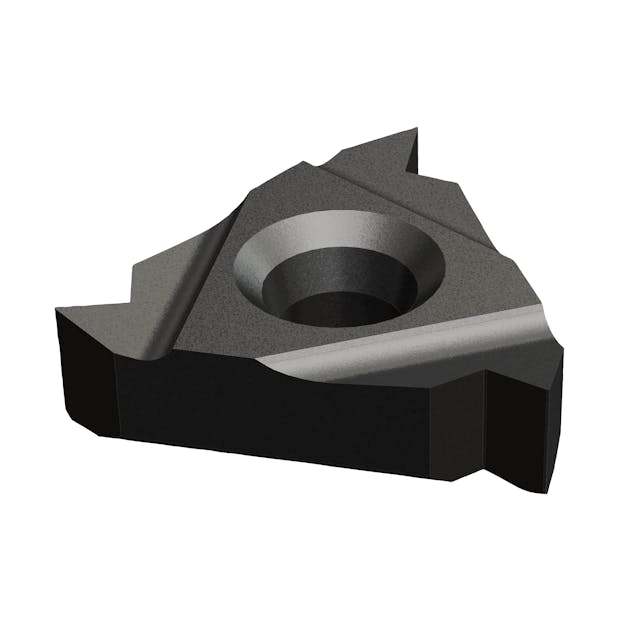
Trapezoidal External Right Hand Thread Turning Insert - General Purpose Grade PTX
- Trapezoidal (TR)
- External right hand
- PTX grade is a general purpose grade suitable for a wide range of materials
- ALTiN coating
£19.78 excl. VAT
£23.74 incl. VAT
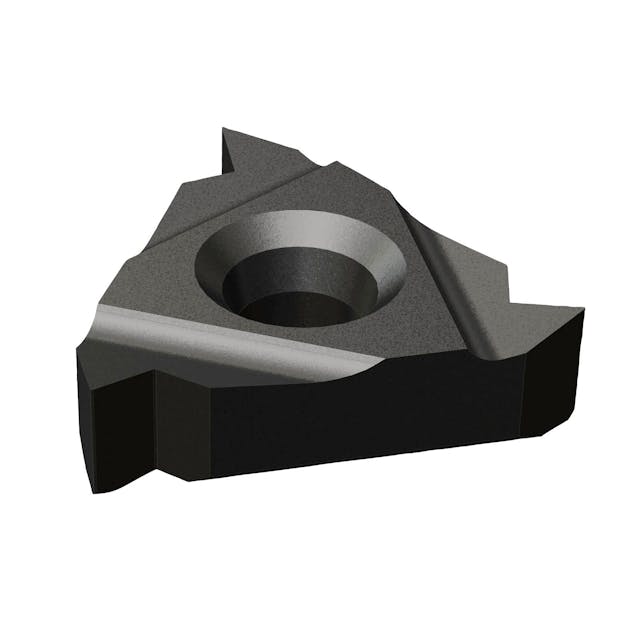
NPT Thread Internal Right Hand Thread Turning Insert - General Purpose Grade PTX
- National Pipe Thread (NPT)
- Internal right hand
- PTX grade is a general purpose grade suitable for a wide range of materials
- ALTiN coating
£17.72 excl. VAT
£21.26 incl. VAT
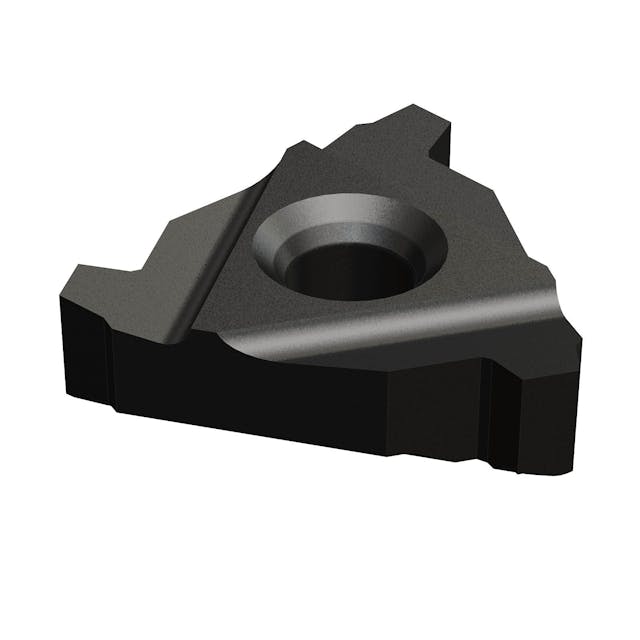
Stub ACME External Right Hand Thread Turning Insert - General Purpose Grade PTX
- STUB ACME (STACME)
- External right hand
- PTX grade is a general purpose grade suitable for a wide range of materials
- ALTiN coating
£19.78 excl. VAT
£23.74 incl. VAT
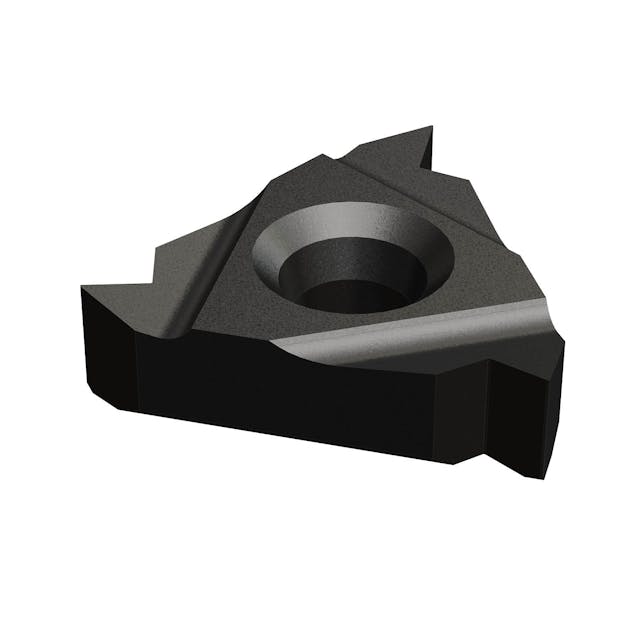
55° Partial Profile External Right Hand Thread Turning Insert - General Purpose Grade PTX
- 55° degree partial profile
- External right hand
- PTX grade is a general purpose grade suitable for a wide range of materials
- ALTiN coating
£14.47 excl. VAT
£17.36 incl. VAT
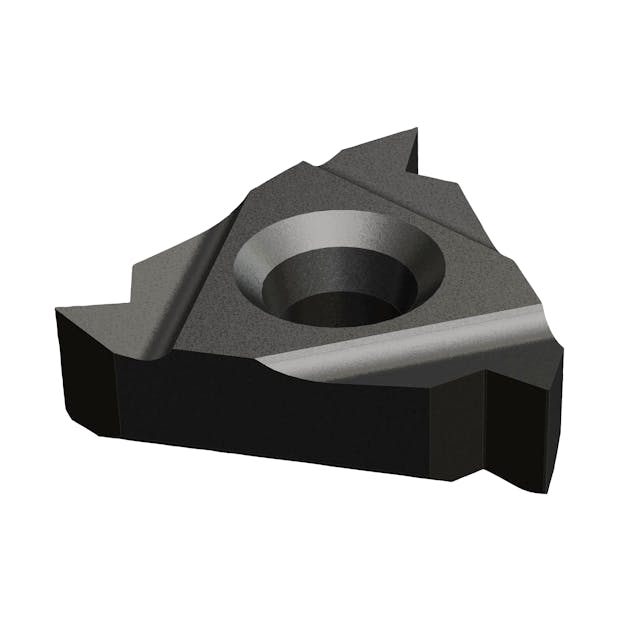
NPT Thread External Right Hand Thread Turning Insert - General Purpose Grade PTX
- National Pipe Thread (NPT)
- External right hand
- PTX grade is a general purpose grade suitable for a wide range of materials
- ALTiN coating
£17.72 excl. VAT
£21.26 incl. VAT

BSPT Thread External Right Hand Thread Turning Insert - General Purpose Grade PTX
- British Standard Pipe Thread (BSPT)
- External right hand
- PTX grade is a general purpose grade suitable for a wide range of materials
- ALTiN coating
£17.72 excl. VAT
£21.26 incl. VAT
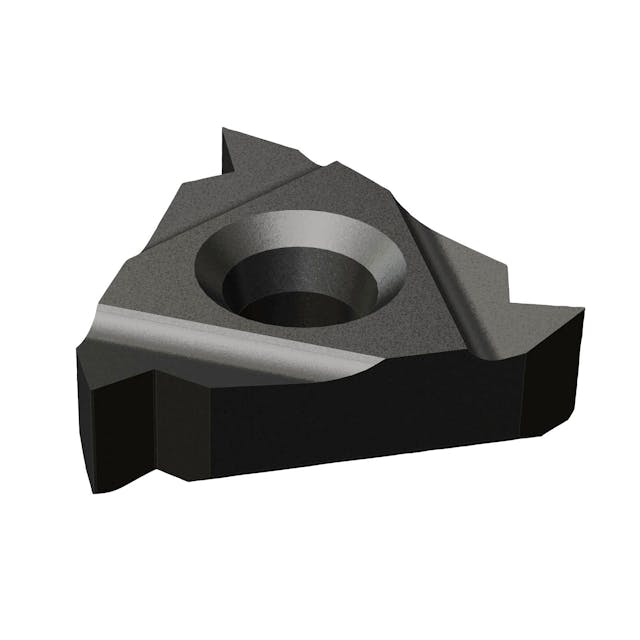
Trapezoidal Internal Right Hand Thread Turning Insert - General Purpose Grade PTX
- Trapezoidal (TR)
- Internal right hand
- PTX grade is a general purpose grade suitable for a wide range of materials
- ALTiN coating
£19.78 excl. VAT
£23.74 incl. VAT
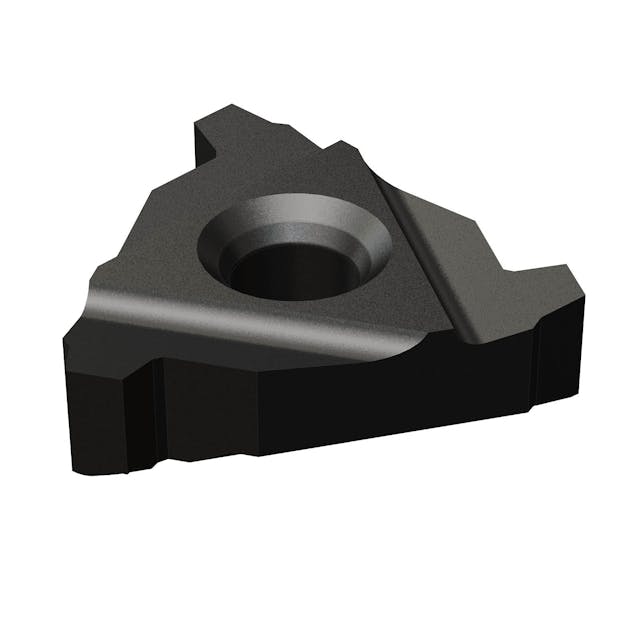
Stub ACME Internal Right Hand Thread Turning Insert - General Purpose Grade PTX
- STUB ACME (STACME)
- Internal right hand
- PTX grade is a general purpose grade suitable for a wide range of materials
- ALTiN coating
£19.78 excl. VAT
£23.74 incl. VAT
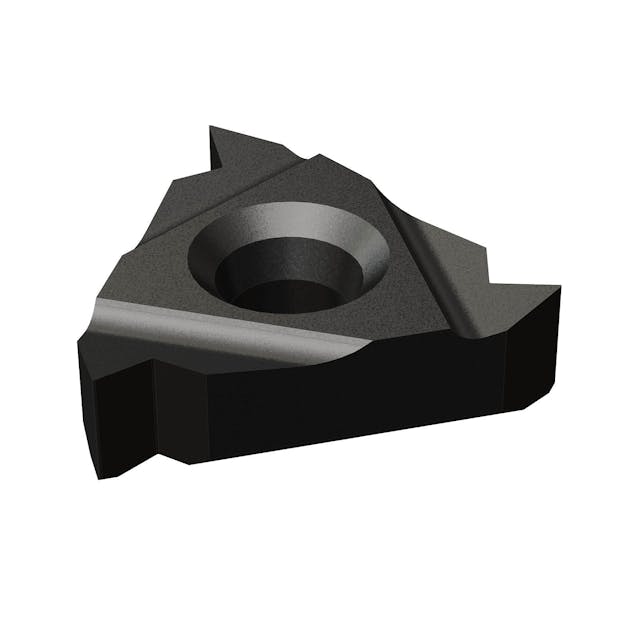
55° Partial Profile Internal Right Hand Thread Turning Insert - General Purpose Grade PTX
- 55° degree partial profile
- Internal right hand
- PTX grade is a general purpose grade suitable for a wide range of materials
- ALTiN coating
£14.47 excl. VAT
£17.36 incl. VAT
BSPT Thread Internal Right Hand Thread Turning Insert - General Purpose Grade PTX
- British Standard Pipe Thread (BSPT)
- Internal right hand
- PTX grade is a general purpose grade suitable for a wide range of materials
- ALTiN coating
£17.72 excl. VAT
£21.26 incl. VAT
Frequently Asked Questions
A threading insert is an indexable insert with a ground thread profile on its cutting edge, designed to cut a screw thread in a single, repetitive pass-cycle on a CNC lathe. Where a turning insert takes depth-of-cut passes to produce a cylindrical shape, a threading insert takes a series of passes along the same path, each stepped in radially by a small increment, until the full thread depth is reached.
The geometry is the key difference.
The cutting edge of a threading insert is the exact profile of the thread (flank angle, pitch and root) so the insert forms the finished thread shape directly. A turning insert has a general-purpose edge and cannot reproduce the precise flank geometry of a thread, which is why threading is its own insert family with its own selection logic.
A full-profile insert, also called a full-form or crested insert cuts the entire thread in one pass, the flanks and the root and on most metric inserts the crest too. Because it machines the full thread shape, the finished thread has the correct root radius and crest form straight from the insert, which gives the fatigue and engagement properties the standard intends.
Choose a full-profile insert for production work and for threads where the root and crest form matters (high-strength and fatigue-critical threads, for example). The trade-off is that each insert covers only one pitch, so you carry an insert per pitch. Where batches run on a single thread, that is no penalty but where you cut many different pitches in small volume, a partial-profile insert may suit better.
A partial-profile (or V-profile) insert carries a 60° (or 55°) V form ground to a small nose, cutting the thread flanks but not the root or crest. Because the V is a fixed flank angle and a small nose radius that suits a range of pitches, a single insert can cut any pitch within its stated range (a 0.5-1.5 mm pitch insert covers M5x0.5, M6x1, M8x1.25 and M10x1.5, for example).
The benefit is toolroom economy: one insert covers a swathe of pitches, so a shop cutting many thread sizes in small volumes keeps fewer inserts on the shelf.
The trade-off is that the root of the thread is left unformed because the core diameter must be pre-machined correctly and the minor diameter produced by the insert depends on the infeed.
For general, non-critical threads, the partial-profile insert is the practical choice.
The figure is the flank angle (the included angle of the thread form):
A 60° profile suits metric (ISO) and Unified (UN) threads, both of which use a 60° flank angle
A 55° profile suits Whitworth and the BSF/BSP family, which use a 55° flank angle.
Matching the insert profile angle to the thread standard is not optional because a 60° insert cannot produce a correct 55° thread and vice versa.
That is why the category separates 60° partial-profile and 55° partial-profile inserts despite both being partial-profile. The flank angle is built into the insert ground form, so choose the profile angle for the thread standard first, then the pitch range or specific pitch within it.
For a metric (ISO) thread, choose either a full-profile metric insert cut for that exact pitch (M6×1 takes a 1.0 mm pitch insert, M10×1.5 a 1.5 mm pitch insert) or a 60° partial-profile insert whose pitch range covers the pitch you need. Metric threads use a 60° flank angle, so a 60° profile is the correct geometry; do not use a 55° (Whitworth) insert for metric work.
Full-profile metric inserts give the correct root radius for the standard and are the choice for production; partial-profile inserts cover a range of metric pitches from one insert and suit mixed, low-volume work.
The insert size (6, 11, 16 etc.) must also be carried by your holder, so confirm the holder accepts the insert size you select.
Unified threads (UNC, UNF and the UNEF series) use a 60° flank angle, like metric, but are specified in threads-per-inch rather than pitch in millimetres. The inserts here in the Unified subcategory are ground to the UN thread form and listed by TPI. Choose a full-profile UN insert for the specific TPI, or a 60° partial-profile insert that covers the pitch range (a 1.0 mm pitch insert approximates 26 TPI, for example, but for exact UN work the dedicated UN insert is the better choice).
Because UN and metric share the 60° flank, a 60° partial-profile insert can be used for both, but only a dedicated UN insert gives the correct full-profile form for a UN thread.
For production UN work, match the insert to the exact TPI and use a full-profile insert but for occasional UN threads, a 60° partial-profile insert will produce a serviceable thread.
Whitworth (BSW and BSF) is the British coarse and fine thread standard with a 55° flank angle and rounded root and crest. BSPT (British Standard Pipe Taper) is the tapered pipe thread, also 55°, used for pressure-tight joints on pipe fittings. Both standards share the 55° flank angle so the inserts for both come from the 55° profile family.
For Whitworth threads, choose the 55° partial-profile insert pitched for the TPI or a dedicated Whitworth insert.
For BSPT, use the dedicated BSPT insert, because a tapered thread needs the insert to feed along a taper path and the form includes the radiused root and crest the standard requires.
The BSPT insert is ground specifically for that taper form, which a plain 55° V-profile will not reproduce.
An ACME thread is a trapezoidal form with a 29° flank angle used for power transmission and lead-screws which are the thick, slow-moving thread you see on lathe lead-screws and valve spindles. The wide, flat crests and roots distribute load across the thread faces, which is the purpose of the form.
ACME is cut with a dedicated ACME insert, ground to the 29° flank angle and the specific pitch of the screw. It cannot be cut with a 60° or 55° insert; the flank angle is altogether different.
Stub ACME is a shallower variant of the same form used where space is tight, and has its own insert series.
Choose the ACME or Stub ACME insert for the exact pitch and note that power threads often run in nut materials, so an insert grade tolerant of the nut material is worth selecting.
A trapezoidal thread (Tr) is the metric equivalent of ACME with a 30° flank angle (instead of ACME’s 29°) and metric pitch designations. It serves the same purpose: power transmission on lead-screws, jacks and driving screws, where a square-ish thread face carries axial load efficiently.
Trapezoidal threads are cut with the dedicated trapezoidal insert for the pitch, ground to the 30° form.
Trapezoidal and ACME are close in form but not interchangeable because the one-degree flank difference and the metric versus per-inch pitch mean the inserts are not swappable.
Pick the insert to the standard the drawing calls up, not the closest equivalent, because the nut will only engage properly with the correct form.
The number refers to the ISO size designation of the insert (the dimensions of the carbide insert body) which is matched to the holder that carries it. A size 11 insert fits a size 11 threading holder; a 16 fits a size 16 holder. The holders take a specific insert size, so the insert size is dictated by the holder you already have on the machine or are buying to fit.
Larger insert sizes accept larger pitches and deeper threads because the insert body carries a longer cutting edge, so for a coarse thread check the maximum pitch the insert size supports.
For a small, fine thread on a small component a smaller insert size keeps the cutting edge close to the work but for a large, coarse power thread a larger insert gives the edge length and rigidity needed.
R Max is the maximum root radius the insert will produce at the bottom of the thread, the radius at the thread root between the flanks. The standard for each thread specifies a minimum and maximum root radius, and the insert produces one specific radius (so the insert’s R Max must fall within the range the drawing or standard calls for).
The root radius matters for fatigue strength because a larger root radius spreads stress and resists cracking, which is why high-fatigue threads specify a controlled root form.
For a general-purpose thread a standard R Max is fine but for a fatigue-critical or aerospace thread, match the insert’s R Max to the specified root radius on the drawing.
A full-profile insert gives a controlled R Max whereas a partial-profile insert leaves the root unformed.
"No. Teeth" is the number of cutting teeth on the insert. The vast majority of inserts here are single-tooth (one cutting edge) which takes one threading pass per revolution and is the standard threading insert. A multi-tooth insert carries several full thread profiles in a row, so each pass removes material from several threads at once, cutting the cycle time dramatically.
Multi-tooth inserts are used on production threading of long, repeat threads (long threaded shafts, for example) where the shorter cycle earns back the higher insert cost.
The trade-off is higher cutting forces and a need for a rigid set-up, because the multi-tooth insert puts far more load through the tool and workpiece than a single-tooth. For most shop threading, single-tooth is the standard and the choice.
The infeed (how the insert advances into the work between passes) makes a real difference to thread finish, insert life and the risk of chatter.
There are two common strategies: radial (plunge) infeed, where the insert drives straight in and flank (side) infeed, where the insert advances along one flank so the chip flows off one edge. Flank infeed puts far less load on the insert and produces a cleaner chip, which is why most modern CNC threading cycles default to it.
For coarse threads and harder materials use a decreasing infeed (the first pass takes a large cut, each following pass a smaller one) so the cutting load stays roughly constant as the thread deepens and the chip stays manageable.
Constant infeed is simpler but produces a long, thin chip on the last passes that can be hard to clear.
The CAM threading cycle on a CNC controls this but on a manual you choose the infeed yourself.
The right infeed strategy converts a chattery, rough thread into a smooth one.
Threading is run at a lower surface speed than turning, because the interrupted cut at the entry and exit of each pass hammers the edge. Recommended speeds are typically 60–80% of the turning speed for the same material in the same grade but for a coated carbide insert in steel, that may be 80-120 m/min rather than the 150-250 m/min you would run for turning.
The "feed" per revolution in threading is the thread pitch (the insert must move one pitch per revolution to form the thread, which the machine synchronises).
The pitch is fixed by the thread, so the variable you adjust is the cutting speed and the infeed.
Start at the maker’s recommended speed for the grade and material, and adjust down if you see notch wear or built-up edge, up if the cut is conservative and finish and life can improve.
The common causes are few and identifiable.
Chipping on the edge is most often too high a speed for the material, a lack of infeed strategy (a constant infeed concentrating load on the last passes) or a weak insert grade for the cut (try a tougher grade, a flank infeed and a lower speed). A torn or poor thread finish is usually too slow a speed causing built-up edge, or insufficient depth left on a finishing pass.
A thread that is oversized or the wrong form points to insert height not on centre or the wrong insert profile for the thread standard.
A withdrawal that drags the insert back through the finished thread points to the CNC pull-out move not being fast enough or not disengaged before the spindle stops.
Reading the insert (which corner is notched, which flank is worn) tells you which of these is the cause, and each has a known fix.
Our team of experienced, in-house engineers can help diagnose from the thread and the insert if you describe the symptom.