




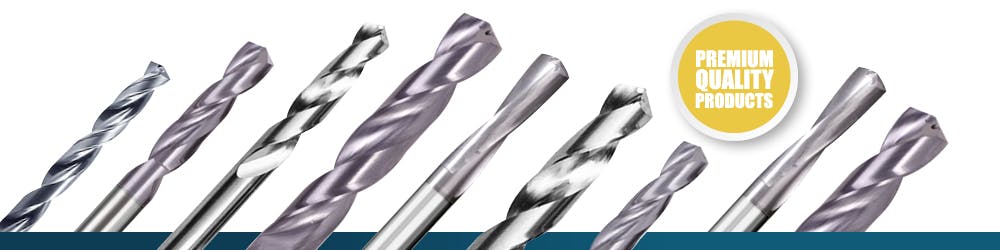
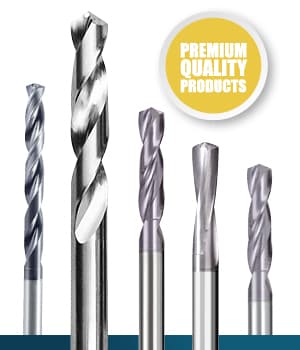
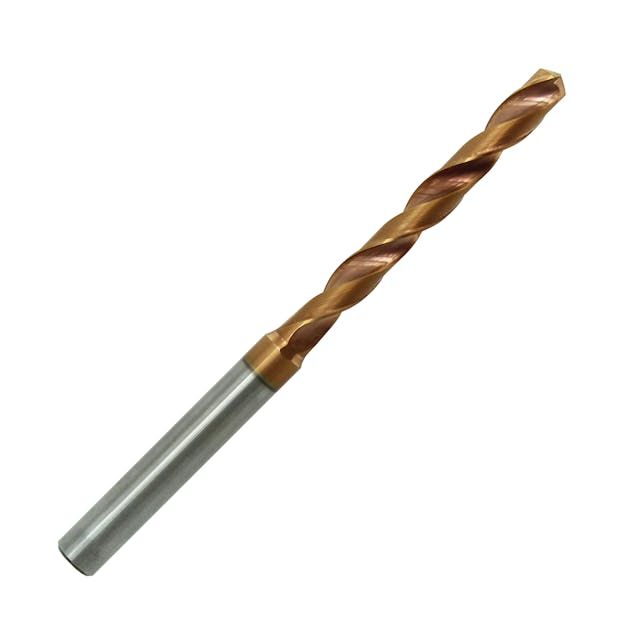
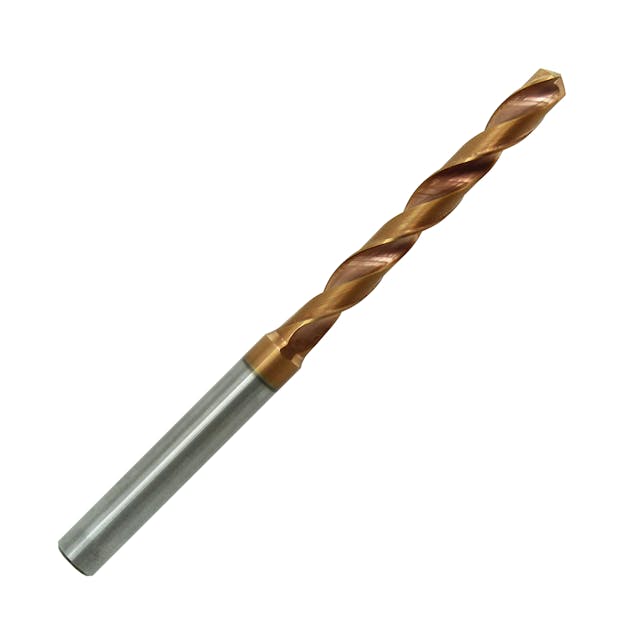
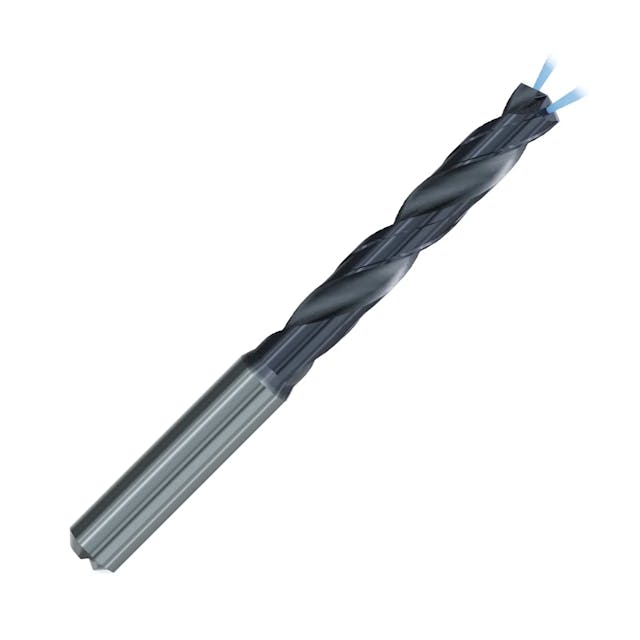
Emuge Franken Basic Drill series for high performance drilling.
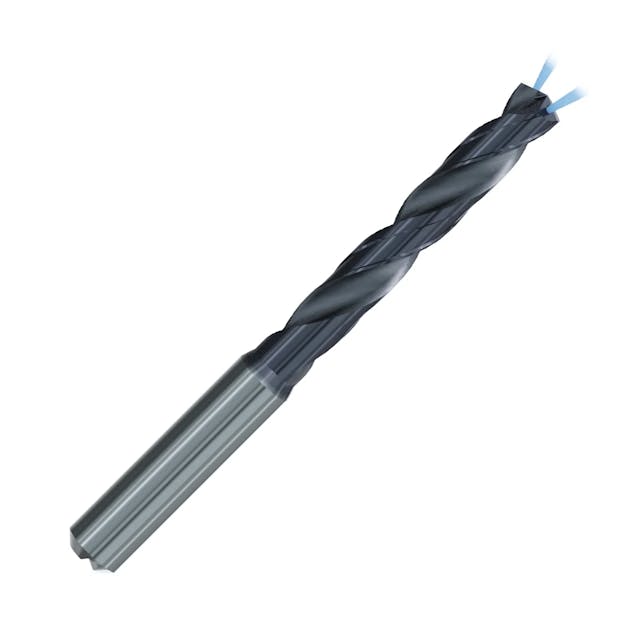
Emuge Franken Basic Drill series for high performance drilling.
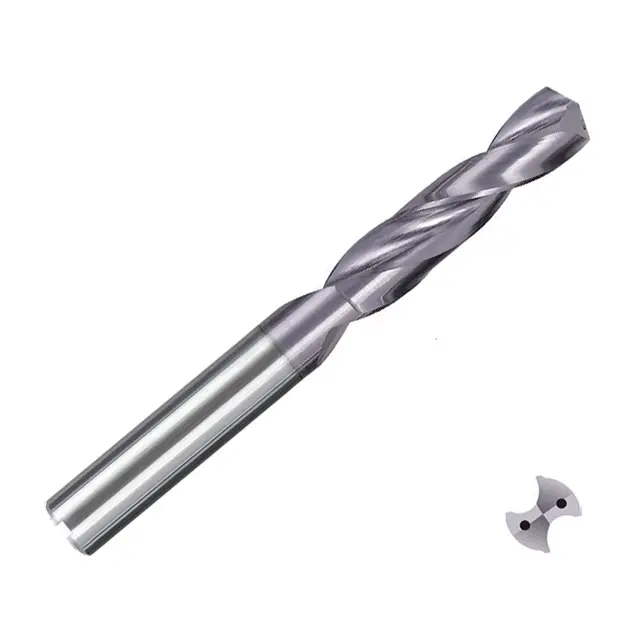
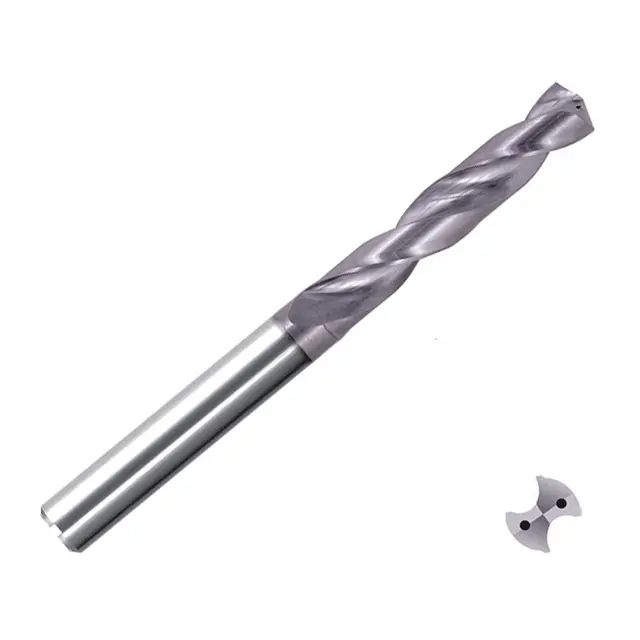
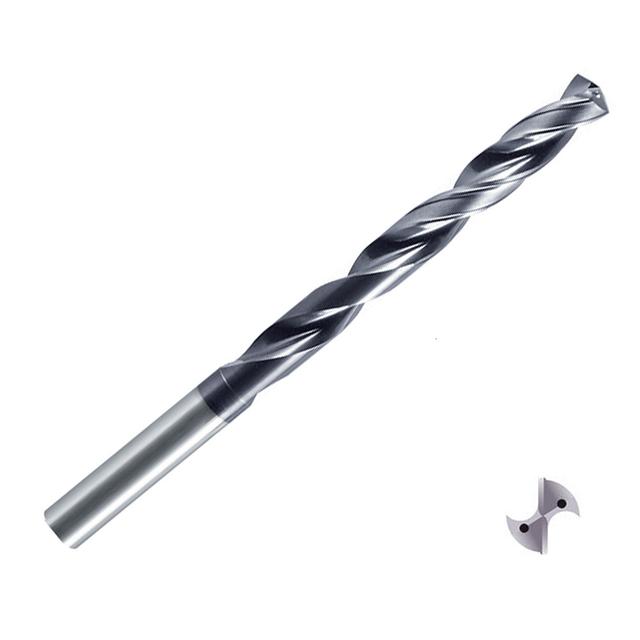
1588SL10C SL Series by ZCC-CT. Solid coated carbide for general purpose drilling.
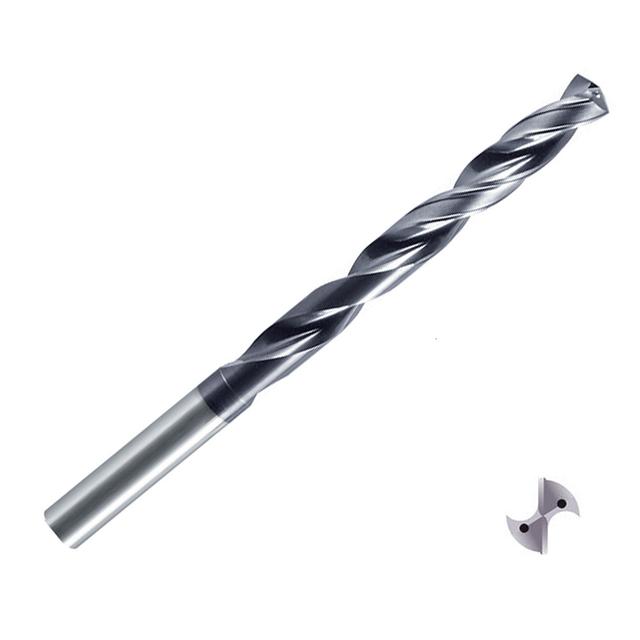
1588SL12C SL Series by ZCC-CT. Solid coated carbide for general purpose drilling.
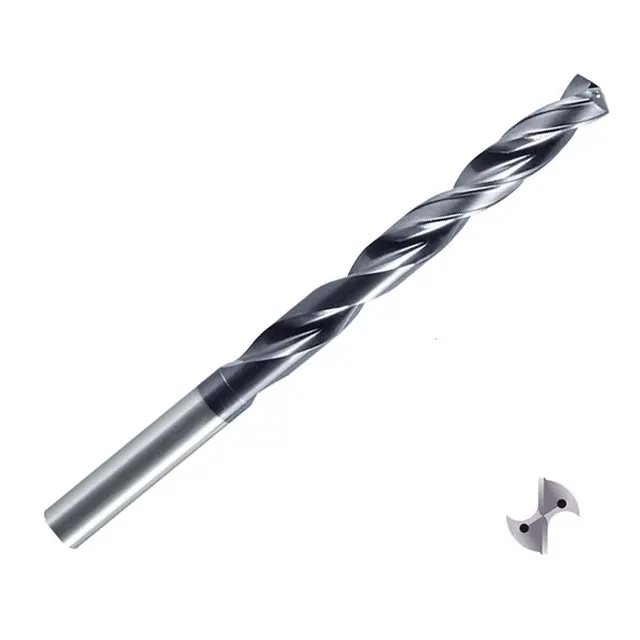
1588SL15C SL Series by ZCC-CT. Solid coated carbide for general purpose drilling.
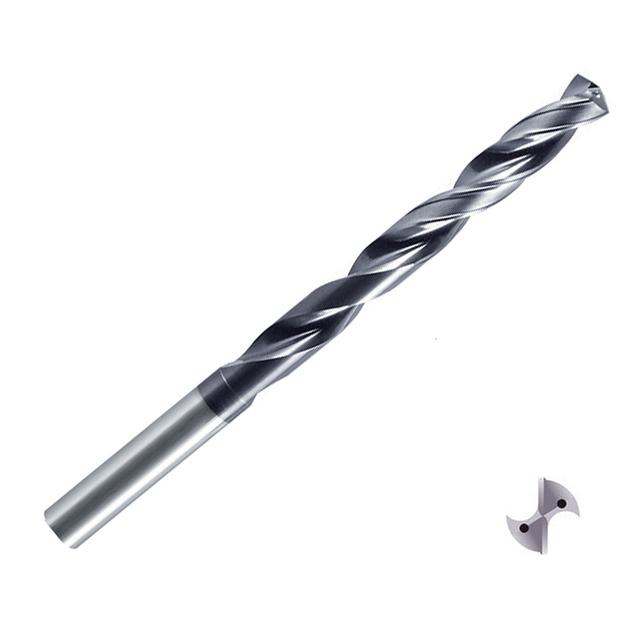
1588SL20C SL Series by ZCC-CT. Solid coated carbide for general purpose drilling.
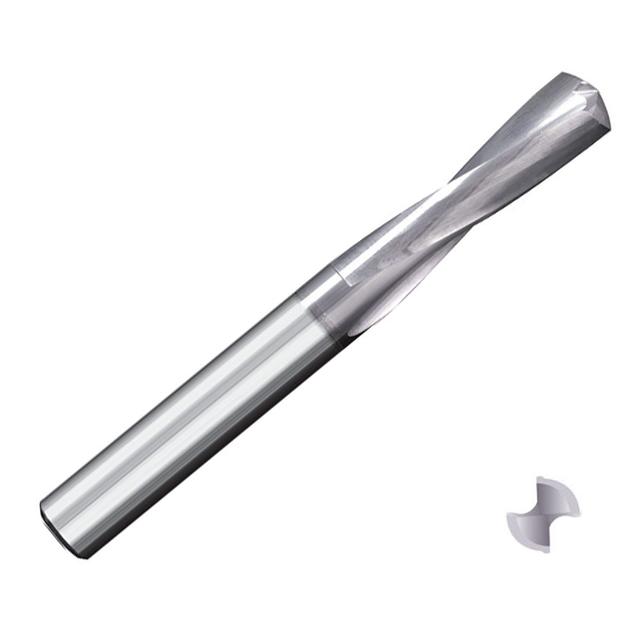
1534SH03 SH Series by ZCC-CT.
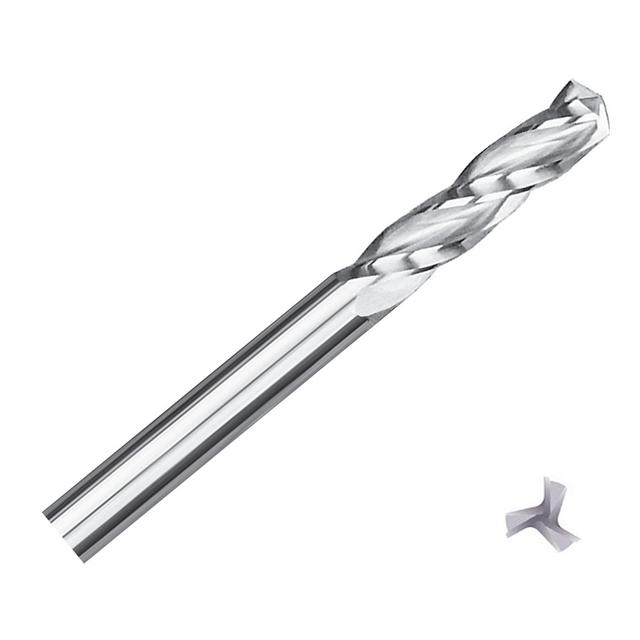
1165PA03 PA Series by ZCC-CT.
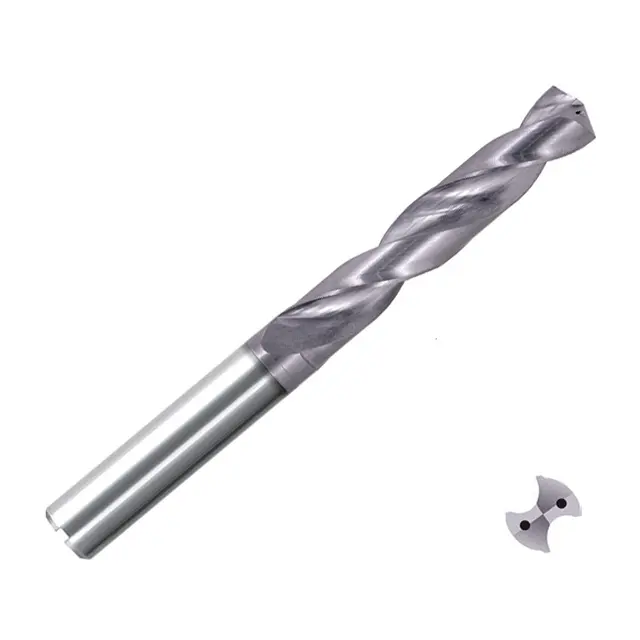
Features:
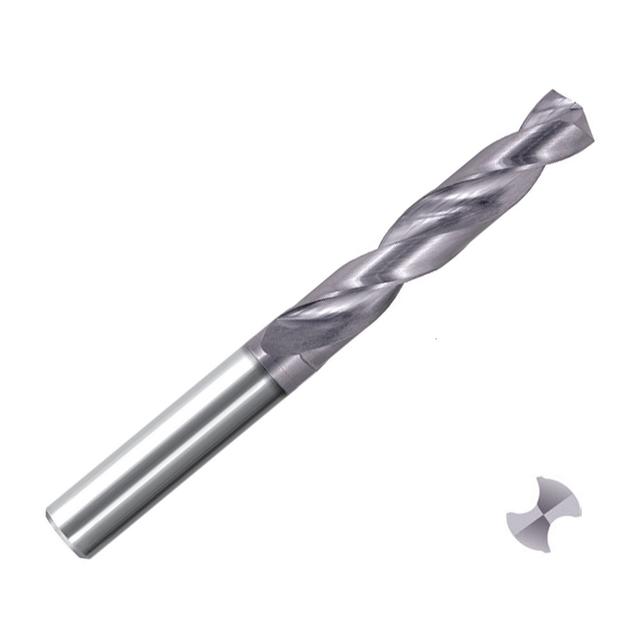
Features:
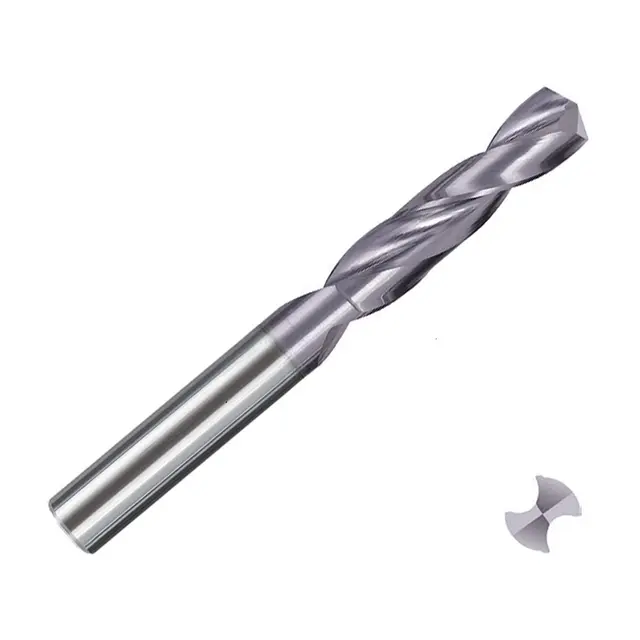
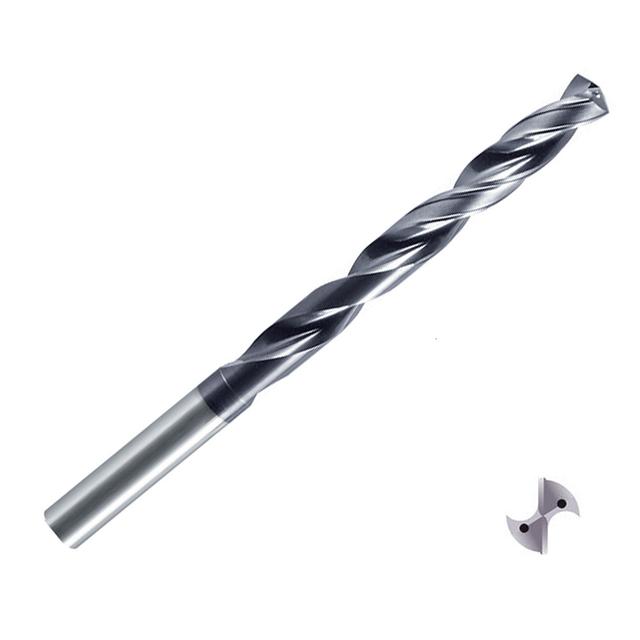
1588SL30C SL Series by ZCC-CT. Solid coated carbide for general purpose drilling.
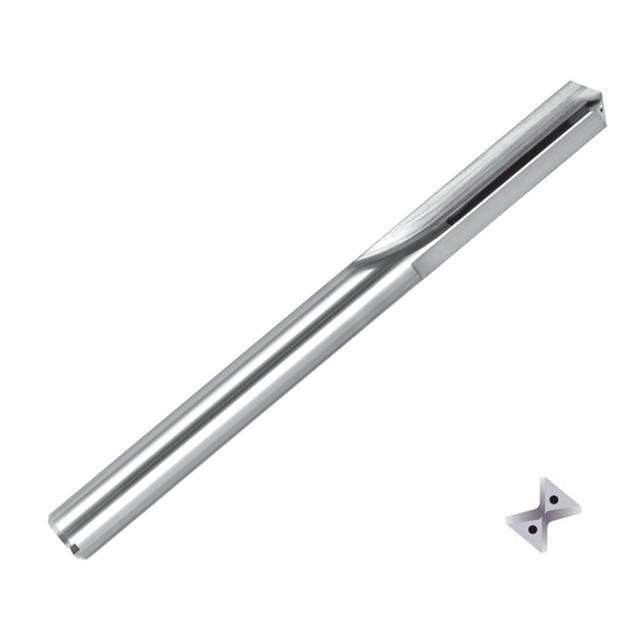
1579PC15C PC Series by ZCC-CT
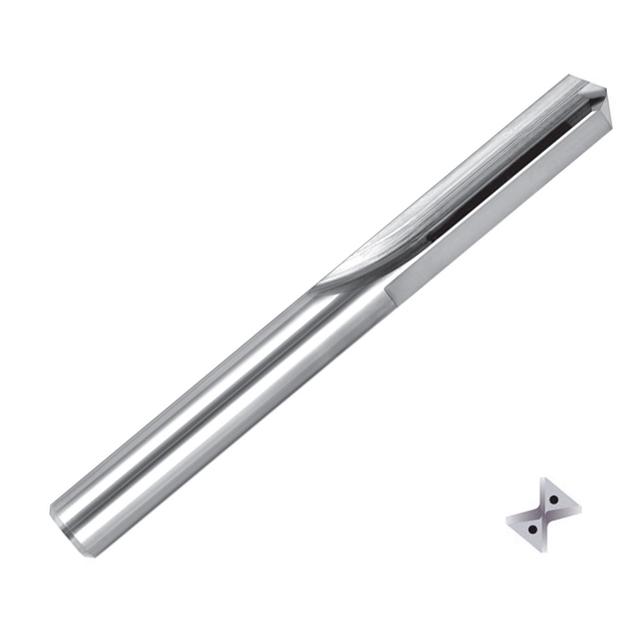
1576PC05C PC Series by ZCC-CT
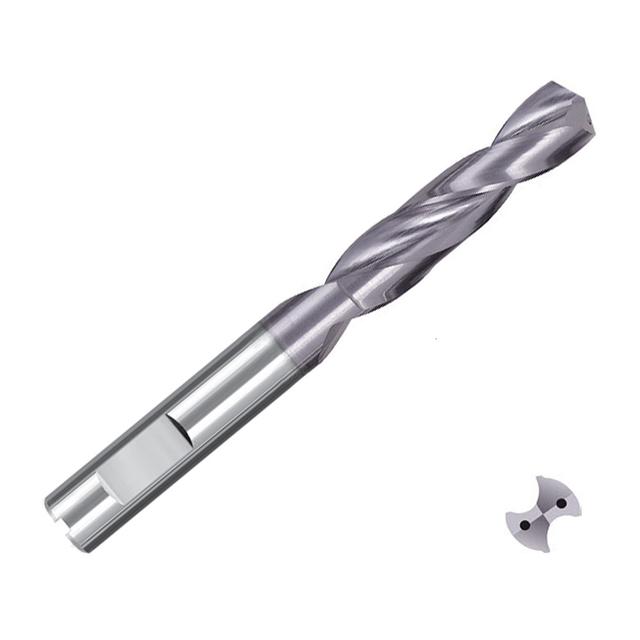
1634SU03C SU Series by ZCC-CT. Solid coated carbide for general purpose drilling.
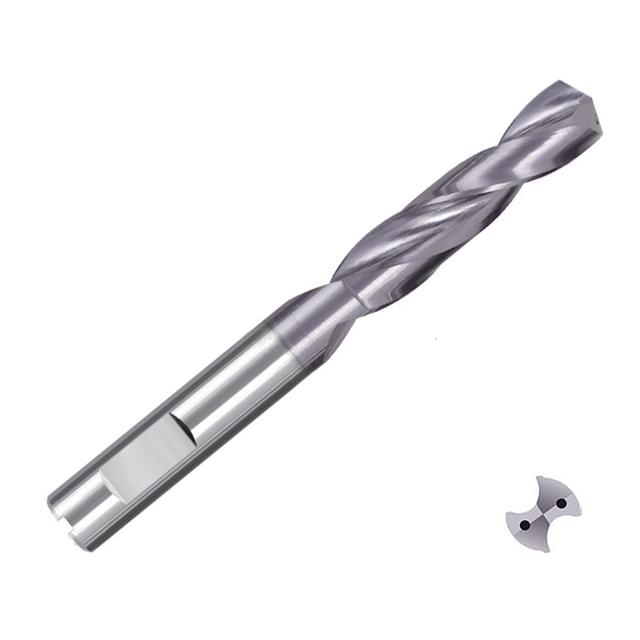
1636SU05C SU Series by ZCC-CT. Solid coated carbide for general purpose drilling.
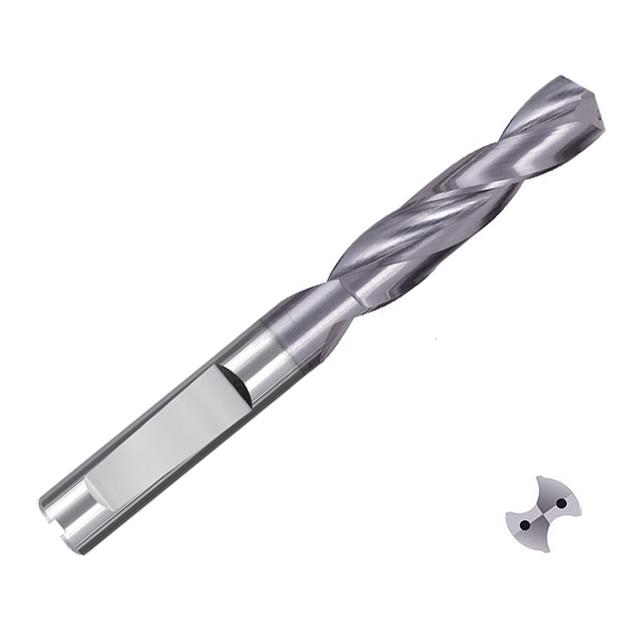
1734SU03C SU Series by ZCC-CT. Solid coated carbide for general purpose drilling.
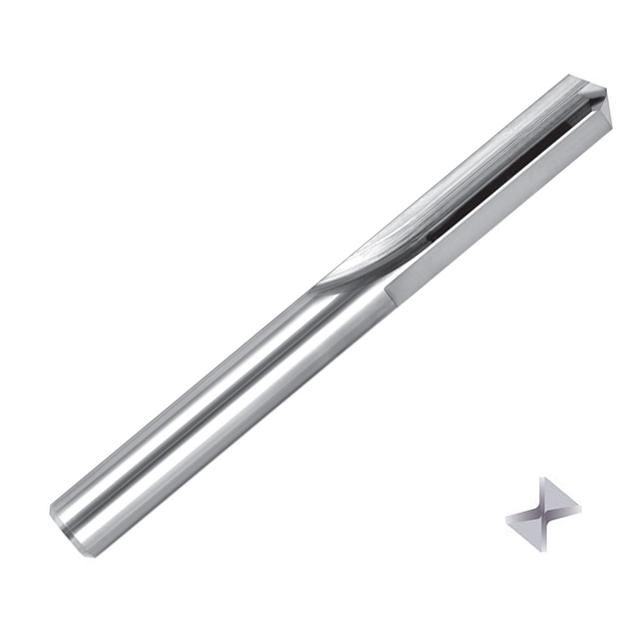
1576PC05 PC Series by ZCC-CT
A solid carbide twist drill is a one-piece drill made from tungsten carbide; a hard, rigid material that holds a cutting edge far longer and runs at far higher speed than high-speed steel. The flute helix and the point geometry are ground into the solid carbide blank, so the whole drill is a precision, rigid cutting tool. The rigidity is the key: carbide is stiffer than HSS which keeps the drill straight in the cut and true to the hole position.
Choose carbide for production drilling on a CNC, where the speed, the tool life and the dimensional consistency pay back the higher unit cost; for abrasive or hard materials where HSS dulls rapidly; and for the smaller diameters where a carbide drill gives a clean, accurate hole at a speed an HSS drill cannot match.
HSS still earns its place on a manual drill or for the odd one-off where the rigidity of the machine set-up cannot support carbide (carbide is unforgiving of a poor set-up, where HSS will flex and survive).
The SU is the general-machining solid carbide twist drill and it is the everyday drill for steels, mild steel, low-alloy and the common shop materials. It is the largest series in the category, the baseline carbide drill that does the bulk of the work on a typical shop-floor. The geometry and coating are optimised for the steels and general work, the flute helix for chip evacuation in the common materials and the point for steady entry.
The SU is the right choice for the everyday production drilling in steel; the holes that are not in a specialist material, not at extreme depth and not in hardened work.
It is the drill to start a carbide drilling kit with: a handful of SU drills in the common diameters, in 3xD and 5xD, covers a great deal of work.
For specific difficult materials the dedicated series will outperform it, but for the common steel drilling the SU is the workhorse.
The SH series is engineered to drill hardened steel; the hardened and tempered steels (the 45-65 HRC range) that a normal carbide drill will not cut cleanly. The substrate is a harder, more wear-resistant carbide grade, the cutting edge geometry is more robust to resist the edge chipping that hardened steel causes and the coating is selected to run at the higher temperatures and the higher cutting resistance of the hardened work.
A general carbide drill in hardened steel will chip the edge early and fail; the SH is built to hold the edge in that work. It is used for drilling holes in hardened moulds and dies, hardened shafts and the heat-treated components where a hole is needed after hardening rather than before.
Because hardened steel is aggressive on the edge the SH runs at lower speed and careful feed than a general drill and demands a rigid set-up, but in the right conditions it will drill a hole no normal carbide drill can.
The SC series is the 2-flute solid carbide drill for aluminium and non-ferrous materials.
Aluminium drills differently from steel because it is soft, gummy and tends to weld itself to a cutting edge under pressure, building up on the margin and tearing the hole wall. The SC is designed for that: a polished flute that lets the soft chip slide clear, a sharper cutting edge with a higher rake angle to cut freely and a clearance and coating that resist the build-up edge.
The SC is the right choice for drilling aluminium and non-ferrous (brass, copper, the softer alloys) where a drill designed for steel would build up and tear. The sharper edge cuts clean, the polished flute evacuates the soft chip and the result is a clean, accurate hole at high speed. Used in the wrong material (in steel) the sharp geometry is too aggressive, the edge chips and the tool fails; the SC is a specialist drill for the soft, gummy materials.
The PA series is the 3-flute aluminium and non-ferrous drill.
The third flute adds a cutting edg, which raises the feed per revolution for a given chip load (the drill removes material faster than a 2-flute at the same chip thickness). The cross-section of the drill is also more rigid with three flutes than two, which helps the stability of the hole at higher feed and the 3-flute configuration is common in the higher-production aluminium drilling where the cycle time matters.
The trade-off is that a 3-flute has less flute space than a 2-flute, so chip evacuation is tighter; for aluminium, where the chip is soft and the flute is polished, that is manageable and the productivity gain is worth it.
For the smaller diameters where chip space is at a premium a 2-flute SC may still be the better choice, but for the mid-range diameters in production aluminium drilling the PA is a step up in feed rate and cycle time.
The UD series is engineered for drilling stainless steel. Stainless is a difficult drilling material because it work-hardens under the cutting edge, it is tough and stringy-chipped and it holds heat in the cutting zone, all of which conspire to break a drill designed for mild steel.
The UD has a geometry that cuts below the work-hardened layer rather than rubbing it, a tough substrate that resists the edge fracture stainless causes and a coating for the higher cutting temperatures.
The key behaviour with stainless is that the drill must keep cutting (a drill that rubs or pecks slowly work-hardens the surface and the next entry chips the edge). The UD is designed to keep a steady feed and a positive chip load that stays under the work-hardened skin, and the through-coolant variants flush the long stringy chips out before they pack the flutes. For the 300-series stainless and the PH grades the UD is the right choice; a mild-steel drill will work for a hole or two and then fail.
The PC series is the cast-iron machining drill. Cast iron machines differently from steel as the chip breaks into small granular particles rather than forming a continuous curl, the material is abrasive, and the graphite in the structure can be aggressive on the cutting edge.
The PC is built for that: a substrate and coating that resist the abrasive wear cast iron causes, a point geometry that handles the discontinuous chip and a flute that clears the granular chip without packing.
Cast iron is often drilled dry or with air rather than with coolant, because the graphite in the chip mixes with coolant to form an abrasive paste; the PC is designed to run in that environment.
The entry can also be tricky because a cast surface can be hard & skinned and the PC point is robust enough to break through without chipping. For production drilling in grey, ductile and malleable cast irons the PC is the right choice; a general drill will wear rapidly in the abrasive material.
The length designation is the maximum drilling depth as a multiple of the drill diameter: a 3xD stub drills to three times its diameter, a 5xD jobber to five, the long series to 8, 10, 12, 15, 20 & 30 times.
The shorter the drill, the more rigid and the more accurate the hole position; the longer the drill, the deeper it reaches but the more it will wander and the harder the chip evacuation.
Pick the shortest drill that reaches the depth you need.
A 3xD stub is the most accurate and the fastest to drill, so use it for blind holes within its reach and for spotting a longer drill. A 5xD jobber covers the bulk of the through-holes. The long series (8xD through 30xD) are for the deep holes and beyond about 5xD they need pecking or through-coolant to clear the chips, because the flutes cannot evacuate the long column of chips in a single pass.
Reaching for a long drill when a short one would do trades accuracy and cycle time for unnecessary length.
The SL is the long-series general-purpose carbide drill, the deeper-reaching sibling of the SU. It is used for holes beyond the 5xD that a jobber drill comfortably reaches, at depths of 8, 10, 12, 15, 20 & 30 times the diameter. At those depths the drill is slender and the flutes are long, which makes it more prone to wandering and to chip-packing so the cutting parameters and the coolant strategy change.
A long drill is used when the hole depth genuinely requires it such as a deep cross-hole, a lubrication passage, a deep blind hole. It is generally run with a peck-drilling cycle (breaking the cut to clear chips) or with through-tool coolant (flushing the chips from the bottom of the hole), and at the deeper ratios (15xD and beyond) both.
It is not a substitute for a short drill since the SL is a specialist tool for depth, and it should be used only where the depth demands it.
The SP series is the solid carbide pilot drill which is a short, rigid drill used to spot or start a hole before a longer drill finishes it.
The pilot drill cuts a shallow, accurate starting hole on position; the longer drill then enters that spot and is guided by it, so the long drill does not wander on entry. The SP is short and rigid so the spot is straight and on position, and the lead-in chamfer is the right angle for the following drill.
A pilot is used wherever a long drill would wander on entry such as a deep hole, a slanted entry, or a hole that must be on position. A 10xD drill entered straight into a flat surface will walk off centre; the same drill entered into a spot from an SP pilot runs true. The SP also serves as a spotting drill for a chamfered entry, the spot doubling as the chamfer.
For production drilling a pilot-then-finish sequence gives a more accurate hole and a longer life on the long drill, at the cost of a tool change and a short first cycle.
Through-coolant on a drill delivers the cutting fluid through the tool, out of the point, directly to the cutting edge and the bottom of the hole. The coolant at the edge cools and lubricates the carbide (which runs hotter than HSS and is more sensitive to heat) and the flow up the flutes flushes the chips out of the hole before they pack. In a deep hole, where the flutes cannot otherwise reach the chips, the through-coolant flow is the only thing that gets them clear.
Through-coolant is worth it whenever the drill runs at depth greater than about 5xD, whenever the material is tough (stainless, the harder alloys) and whenever the speed is high enough that the edge would burn without direct fluid. It needs the machine to have through-spindle or through-tool coolant supply at the pressure the drill is designed for (a low-pressure supply will not flush the deep-hole chips).
Around two-thirds of the drills we carry are through-coolant variants and they are the right choice for production drilling on a machine that can supply the fluid.
The category carries four brands: Starke, ZCC-CT, Emuge-Franken & Kennametal. They are all precision solid carbide drills, but they sit at different points on the price/performance axis.
Starke is our in-house engineering range, the value-engineered carbide drill that covers the bulk of general drilling at a competitive price.
ZCC-CT is the volume-production carbide specialist, a very wide range at a strong price point.
Emuge-Franken is the German-engineered range, the premium for the harder work and tighter tolerance.
Kennametal is the global premium brand, the top of the range for the most demanding work.
The right choice is the one that matches the work. For general production drilling, Starke or ZCC-CT gives the best cost per hole; for the more demanding material, the tighter tolerance or the more specialist geometry, Emuge-Franken or Kennametal earns its premium.
There is little to be gained from running a premium drill in a straightforward mild-steel hole and equally little gain from running a value drill in hardened steel. Match the brand to the difficulty of the work and our engineers can guide you to the right one for a specific job.
Carbide drills run at higher speed and lower feed per revolution than HSS (the surface speed for carbide in mild steel is several times that of HSS) and the feed is a smaller chip load per flute but at a higher rate through the higher speed.
The exact figures come from the manufacturer’s data for the series and the material and from the rigidity of the set-up; carbide is intolerant of a rubbing cut, so the drill must be fed positively to keep the edge cutting and not burning.
For depths above about 5xD, use a peck-drilling cycle (G83) so the drill breaks the cut, retracts to clear the chips and re-enters; peck depth is set to keep the chips clearing.
For a through-coolant drill the pecking can be lighter or omitted, because the coolant flushes the chips. For the longer ratios (15×D and beyond) pecking is essential and the cycle is slower.
Our advice is to always start at the conservative end of the maker’s range and work up; a chatter or a rub will chip a carbide edge in seconds, where an HSS drill would survive it.
The classic carbide drill failures are chipping on entry, packing the flutes with chips, snapping from bending or a generally poor set-up.
Entry chipping comes from a wandering start so use a pilot drill, ensure the entry face is square, and feed positively on entry so the edge cuts and does not rub.
Flute packing comes from drilling too deep without clearing so peck at the depths the drill needs and use through-coolant where the drill is designed for it.
Wrapping and snapping come from a poor set-up (a loose workpiece, a misaligned spindle, or a holder with runout) that lets the drill bend in the cut.
Carbide is rigid and unforgiving, so the set-up must be rigid too: a clean, true holder with low runout, a workpiece clamped so it cannot lift and a feed that keeps the edge cutting.
Inspect the point regularly because a slightly worn edge can be reground by a specialist, but a chipped edge is usually done.
Store drills racked, by diameter, with the points protected; the carbide edge will chip on contact with another drill or a hard surface, which is the most common cause of premature failure in a well-kept workshop.