




Roller Burnishing Tools


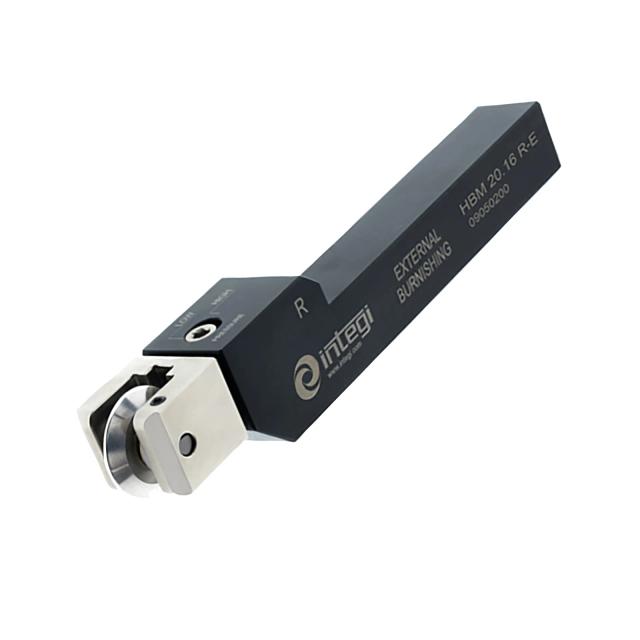
INTEGI External Roller Burnishing Tool
• Tool designed for burnishing on sliding head lathes, on various profiles
• The roll is supported between axial bearings
• Usable on pieces of different types of materials with hardness of 45 HRC
• Tool supplied with a single burnishing roll
£580.00 excl. VAT
£696.00 incl. VAT

INTEGI External Roller Burnishing Tool
• Tool designed for burnishing on sliding head lathes, on various profiles
• Possibility of burnishing up to one face
• Usable on pieces of different types of materials with hardness of 45 HRC
• Tool supplied with a single burnishing roll
£600.00 excl. VAT
£720.00 incl. VAT
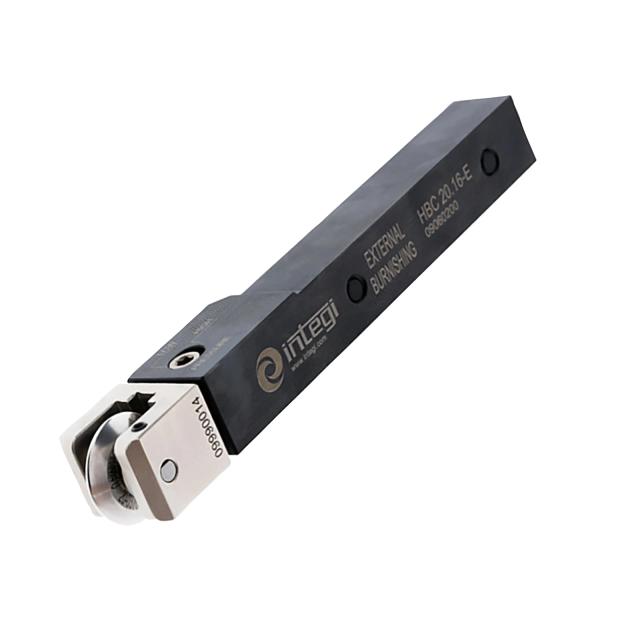
INTEGI External Roller Burnishing Tool
• Tool designed for burnishing on sliding head lathes, on various profiles
• The roll is supported between axial bearings
• Usable on pieces of different types of materials with hardness of 45 HRC
• Tool supplied with a single burnishing roll
£580.00 excl. VAT
£696.00 incl. VAT

INTEGI External Roller Burnishing Tool
• Tool designed for burnishing on sliding head lathes, on various profiles
• Possibility of burnishing up to one face
• Usable on pieces of different types of materials with hardness of 45 HRC
• Tool supplied with a single burnishing roll
£600.00 excl. VAT
£720.00 incl. VAT
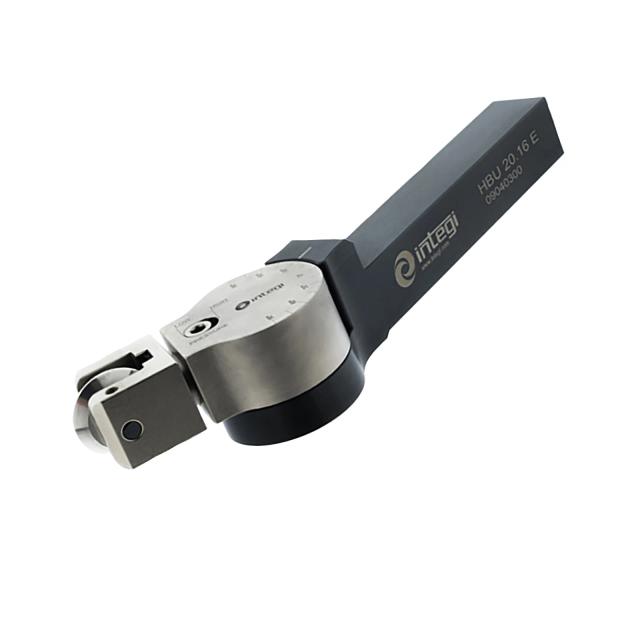
INTEGI External Roller Burnishing Tool WITH ROTATING HEAD
• Tool designed for burnishing on lathes, on various profiles
• Rotating head with graduated scale (Fig. 1&2)
• Head provided with an internal spring system that regulates the pressure making it homogeneous in all the parts (Fig.3)
• The roll is supported between axial bearings
• Usable on pieces of different types of materials with hardness of 45 HRC
• Carbide pin
• Provided with a U type burnishing roll made of HSS and tempered to 62 HRC, with a polished surface to Ra<0.4
• Tool supplied with a single burnishing roll
£790.00 excl. VAT
£948.00 incl. VAT
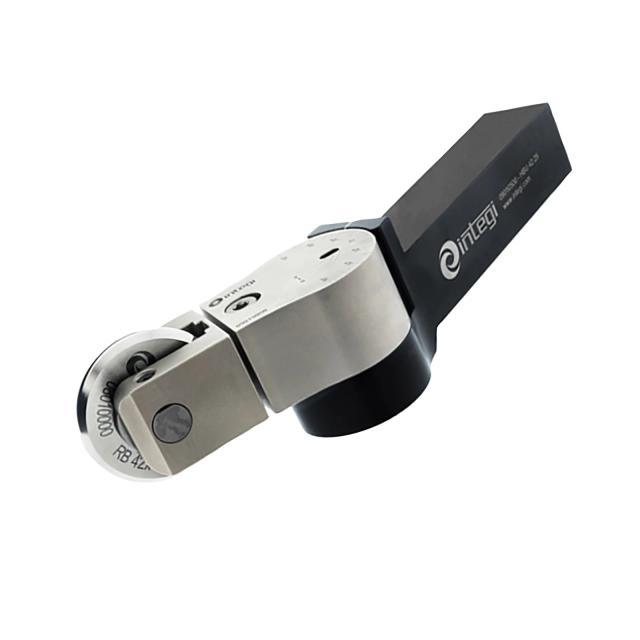
INTEGI External Roller Burnishing Tool WITH ROTATING HEAD
• Tool designed for burnishing on lathes, on various profiles
• Usable on pieces of different types of materials with hardness of 45 HRC
• Provided with a U type burnishing roll made of HSS and tempered to 62 HRC, with a polished surface to Ra<0.4
• Tool supplied with a single burnishing roll
£850.00 excl. VAT
£1020.00 incl. VAT
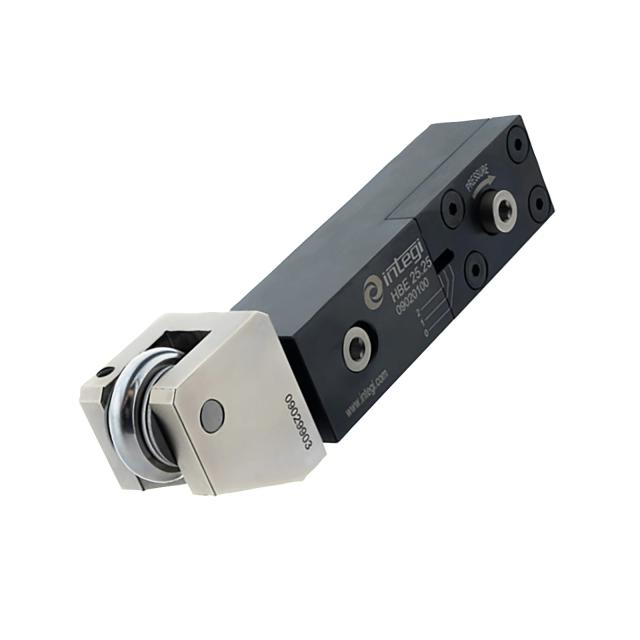
External Roller Burnishing Tool Holder For Form E Rollers (INTEGI)
- Tool designed for burnishing on lathes, on various profiles
- Usable on pieces of different types of materials with hardness of 45 HRC
- Provided with a E type burnishing roll made of HSS and tempered to 62 HRC, with a polished surface to Ra<0.4
- Tool supplied with a single burnishing roll
£640.00 excl. VAT
£768.00 incl. VAT
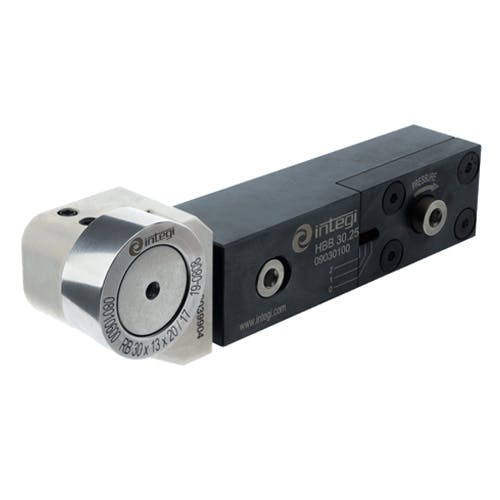
External Roller Burnishing Tool Holder (INTEGI)
- Tool designed for burnishing on lathes, on various profiles
- Usable on pieces of different types of materials with hardness of 45 HRC
- Provided with a B type burnishing roll made of HSS and tempered to 62 HRC, with a polished surface to Ra<0.4
- Tool supplied with a single burnishing roll
£985.00 excl. VAT
£1182.00 incl. VAT
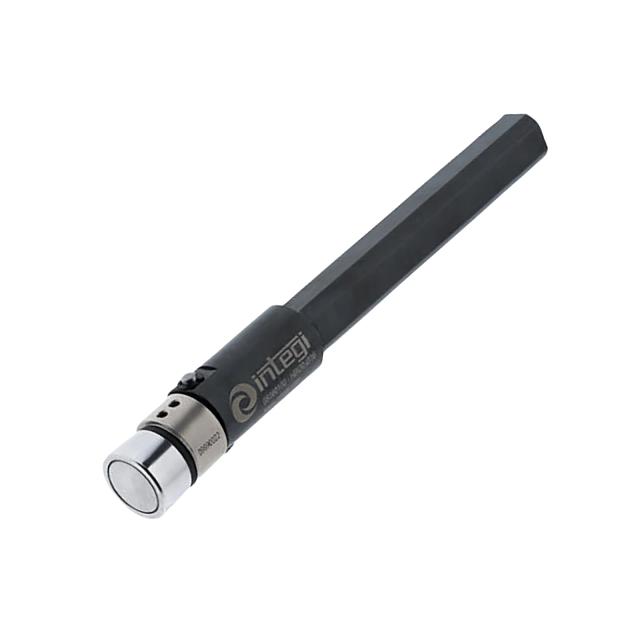
Internal & External Roller Burnishing Tool (INTEGI)
- Tool designed for burnishing internal and/or external surfaces
- For burnishing holes from Ø22 mm x 70 mm deep
- Usable on workpiece of different types of materials with hardness up to 45 HRC
- Tool supplied with a single burnishing roll
£985.00 excl. VAT
£1182.00 incl. VAT
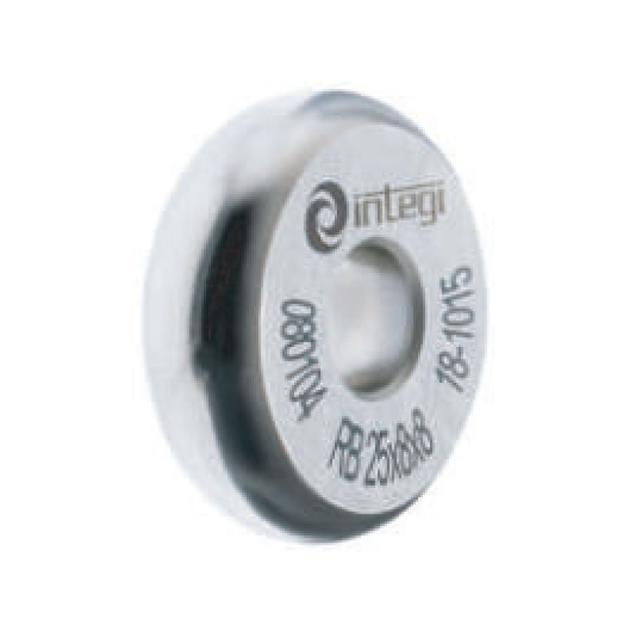
From E Burnishing Roller (INTEGI)
- Usable on pieces of different types of materials with hardness of 45 HRC
- Form E roll for use with form E tools
- Provided with a U type burnishing roll made of HSS and tempered to 62 HRC, with a polished surface to Ra<0.4
- Tool supplied with a single burnishing roll
£41.00 excl. VAT
£49.20 incl. VAT
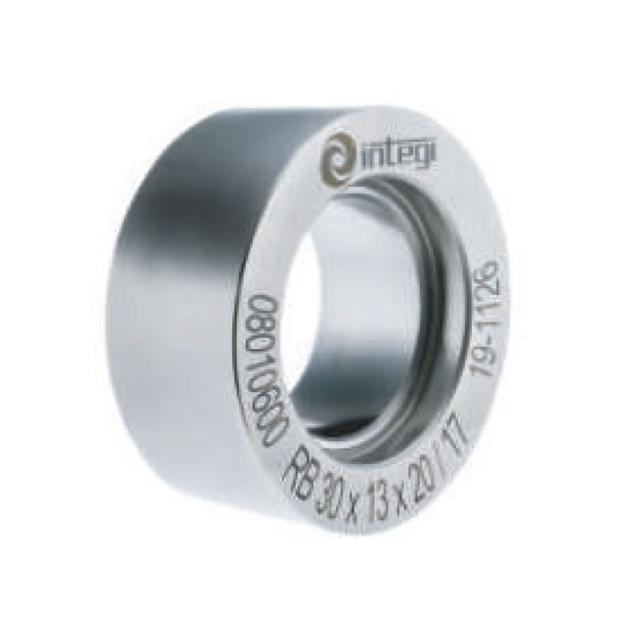
Form B Burnishing Roller (INTEGI)
- Form B for use with form B tools
- Usable on pieces of different types of materials with hardness of 45 HRC
- Provided with a B type burnishing roll made of HSS and tempered to 62 HRC, with a polished surface to Ra<0.4
- Tool supplied with a single burnishing roll
£80.00 excl. VAT
£96.00 incl. VAT
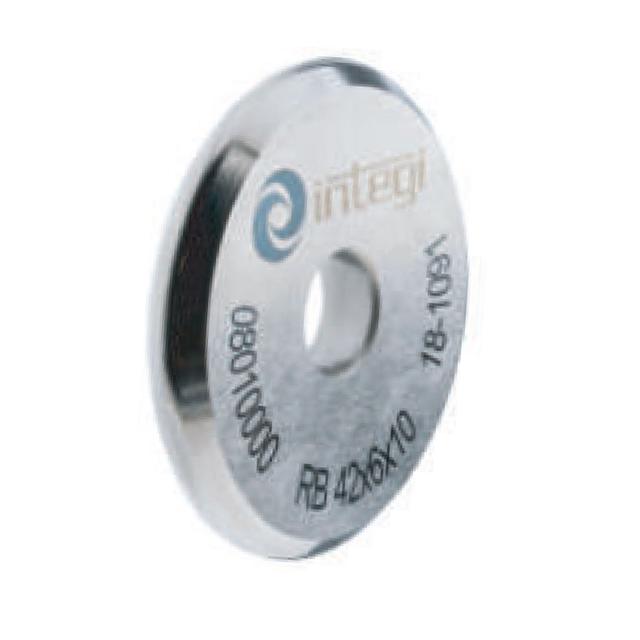
Form U Burnishing Roller (INTEGI)
- Usable on pieces of different types of materials with hardness of 45 HRC
- Form U for use with form U tools
- Provided with a U type burnishing roll made of HSS and tempered to 62 HRC, with a polished surface to Ra<0.4
£43.00 excl. VAT
£51.60 incl. VAT
Frequently Asked Questions
Roller burnishing is a cold-working surface finishing process that compresses and smooths the surface of a machined workpiece by pressing a hardened roller against it under controlled pressure. Unlike turning, milling or grinding (which remove material to achieve the final dimension and surface), burnishing plastically deforms the surface layer, compressing the microscopic peaks (asperities) left by the preceding machining operation into the valleys, producing a smoother, harder and more dimensionally accurate surface without removing any material.
The process works because all machined surfaces have a microscopic irregularity profile. A turned surface at a typical finishing feed rate has a surface roughness (Ra) of perhaps 1.6-3.2µm. When the burnishing roller (which is harder than the workpiece and has a mirror-polished surface (Ra <0.4µm on the INTEGI rolls)) is pressed against the workpiece under sufficient pressure, the localised contact stress exceeds the yield strength of the workpiece material. The surface material flows plastically, redistributing the asperity material to fill the valleys. The resulting surface can achieve Ra values of 0.2-0.4µm or better depending on the starting condition and the burnishing parameters.
Three effects are achieved simultaneously:
Improved surface finish (roughness reduction)
Improved dimensional accuracy (the burnishing pressure can size the surface to a controlled dimension)
Improved surface hardness (work hardening of the compressed surface layer increases wear resistance and fatigue life).
Burnishing is typically performed on a lathe, either manual or CNC as a secondary operation after turning. The tool replaces the turning tool in the toolpost and is fed along the workpiece in the same manner as a finishing turning pass. No cutting takes place because the roller rolls against the surface under spring pressure and the workpiece material yields beneath it.
Roller burnishing can achieve surface finishes (Ra) of 0.2-0.5µm on a properly prepared surface, comparable to grinding quality but achieved in a single pass on a lathe without the need for a separate grinding operation. The INTEGI rollers we stock are polished to Ra <0.4µm which sets the lower limit of the achievable surface finish on the workpiece.
The achievable finish depends critically on the condition of the surface before burnishing. Burnishing compresses the existing surface profile, it does not remove material. If the preceding turning operation left a rough surface with deep valleys and tall peaks, the burnishing roller will compress the peaks into the valleys but if the valleys are too deep, they will not be fully filled and the resulting surface will still show evidence of the original turning marks.
Recommended pre-burnish surface preparation:
Surface roughness (Ra): the pre-burnish surface should be turned to Ra 1.6-3.2µm. A standard finishing turning pass with a sharp insert at appropriate feed rate (0.05-0.1mm/rev) produces this. If the surface is rougher than Ra 3.2µm burnishing alone may not achieve the target finish and a finer turning pass may be needed first.
No built-up edge or welding: the turned surface must be clean. Built-up edge from a dull insert or excessive cutting speed leaves irregular deposits on the surface that the burnishing roller will press into the workpiece rather than smooth out.
No work hardening from the turning operation: if the turning insert was dull or the cutting speed was too low, the surface layer may already be work-hardened. This reduces the effectiveness of burnishing because the material is less willing to plastically deform under the roller. Use a sharp insert and appropriate cutting parameters for the pre-burnish pass.
Consistent diameter: the pre-burnish diameter should be consistent and close to the final burnished dimension. The burnishing process typically reduces the diameter by 0.01-0.03mm (the amount of material that is compressed from the peaks into the valleys). The pre-burnish diameter should be targeted at the upper tolerance limit of the finished dimension so that the burnishing operation brings it to the nominal dimension.
Cleanliness: the surface must be free of swarf, chips and debris before burnishing. A chip trapped between the roller and the workpiece will be pressed into the surface creating a defect.
Roller burnishing is not a cutting operation so the parameters differ fundamentally from turning. There is no depth of cut in the conventional sense in that the tool is fed against the workpiece until the spring pressure (or set pressure on the HBE/HBB) reaches the working value, then fed axially along the surface. The key parameters are speed, feed, pressure and lubrication.
Spindle speed (RPM): Burnishing is performed at significantly lower speeds than turning. The surface speed (Vc) is typically 50-150 m/min for steel, 100-300 m/min for aluminium and 50-100 m/min for stainless steel. For a 25mm diameter workpiece in steel this corresponds to approximately 600-1900 RPM. Too high a speed causes the roller to skid rather than roll, producing a poor finish and potential roller damage. Too low a speed is inefficient but does not damage the surface. Start at a moderate speed and increase only if the finish is good and the roller is rolling smoothly.
Feed rate: The axial feed rate determines the spacing between successive roller passes across the surface. A feed of 0.05-0.15mm/rev is typical. Too high a feed leaves visible spiral marks on the surface (the spacing between passes is wider than the roller can smooth in a single pass). Too low a feed is inefficient and can cause over-working of the surface, leading to excessive work hardening and potential surface fatigue.
Pressure: On spring-regulated tools (HBM, HBC, HBU, HBI) the pressure is set automatically by feeding the tool against the workpiece until the spring compresses to its working position: the operator feeds the tool in until resistance is felt and the spring is engaged, then feeds axially. On adjustable-pressure tools (HBE, HBB) the pressure is set manually using the adjustment mechanism. Start with a lower pressure setting and increase if the surface finish is not achieving the target Ra or if the material is at the harder end of the range.
Lubrication: Burnishing should always be performed with lubrication — the same cutting fluid used for turning is typically suitable. The lubricant prevents metal-to-metal adhesion between the roller and workpiece (which would cause pick-up and surface damage), flushes any debris and helps dissipate the heat generated by the plastic deformation. Apply coolant generously to the burnishing zone throughout the operation.
Number of passes: A single pass is normally sufficient to achieve the target surface finish on a properly prepared surface. Multiple passes without re-positioning the tool do not significantly improve the finish and can cause over-working. If the first pass does not achieve the target finish check the pre-burnish surface condition rather than making additional burnishing passes.