




Slot Drills
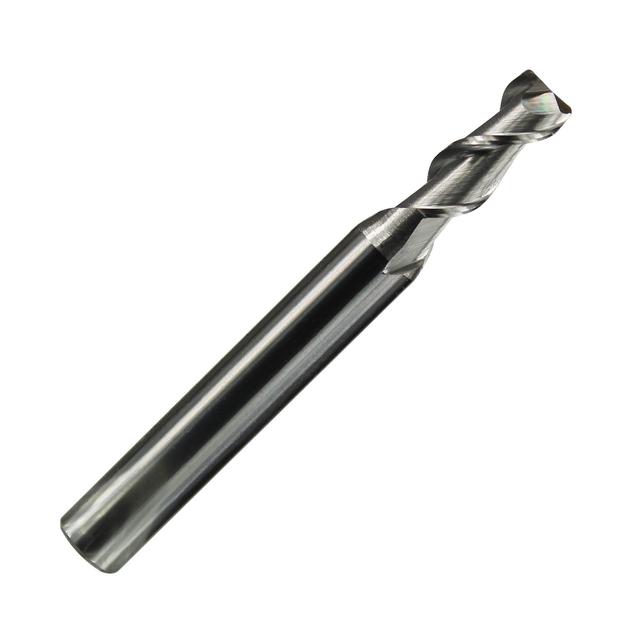
Ali-Mill 2 Flute 45 Degree Carbide Slot Drills for Aluminium
ALI-MILL Solid Carbide 2 Flute 45 Degree Slot Drill from STÄRKE is 1st choice for machining aluminium and non ferrous material.
Polished flutes for superior surface finish.
The special Hi-Helix geometry enables better chip removal.
Micrograin carbide
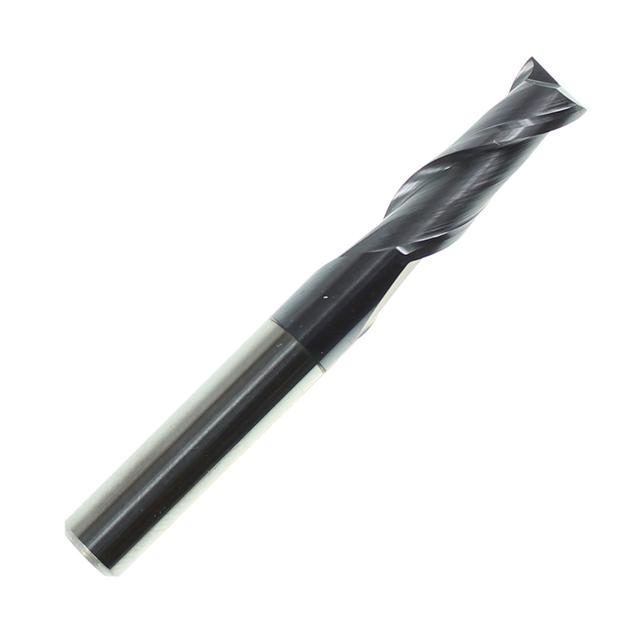
Eco-Mill 2 Flute Coated Solid Carbide Slot Drill
ECO-MILL Coated Carbide 2 Flute End Mill from STÄRKE is a TiALN coated general purpose cutter.
- Suitable for cutting steel, stainless steel, cast iron and non-ferrous material including cast aluminium and copper.
- Cut up to 45 HRC
- Can be used wet or dry to increase tool life.
- Micrograin carbide
- Centre cutting
- Available diameter sizes between 1mm to 20mm


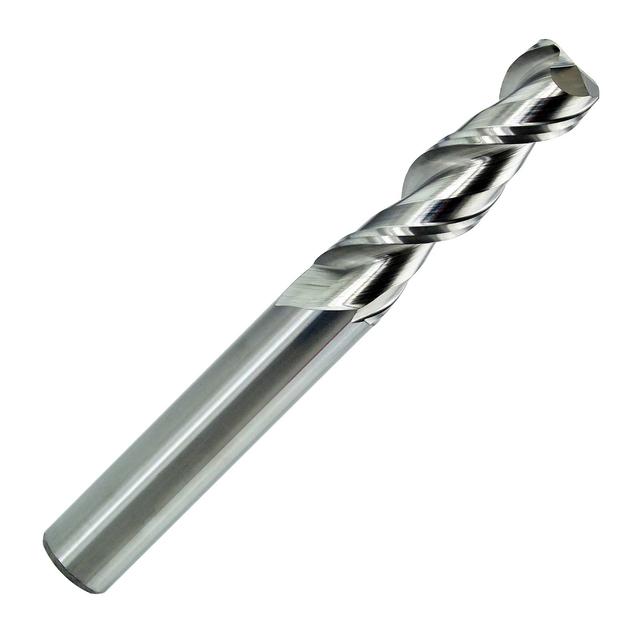
2 Flute Long Series carbide Slot Drill for Aluminium (STARKE Ali-Mill)
- Suitable for machining of aluminium and other non-ferrous materials.
- Mirror polished fl utes
- Excellent surface finishes, superior chip removal.
- Micrograin carbide
- Hi-helix geometry
- Sizes available: 3mm, 4mm, 6mm, 8mm, 10mm, 12mm, 16mm, 20mm
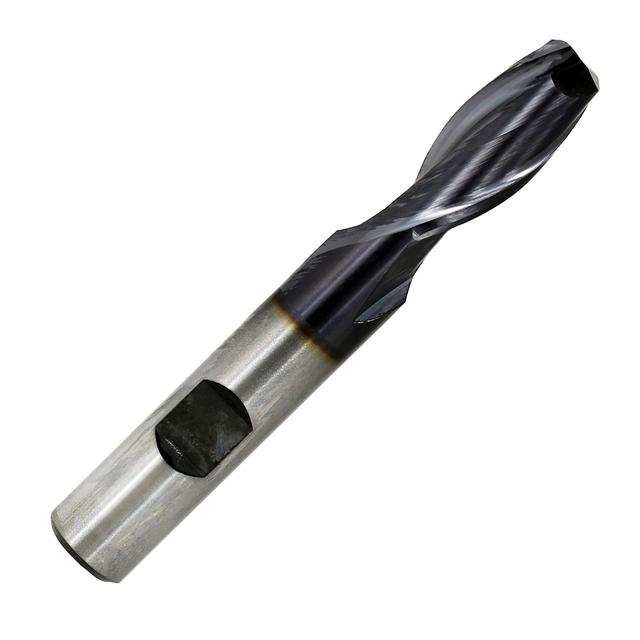
HSC Series 2 Flute Tialn Coated HSS Milling Cutters
- 2 flute HSSE slot drill
- HSS 8% Cobalt gives improved tool life and performance in comparison to conventional HSS
- 1st choice for economical machining
- TIALN coated for increased tool life
£10.01 excl. VAT
£12.01 incl. VAT
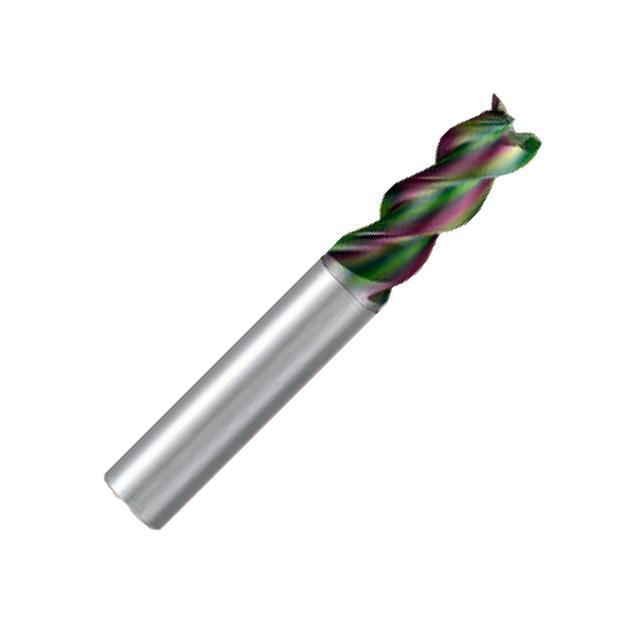
Alu-Cut 2544K Series 2 & 3 Flute Long Length Milling Cutters
The Alu-Cut series for high performance machining of aluminum and high silicon aluminum.
- Highest metal removal rates for stable milling processes
- Several corner radii per diameter
- Center cutting
- GLT coated for improved tool life, works in copper alloys in addition to aluminum
- Rough and finish with 1 tool
£41.90 excl. VAT
£50.28 incl. VAT
£36.63excl. VAT
£43.96incl. VAT
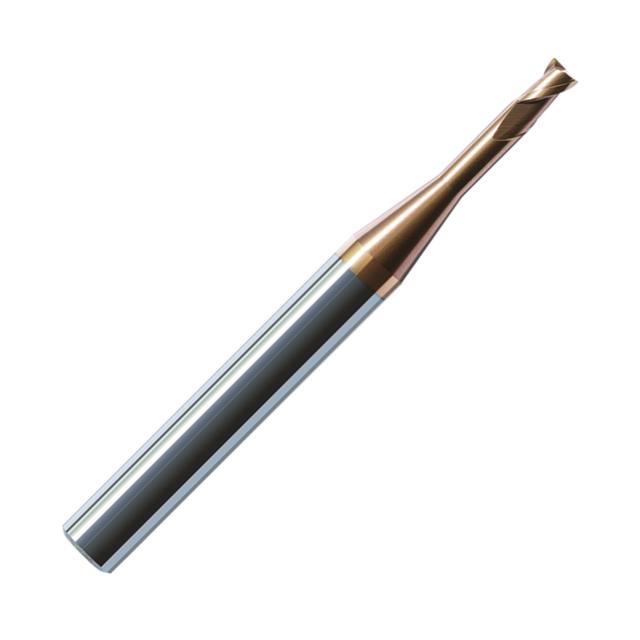
ZCC-CT HM-2EP 2 Flute Slot End Mill with Short Cutting Edge and Long Neck for Hardened Steel
ZCC-CT HM-2EP 2 Flute Slot End Mill with Short Cutting Edge and Long Neck
- Excellent tool design covers large chip pocket, good stability and machining efficiency
- Optimized cutting geometry (Rake angle) assures edge stabitlity and sharpness
- Ultra fine grain carbide
- KMG555 Nano-ALTiN coating base for hard machining at high temperatures
- For machining upto 68HRC
£19.74 excl. VAT
£23.69 incl. VAT
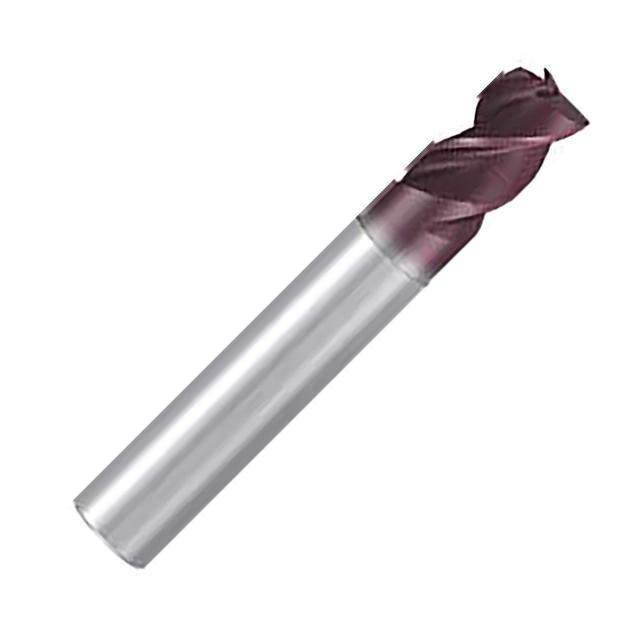
FRANKEN 3 Flute High Performance Long Length End Mill
FRANKEN Top-Cut 3 Flute High Performance Long Length End Mill
- Solid micrograin carbide
- TiALN coated
- Centre cutting
- Variable helix geometry
- Rough and finish with 1 tool
- Chamfered for corner protection
- Suitable for steel, stainless steel, cast iron, titanium and HRSA
£20.80 excl. VAT
£24.96 incl. VAT
£18.18excl. VAT
£21.82incl. VAT
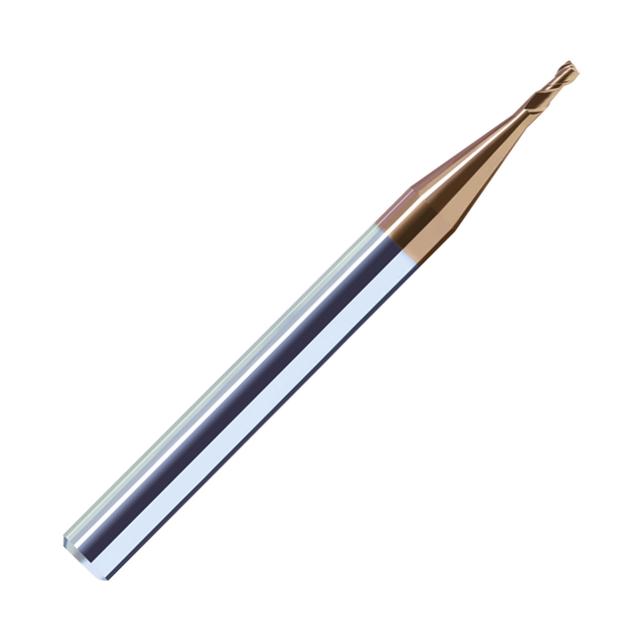
ZCC-CT HM-2ES Series 2 Flute Micro Diameter End Mill with Straight Shank for Hardened Steel Machining
ZCC-CT HM-2ES 2 Flute Micro Diameter End Mill with Straight Shank
- Excellent tool design covers large chip pocket, good stability and machining efficiency
- Optimized cutting geometry (Rake angle) assures edge stabitlity and sharpness
- Ultra fine grain carbide
- KMG555 Nano-ALTiN coating base for hard machining at high temperatures
- For machining upto 68HRC
- Starting at 0.3mm diameter
£12.31 excl. VAT
£14.77 incl. VAT
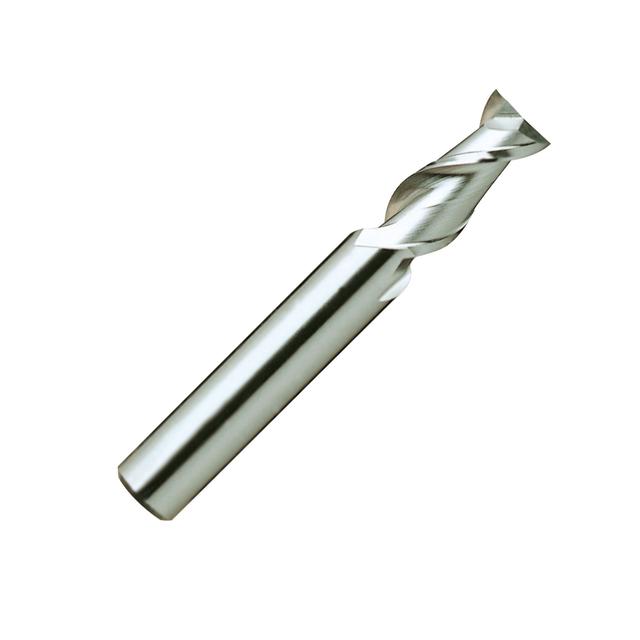
Alu-XP 2 Flute Carbide Slot Drill for Aluminium
Alu-XP 2 Flute Carbide Slot Drill for Aluminium
- Excellent surface finishes.
- Superior chip removal
- Micrograin solid carbide substrate
- Mirror polished Flutes
- Suitable for high speed machining of aluminium and other non-ferrous materials
- Corner protected.
£12.50 excl. VAT
£15.00 incl. VAT
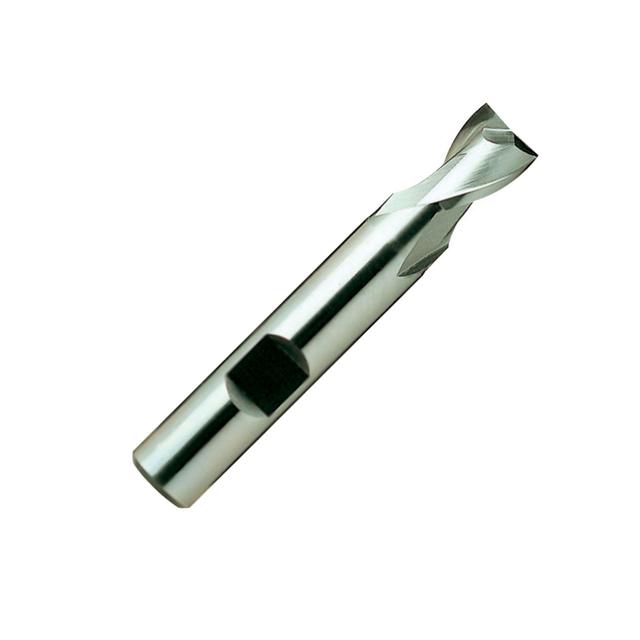
Clarkson 2 Flute HSS Co8 Weldon Shank Short Length Slot Drill
Clarkson 2 Flute HSS Co8 Weldon Shank Short Length Slot Drill
- HSS 8% cobalt
- Uncoated
- Weldon shank
- Suitable for a wide range of materials
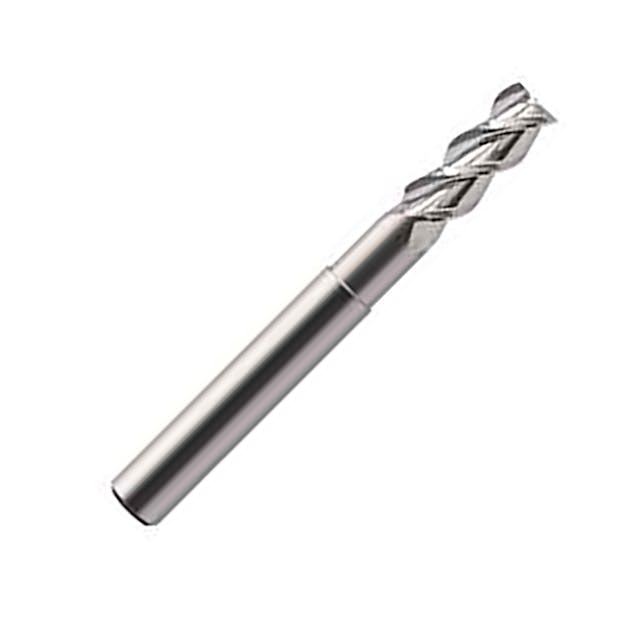
2 Flute Carbide Reduced Neck End Mill for Aluminium
- Excellent surface finishes.
- Superior chip removal
- Micrograin solid carbide substrate
- Mirror polished Flutes
- Suitable for high speed machining of aluminium and other non-ferrous materials
- Corner protected.
- Long series
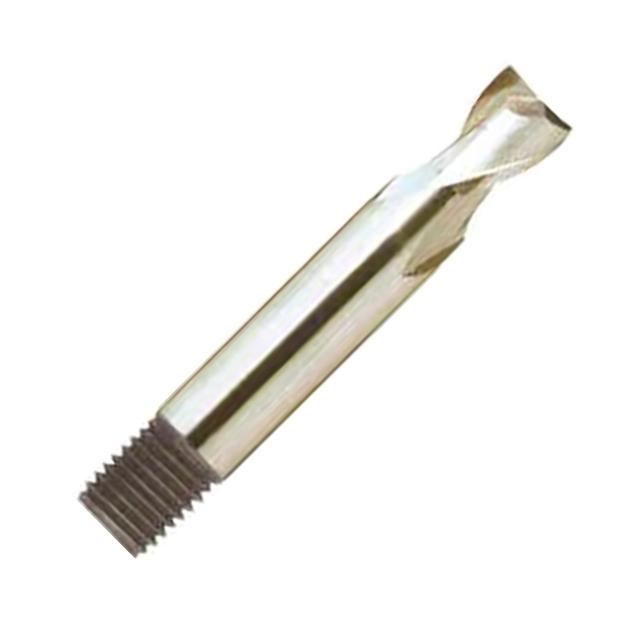
CLARKSON HSS Co8 2 Flute Threaded Shank Slot Drill
CLARKSON HSS Co8 2 Flute Threaded Shank Slot Drill
- HSS 8% cobalt
- Uncoated
- Threaded shank
- Suitable for a wide range of materials
£7.11 excl. VAT
£8.53 incl. VAT
£6.84excl. VAT
£8.21incl. VAT
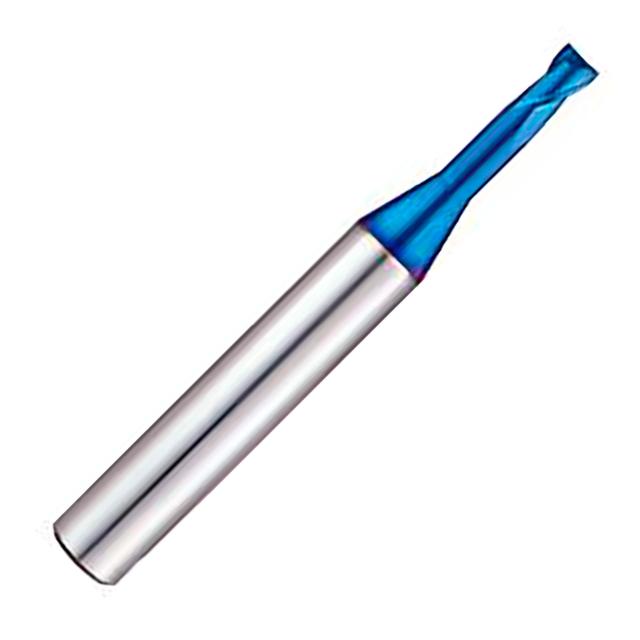
Pulsar Blue 2 Flute Rib Processing Slot Drill for Hardened Steel
Pulsar Blue 2 Flute Rib Processing Slot Drill for Hardened Steel
- Premium nanograin carbide
- Suitable for dry cutting
- Suitable for machining upto 70HRC
- High speed cutting
- 30 degree helix
- Excellent workpiece finish
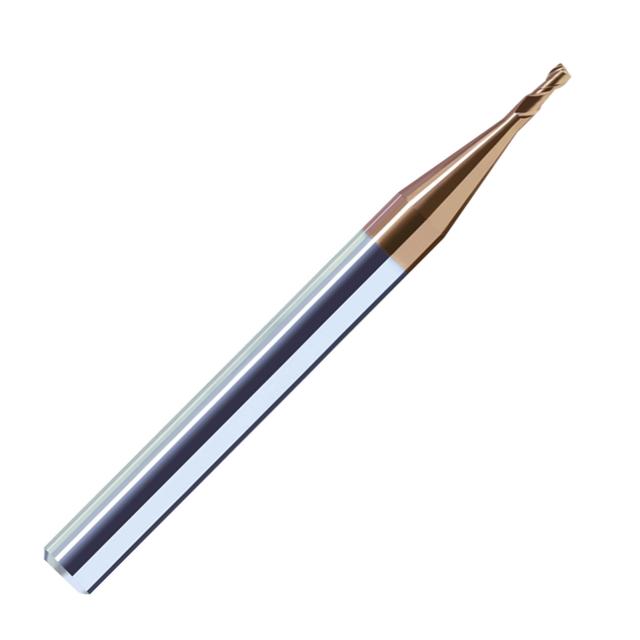
ZCC-CT HM-2E Series 2 Flute End Mill with Straight Shank for Hardened Steel Machining
ZCC-CT HM-2E 2 Flute End Mill with Straight Shank
- Excellent tool design covers large chip pocket, good stability and machining efficiency
- Optimized cutting geometry (Rake angle) assures edge stabitlity and sharpness
- Ultra fine grain carbide
- KMG555 Nano-ALTiN coating base for hard machining at high temperatures
- For machining upto 68HRC
£17.49 excl. VAT
£20.99 incl. VAT
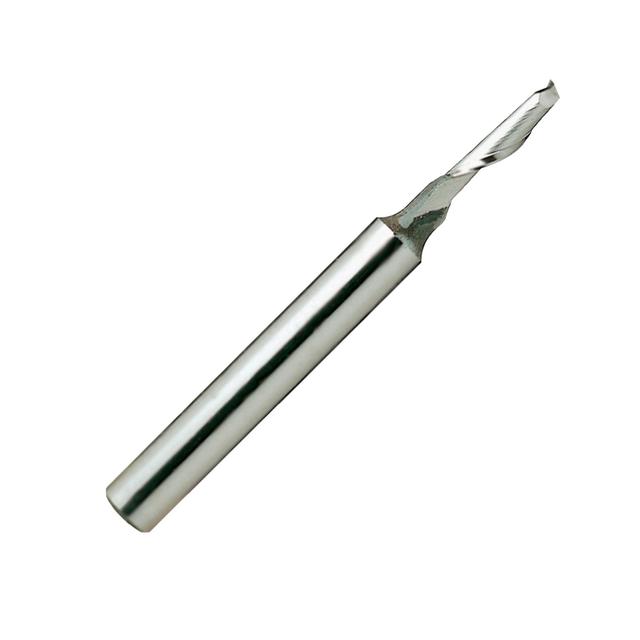
CLARKSON HSS 1 Flute End Mill for Aluminium
CLARKSON HSS 1 Flute End Mill for Aluminium
- HSS
- Uncoated
- Suitable for aluminium and non-ferrous material
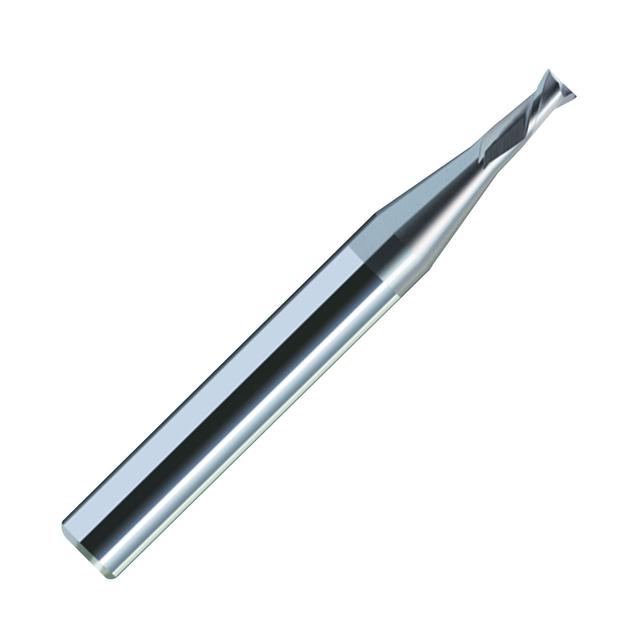
2 Flute Coated Aluminium Rib Processing Micro Slot Drill
2 Flute Coated Aluminium Rib Processing Micro Slot Drill
- For machining of Aluminiums, Copper, Brass and Bronze
- Excellent sharpness of cutting edge for very good surface quality
- CrN coating for improved tool life
- Sizes from 0.5mm-5mm
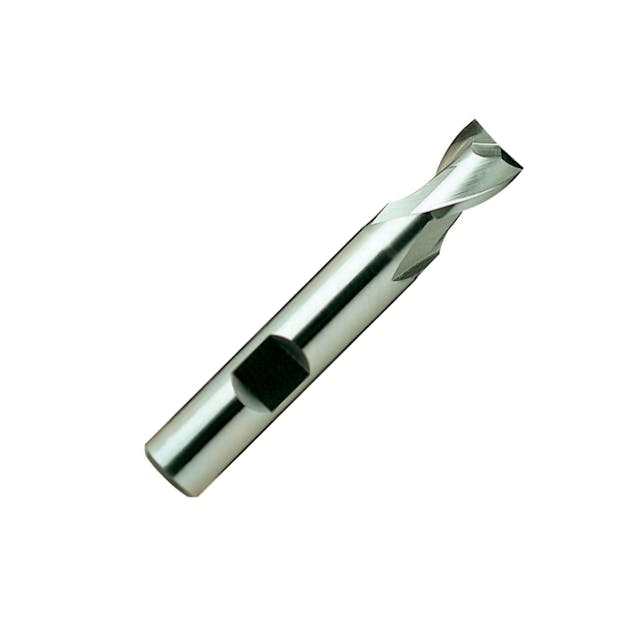
CLARKSON TiALN HSS Co8 2 Flute Short Length Slot Drill
CLARKSON TiALN HSS Co8 2 Flute Short Length Slot Drill
- HSS 8% coablt
- TiALN coated
- Weldon (flatted) shank
- Suitable for a wide range of materials
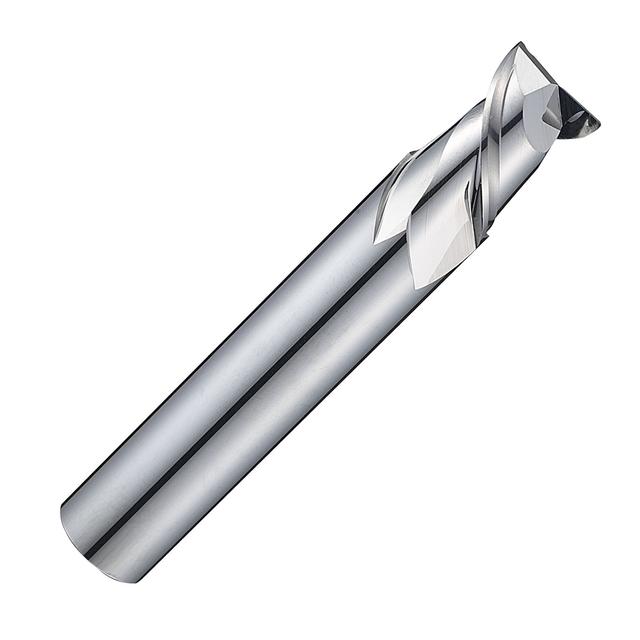
ALU-XP 2 Flute Short Length Slot Drill for Aluminium
ALU-XP 2 Flute Short Length Slot Drill for Aluminium
Suitable for machining of aluminium and other non-ferrous materials.
Excellent surface finishes, superior chip removal.
Corner protected.
Mirror polished flutes.
£12.84 excl. VAT
£15.41 incl. VAT
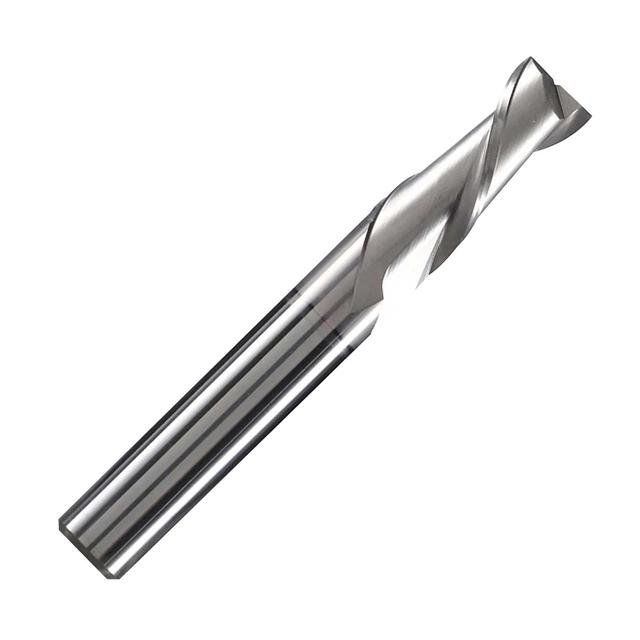
2 Flute CrN Coated Carbide Aluminium Slot Drill
2 Flute CrN Coated Carbide Aluminium Slot Drill
- For machining of Aluminiums, Copper, Brass and Bronze
- Excellent sharpness of cutting edge for very good surface quality
- CrN coating for improved tool life
- Sizes from 1mm-12mm
£13.30 excl. VAT
£15.96 incl. VAT
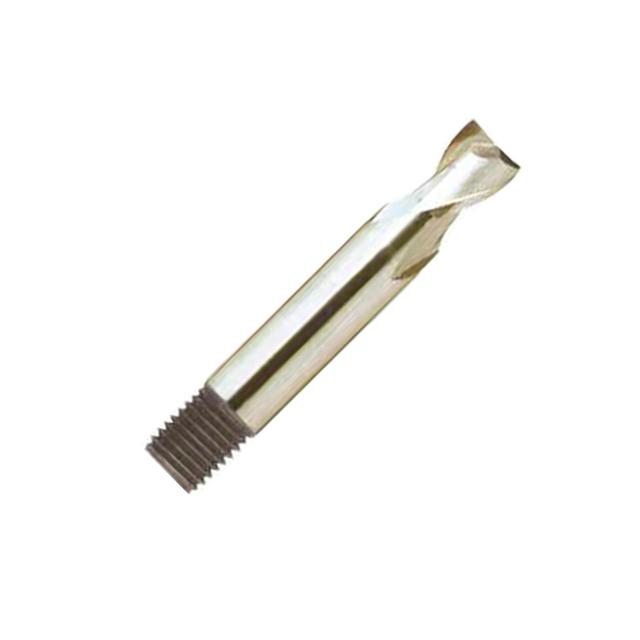
Clarkson 2 Flute HSS Threaded Shank Slot Drill
Clarkson 2 Flute HSS Threaded Shank Slot Drill
- HSS
- Threaded shank
- Uncoated
- Suitable for a wide range of materials
£4.45 excl. VAT
£5.34 incl. VAT
£3.78excl. VAT
£4.54incl. VAT
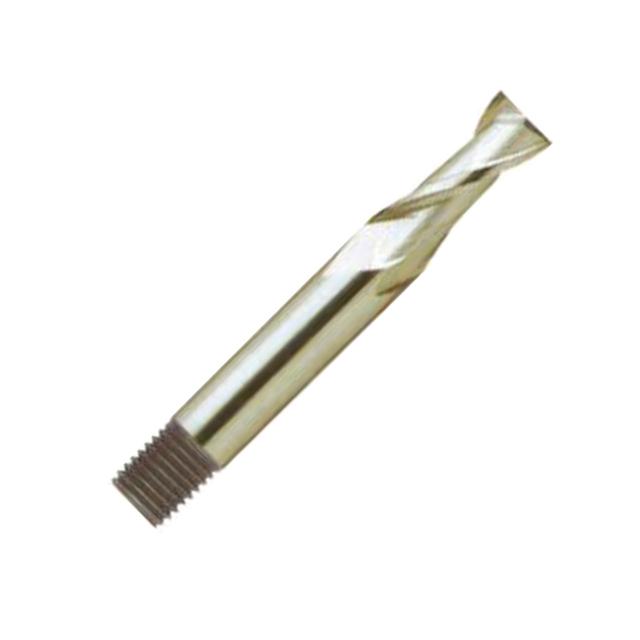
Clarkson 2 Flute HSS Threaded Shank Long Length Slot Drill
Clarkson 2 Flute HSS Threaded Shank Long Length Slot Drill
- HSS
- Uncoated
- Threaded shank
- Suitable for a wide range of materials
£9.83 excl. VAT
£11.80 incl. VAT
£8.36excl. VAT
£10.03incl. VAT
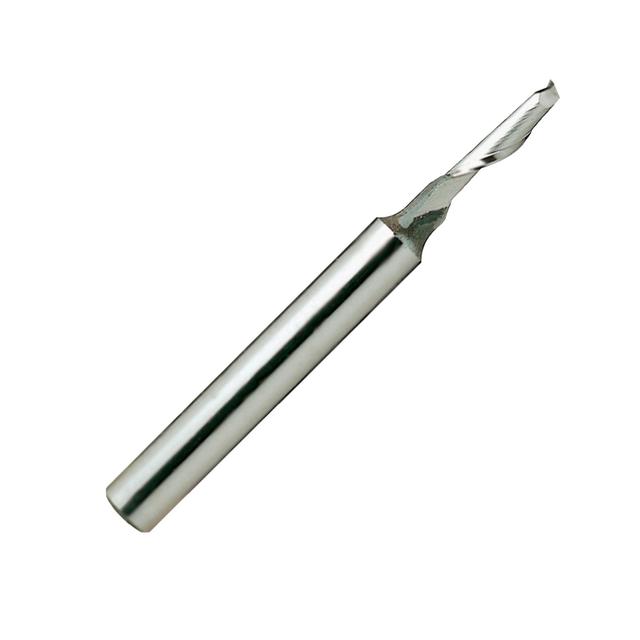
CLARKSON HSS TiALN Coated 1 Flute End Mill for Aluminium
CLARKSON HSS TiALN coated 1 Flute End Mill for Aluminium
- HSS
- Uncoated
- Suitable for aluminium and non-ferrous material
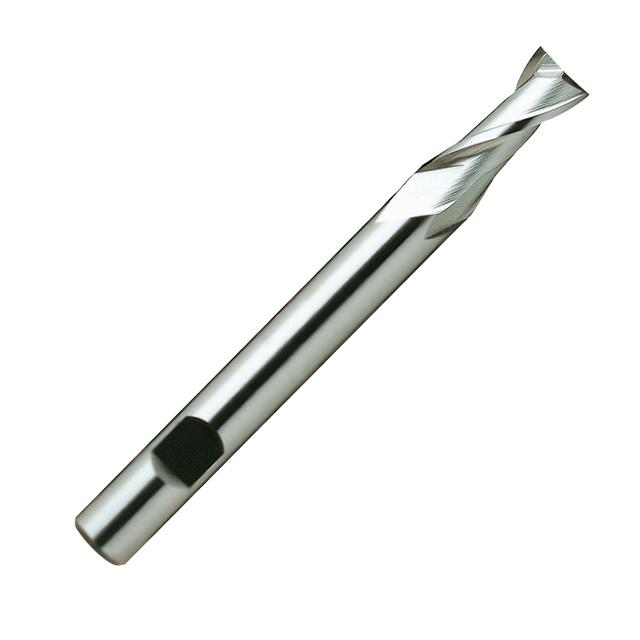
Clarkson 2 Flute HSS Co8 TiAlN Coated Extra-Long Length Slot Drill
Clarkson 2 Flute HSS Co8 TiALN Coated Extra-Long Length Slot Drill
- HSS 8% cobalt
- TiALN coated
- Weldon (flatted) shank
- Suitable for a wide range of materials
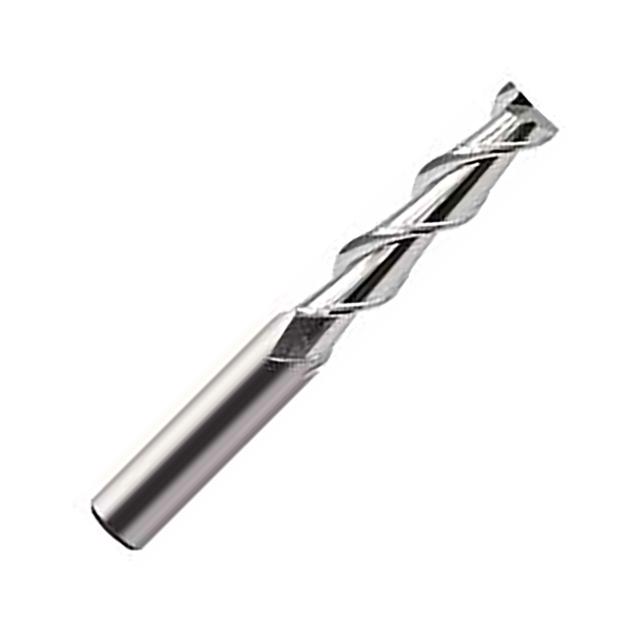
Alu-XP 154303 Series 2 Flute Carbide Long Length End Mill for Aluminium & Non-Ferrous Machining
Alu-XP tools with Òmirror polishedÓ flutes allow for smooth chip evacuation, giving better surface finish and wear resistance. Cutting edges are optimised to minimise vibration, and 3-flute tools have a tight diameter tolerance giving excellent process reliability.
Frequently Asked Questions
A slot drill is a milling cutter designed primarily for plunging axially into material (drilling plunge cuts) and cutting slots, keyways & pockets. The defining geometric feature of a slot drill is that it is centre-cutting, meaning that the cutting edges extend across the centre axis of the tool and that the tool can be fed directly into the workpiece in the axial direction (plunged) like a drill, as well as fed laterally to cut a slot or profile. This centre-cutting geometry is achieved by grinding one flute slightly lower than the other on a two-flute cutter so one cutting edge passes over centre and can cut the full diameter at the tool tip without leaving a dead spot in the middle.
An end mill is the broader category of milling cutters used for profile milling, facing, shoulder milling and contouring. Many end mills (particularly multi-flute types with 3, 4 or more flutes) are not centre-cutting (the cutting edges do not cross the centre axis, so there is a dead zone in the middle of the tool tip). Non-centre-cutting end mills cannot be plunged directly into solid material, they must be fed laterally and require a pre-drilled hole or a ramp/helical entry path. Slot drills by contrast can plunge directly.
The terms are often used interchangeably in the industry because a 2-flute slot drill is technically a type of end mill, and many 2-flute end mills are centre-cutting. On Milotools.co.uk the "Slot Drills" category encompasses all 2-flute and 3-flute milling cutters (including square-end, ball-nose and corner-radius profiles) regardless of whether the specific application is slotting or general profiling.
The STARKE E452 series, for example, is described as both a "slot drill" and an "end mill" — a TiAlN-coated carbide 2-flute centre-cutting cutter suitable for slotting, profiling and plunging.
Key distinction:
Slot drill = centre-cutting, can plunge axially
Non-centre-cutting end mill = cannot plunge, must enter laterally
All slot drills are end mills; not all end mills are slot drills.
The number of flutes (cutting edges) on a slot drill affects chip evacuation, feed rate, surface finish and the maximum practical depth of cut. Our range includes 1-flute, 2-flute & 3-flute options.
1-flute slot drills: A single-flute cutter provides the maximum possible chip gullet for a given diameter because the entire circumference except one cutting edge is open space. This is used for materials that produce very bulky chips or where chip evacuation is extremely difficult, such as gummy aluminium alloys, plastic, and some non-ferrous materials. The trade-off is lower feed rates (only one edge cutting per revolution) and potentially more vibration (single point intermittent cutting). One-flute cutters are a specialist choice for specific materials where chip packing is the primary failure mode.
2-flute slot drills: Two flutes provide the largest chip gullet (the space between cutting edges that carries the chip out of the cut). This is critical when cutting deep slots or plunging into solid material because the chip needs room to form & evacuate and a 2-flute tool provides maximum chip space. Two-flute cutters are the standard choice for slotting, keyway cutting, pocketing and plunging operations where chip evacuation is the primary concern. They can cut full-width slots in a single pass (the tool diameter equals the slot width). The STARKE E452 (2-flute, TiAlN coated, carbide) and the Clarkson 100102 (2-flute, HSS Co8, uncoated) are both 2-flute slot drills. Two-flute cutters are suitable for steel, stainless steel, cast iron and non-ferrous materials including aluminium and copper.
3-flute slot drills: Three flutes provide a balance between chip evacuation and surface finish. The additional cutting edge means more cutting edges are engaged per revolution, so for the same feed per tooth, the feed rate is 50% higher than a 2-flute tool which results in faster material removal. The extra edge also provides a better surface finish (more finishing passes per revolution) and greater rigidity (the core of a 3-flute tool is thicker than a 2-flute for the same diameter). However, the chip gullet is smaller so chip evacuation is not as good as a 2-flute tool in deep slots. Three-flute slot drills are often used for aluminium and non-ferrous materials where chip load is high and the material forms manageable chips.
Our selection guidance
For general-purpose slotting in steel and stainless: 2 flutes
For high-feed-rate aluminium machining where finish matters: 3 flutes
For problem materials that pack chips (gummy aluminium, plastics): 1 flute.
The vast majority of slot drilling applications use 2-flute slut drills.
Our range includes two primary cutter materials with each being suited to different applications and budgets:
HSS Co8 (High-Speed Steel with 8% Cobalt) / Clarkson range: HSS is a tool steel alloy containing tungsten, molybdenum, chromium and vanadium which is hardened to approximately 63-65 HRC. The "Co8" designation means 8% cobalt is added to the alloy (sometimes called HSS-E or HSS-Co). Cobalt increases the hot hardness of the steel (the temperature at which the cutting edge begins to soften). Standard HSS softens around 600°C whereas HSS Co8 retains hardness up to approximately 670-700°C. This means HSS Co8 can run at higher cutting speeds than standard HSS before heat causes the edge to lose hardness and fail. The Clarkson 100102 series is HSS 8% cobalt, described as "suitable for a wide range of materials." HSS Co8 slot drills are tough (resistant to chipping and breakage), relatively inexpensive and forgiving (they can tolerate less rigid setups and interrupted cuts better than carbide). They are the economical choice for general workshop use, maintenance and low-to-medium production volumes on mild steel, cast iron and non-ferrous materials.
Solid Carbide (Micrograin) / STARKE, ZCC-CT, Europa Tool & Emuge-Franken ranges: Solid carbide slot drills are made from tungsten carbide powder sintered with a cobalt binder. The "micrograin" designation means the carbide particles are very fine (typically 0.5 to 1.0 micron), producing a harder, more wear-resistant cutting edge than conventional carbide. Carbide is significantly harder than HSS (approximately 90 HRA / 1600-1800 HV vs 63–65 HRC for HSS Co8) and retains its hardness at temperatures up to 800–1000°C, allowing cutting speeds 3 to 5 times higher than HSS. The STARKE E452 is described as "micrograin carbide, centre cutting." The ZCC-CT HM-2BP uses "ultra fine grain carbide." Carbide cutters produce better surface finish, last longer in production and can machine harder materials (the STARKE E452 is rated to cut up to 45 HRC and the ZCC-CT HM-2BP up to 68 HRC). The trade-off is that carbide is brittle and it chips or shatters if subjected to shock, vibration or interrupted cuts and it requires a rigid setup.
Our selection guidance: For general-purpose, low-volume work on mild steel and non-ferrous materials where cost and toughness matter go for HSSE slot drills. For higher speeds, better finish, longer tool life and production volumes go for solid carbide slot drills (STARKE, ZCC-CT). For hardened steel above 45 HRC use a carbide slot drill option with appropriate coating (ZCC-CT HM series up to 68 HRC).
Coatings are thin layers of wear-resistant material applied to the cutter surface by PVD (Physical Vapour Deposition) or CVD (Chemical Vapour Deposition). They increase surface hardness, reduce friction and resist oxidation at high temperatures which allow for higher cutting speeds and longer tool life.
Our slot drill range includes both uncoated and coated options:
Uncoated (bright finish): The cutter is used bare with no surface coating. Uncoated cutters have a lower upfront cost and are suitable for lower-speed applications and non-ferrous materials where the cutting temperature is moderate. The Clarkson 100102 series is uncoated HSS Co8. Uncoated cutters are often preferred for aluminium and non-ferrous materials because aluminium has a strong tendency to weld (adhere) to coated surfaces because the aluminium builds up on the cutting edge (BUE — built-up edge) and ruins the surface finish. Uncoated or polished flutes allow aluminium chips to slide off cleanly.
TiAlN (Titanium Aluminium Nitride): The most common coating in our slot drills range. TiAlN is a PVD coating with a hardness of approximately 2800-3300 HV (significantly harder than the carbide substrate itself). TiAlN forms a protective layer of aluminium oxide at high cutting temperatures (above 700°C) which acts as a thermal barrier menaing heat stays in the chip rather than conducting into the tool. This allows higher cutting speeds and extends tool life. The STARKE E452 is "TiALN coated" and rated to cut up to 45 HRC. The Clarkson 100121 series is "TiALN coated HSS Co8". Applying TiAlN to HSS cobalt cutters increases their speed capability and life. TiAlN is a general-purpose coating suitable for steel, stainless steel, cast iron and high-temperature alloys. TiAlN-coated cutters can be used wet or dry.
Nano-AlTiN (Aluminium Titanium Nitride, nano-structure): An advanced variant of AlTiN with a nano-structured multilayer composition. The ZCC-CT HM-2BP series uses "KMG555 Nano-ALTiN coating base for hard machining at high temperatures" and is rated for machining up to 68 HRC. Nano-AlTiN provides higher oxidation resistance (up to 1000-1100°C) and is designed for hard machining (milling hardened tool steels and die steels where cutting temperatures are extreme). The nano-structured layers resist crack propagation and provide a smoother surface that reduces friction.
Our coating selection guidance:
Uncoated for aluminium and non-ferrous materials (prevents BUE)
TiAlN for general-purpose steel, stainless, and cast iron (up to 45 HRC)
Nano-AlTiN for hardened steel (up to 68 HRC).
Note that coated slot drills for aluminium require specific coatings (TiB2, diamond-like carbon or polished uncoated) and that standard TiAlN is not recommended for aluminium due to the welding/adhesion problem.
The range covers a broad spectrum of workpiece materials with different cutter grades and coatings rated for different material hardness levels:
General-purpose machining (steel, stainless steel, cast iron, non-ferrous) / up to 45 HRC: The STARKE E452 (Eco-Mill) series is described as: "Suitable for cutting steel, stainless steel, cast iron and non-ferrous material including cast aluminium and copper. Cut up to 45 HRC. Can be used wet or dry." This covers the majority of everyday milling applications including mild steel (typically 120-200 HB / up to ~15 HRC), medium carbon steel, stainless steel (austenitic 304/316, martensitic 410/420), grey and ductile cast iron, aluminium alloys, brass and copper. The TiAlN coating provides the heat resistance needed for these materials at production cutting speeds. The Clarkson HSS Co8 range (uncoated and TiAlN coated) is also suitable for a wide range of materials at lower cutting speeds (the HSS substrate handles the same material range but at reduced speeds compared to carbide).
Hardened steel machining / up to 68 HRC: The ZCC-CT HM-2BP series is designed for hard machining: "KMG555 Nano-ALTiN coating base for hard machining at high temperatures; For machining up to 68HRC." This covers hardened tool steels (D2, A2, H13 after heat treatment), die steels and hardened alloy steels used in mould and die making. Machining at 68 HRC is at the extreme end of the hardness range (these are fully hardened steels that would traditionally require grinding). The ultra-fine-grain carbide substrate provides the edge strength needed to cut hard material and the Nano-AlTiN coating provides the oxidation resistance needed at the high cutting temperatures generated when machining hardened steel. The HM-2BP is a ball-nose cutter specifically designed for rib processing (machining the deep narrow ribs and channels in mould cavities).
Aluminium and non-ferrous materials: The 3-flute slot drill range includes cutters with "special geometry for the machining of aluminium", these cutters have polished flutes and geometries optimised for the high chip loads and gummy nature of aluminium alloys. For aluminium the concern is built-up edge (BUE) & aluminium welding to the cutting edge. Uncoated or specifically coated (polished) cutters are used. The STARKE E452 lists "cast aluminium and copper" as suitable materials. For high-silicon aluminium alloys (12%+ Si), which are abrasive, carbide with appropriate geometry is essential.
Our selection guidance:
For mild steel, stainless, cast iron and non-ferrous up to 45 HRC: STARKE E452 (carbide, TiAlN) or Clarkson HSS Co8 (economy, lower speeds)
For hardened steel up to 68 HRC: ZCC-CT HM-2BP (carbide, Nano-AlTiN)
For aluminium: 3-flute slot drills with polished geometry or uncoated cutters to prevent BUE.
Always consult the cutting data sheet provided with each product for specific speed and feed recommendations per material.
The product description for the STARKE E452 states: "Can be used wet or dry to increase tool life." This means the cutter can operate with or without cutting fluid (coolant) but and the choice has practical implications:
Dry machining (no coolant): The cutter relies on air and the coating to manage heat. TiAlN and Nano-AlTiN coatings are specifically designed for dry machining because they form an aluminium oxide layer at high temperature that acts as a thermal barrier, keeping heat in the chip (which is ejected) rather than in the tool.
Dry machining is advantageous because:
It eliminates the thermal shock problem: when coolant hits a hot carbide cutter, the rapid cooling can cause thermal cracking in the carbide substrate, leading to premature failure
It simplifies the machining setup (no coolant delivery, filtration or disposal)
It is often faster because the cutter runs hotter and the coating is designed to perform at elevated temperatures.
Dry machining is the standard for hard machining (the ZCC-CT HM-2BP for hardened steel) and for TiAlN-coated carbide in general. The trade-off being that chip evacuation is less effective without coolant flushing and very deep slots may pack chips.
Wet machining (with coolant): Cutting fluid (flood coolant, through-tool coolant or mist) cools the cutter and workpiece, flushes chips from the cutting zone and provides lubrication (reducing built-up edge on the cutting edge).
Wet machining is advantageous for:
Deep slotting where chip evacuation is difficult: the coolant flushes chips out of the slot;
Materials prone to BUE (aluminium, some stainless steels): the lubricating film reduces adhesion;
HSS cutters (the Clarkson range): HSS cannot withstand the high temperatures that carbide handles, so coolant is more important for HSS to prevent softeningheat-sensitive workpieces where thermal expansion affects dimensional accuracy.
The trade-off here is that thermal shock risk on carbide (particularly with interrupted cuts) and the environmental/cost overhead of coolant management.
Our selection guidance:
For TiAlN-coated carbide on steel/stainless: dry or wet, dry preferred for maximum coating effectiveness
For HSS Co8 cutters: wet is recommended to prevent heat softening. For deep slotting use wet (or through-tool coolant) for chip flushing
For hardened steel (Nano-AlTiN): dry is standard (thermal shock risk is severe on hard machining)
For aluminium: wet or air blast, with uncoated or polished cutters to prevent BUE.
Always consult the product's cutting data sheet for the recommended conditions per material.
Each slot drill product on Milotools is presented as a "series" (a family of related cutters sharing the same design) with multiple "variants" (individual sizes within that series). Understanding the coding helps you find the exact cutter you need:
Series codes: The series code identifies the cutter family.
Examples:
Clarkson 100102 = 2-flute, HSS Co8, Weldon shank, short length, square end, uncoated
Clarkson 100121 = 2-flute, HSS Co8, Weldon shank, short length, square end, TiAlN coated
Clarkson 112102 = 2-flute, HSS Co8, Weldon shank, ball nose, uncoated
Clarkson 114121 = 2-flute, HSS Co8, Weldon shank, long length, ball nose, TiAlN coated
STARKE E452 = 2-flute, carbide, TiAlN coated, square end (Eco-Mill general purpose)
STARKE EB452 = 2-flute, carbide, TiAlN coated, ball nose (Eco-Mill ball nose)
ZCC-CT HM-2BP = 2-flute, carbide, Nano-AlTiN, ball nose, rib processing (hardened steel)
Variant (SKU) codes: The full SKU encodes the specific dimensions.
Examples:
Clarkson 1001020300 = series 100102, diameter 3mm, shank 6mm, cutting length 5mm, overall length 49mm
Clarkson 1001022000 = series 100102, diameter 20mm, shank 20mm, cutting length 22mm, overall length 88mm
STARKE E452025 = series E452, diameter 2.5mm, dimensions 2.5×7×4 (diameter × overall × cutting length)
ZCC-CT HM2BPR10M08KMG555 = series HM-2BP, radius R1.0mm (diameter 2mm), length-below-shank M08 (8mm), coating KMG555 (Nano-AlTiN)
Variant table dimensions: Each product page includes a variant table with columns:
Diameter / D1: the cutting diameter (the width of the slot it cuts)
Shank Diameter / D2: the shank diameter (must match your tool holder/collet)
Cutting Length / L1: the length of the fluted cutting section (maximum depth of cut before the shank rubs)
Overall Length / L2: the total tool length from tip to shank end
Radius / R (ball nose only): the ball radius (half the cutting diameter)
Length Below Shank / L3 (rib processing): the reach from the shank to the tool tip
Neck Dia (reduced neck): the diameter of the neck section between shank and flutes
Cutting data sheets: Each product includes a downloadable cutting data PDF (e.g. "e452-cutting-data.pdf", "100102-cutting-data.pdf", "hm-2bp-cutting-data.pdf") providing recommended spindle speed (RPM), feed rate (mm/min), depth of cut and width of cut for each workpiece material.
You should always consult this data before machining because the correct parameters vary significantly by material, diameter and coating.