




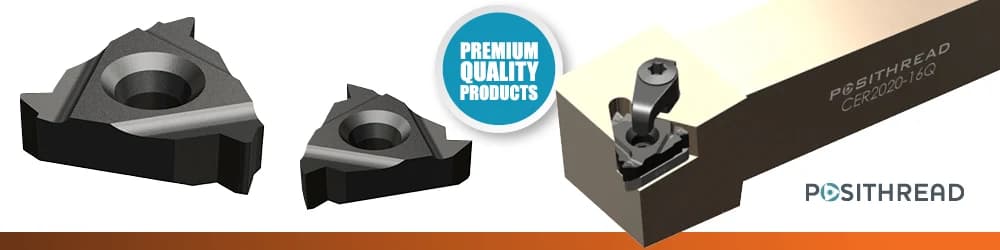
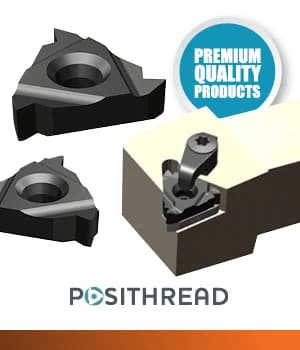
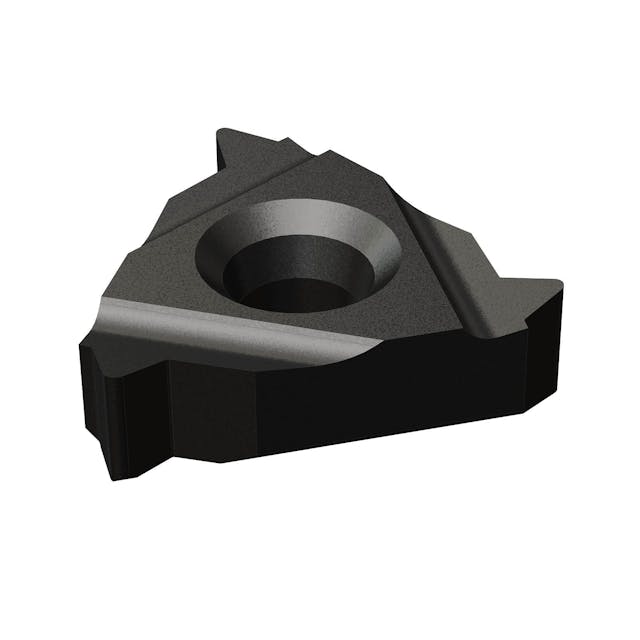
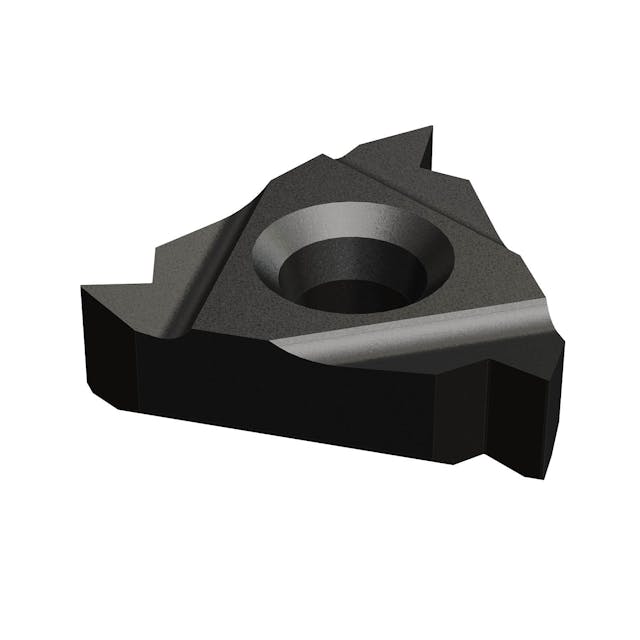
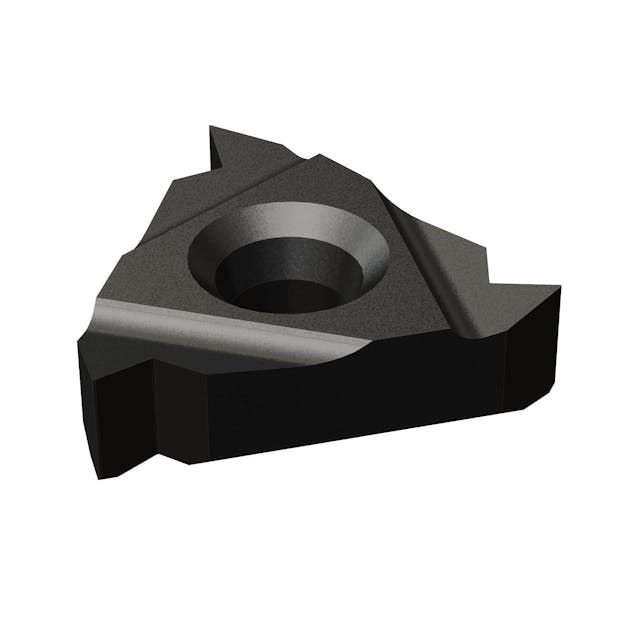
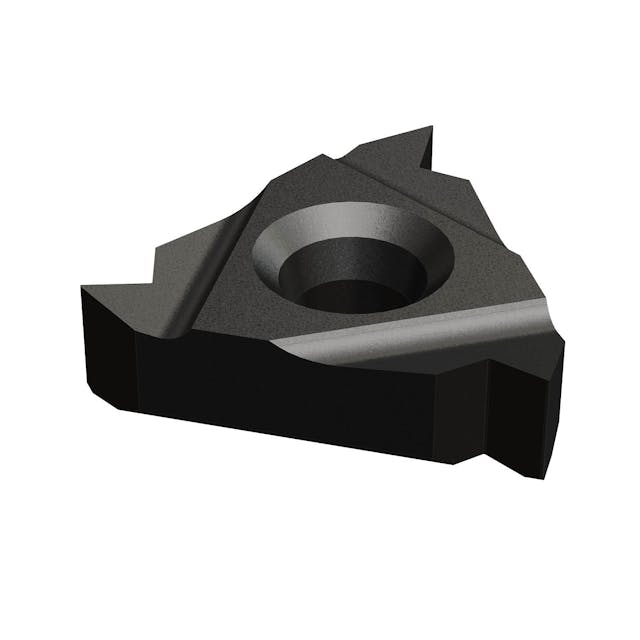
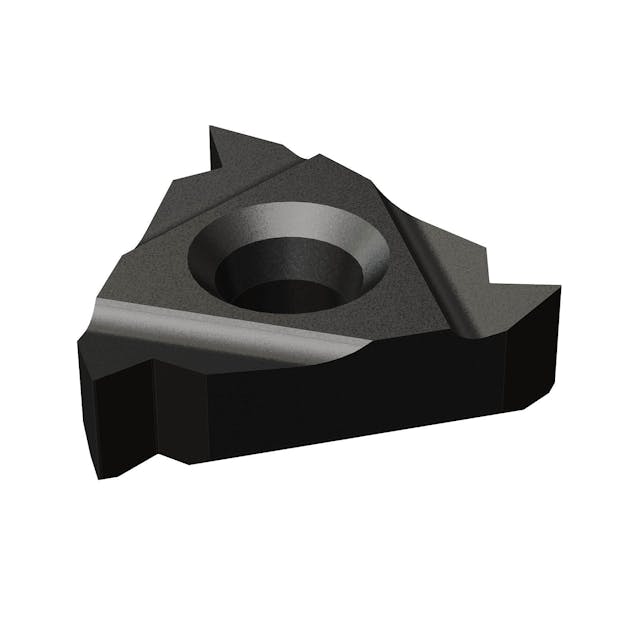
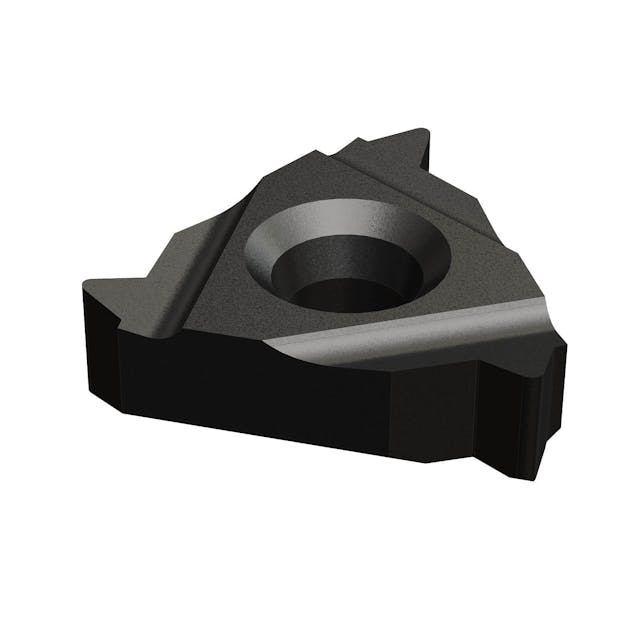
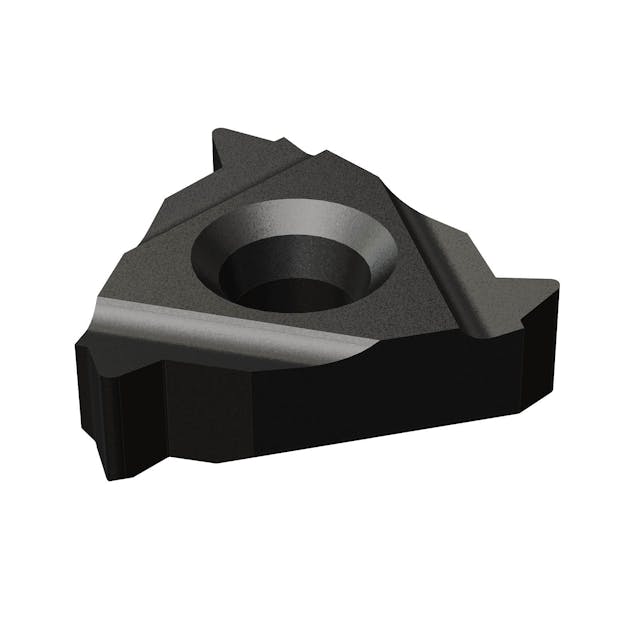
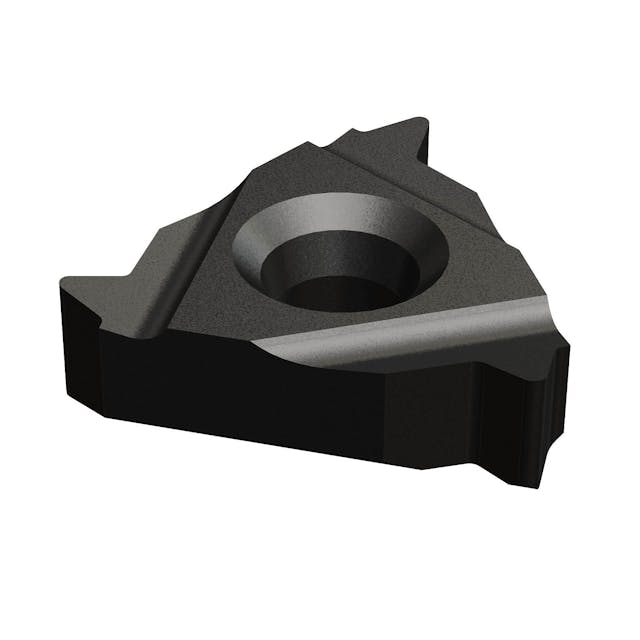
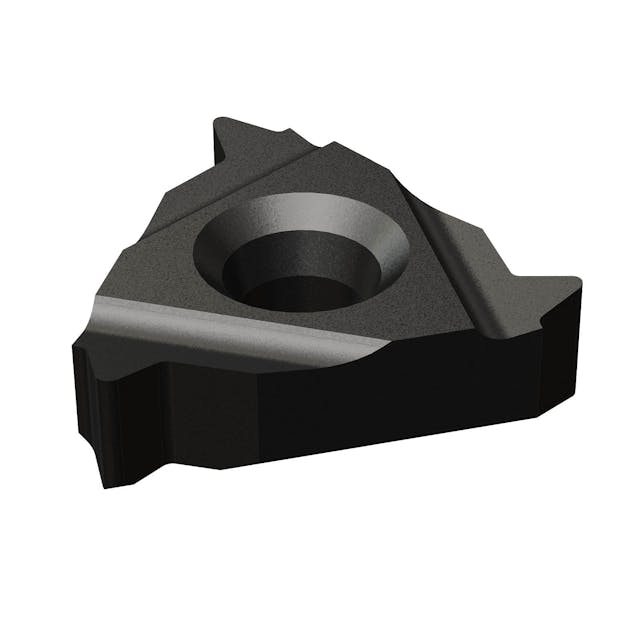

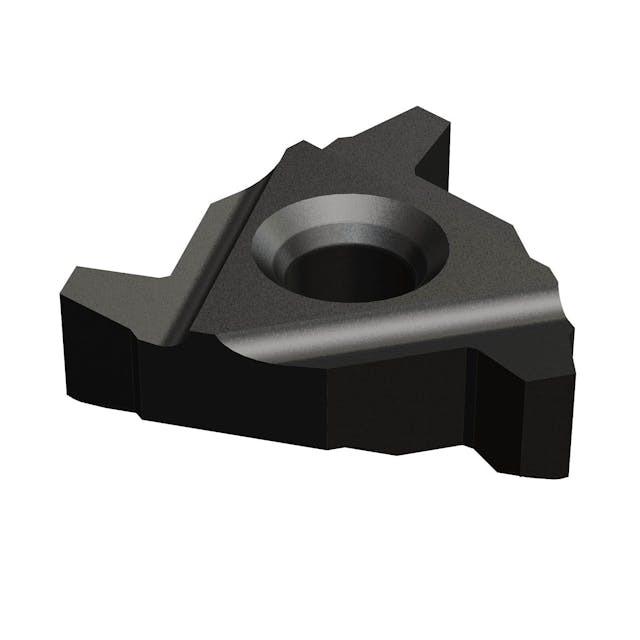
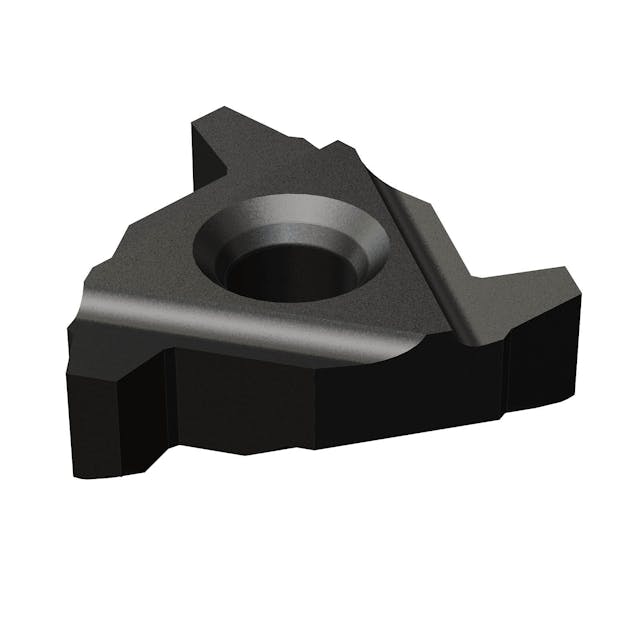
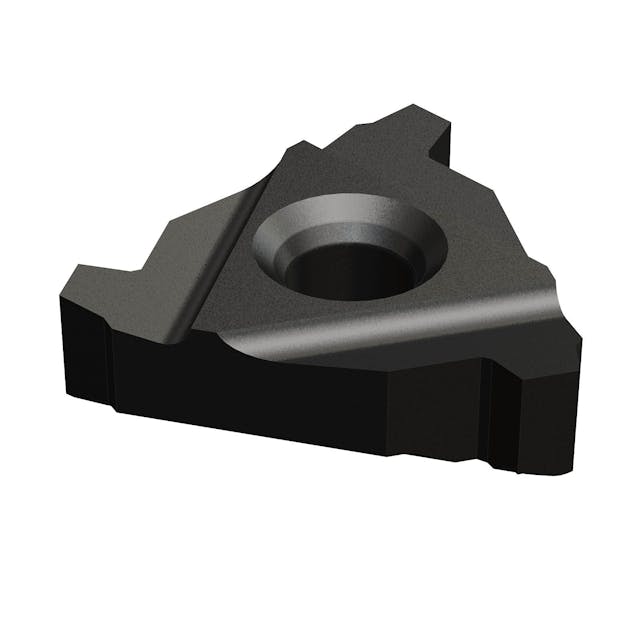
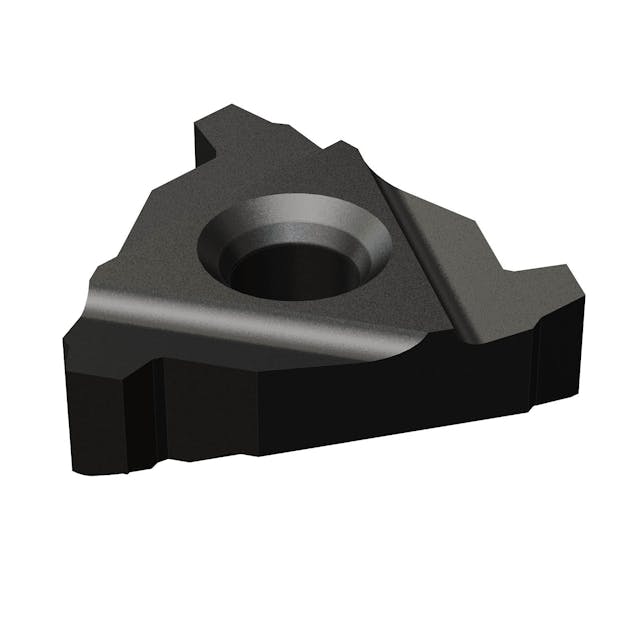
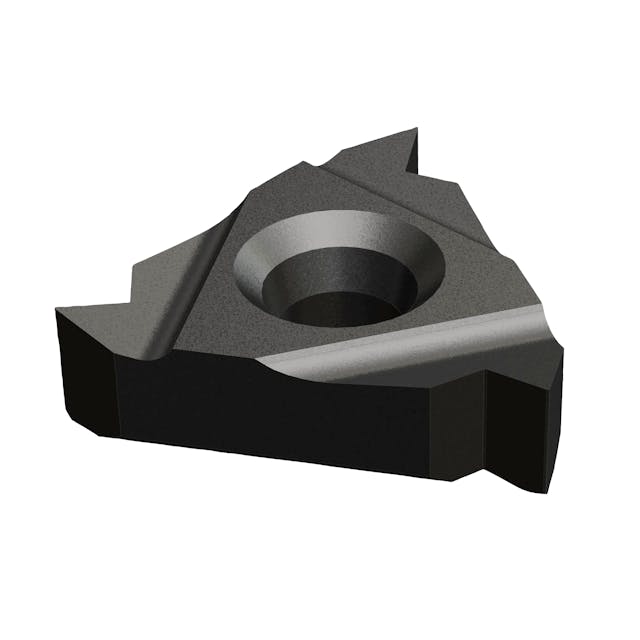
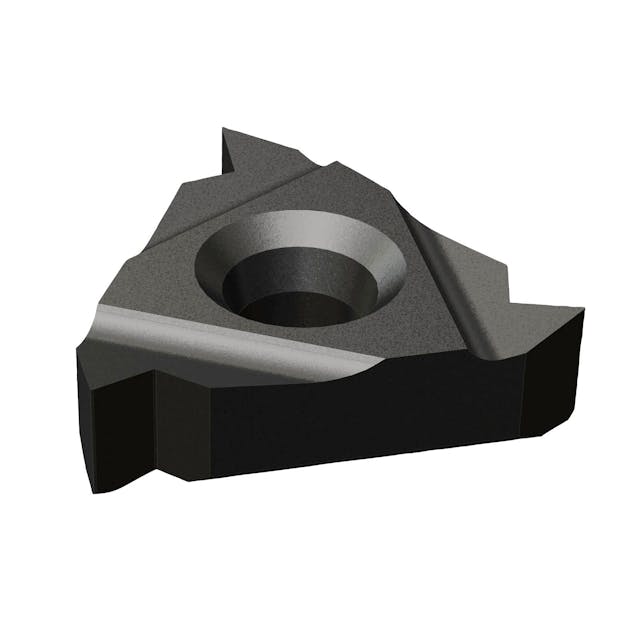
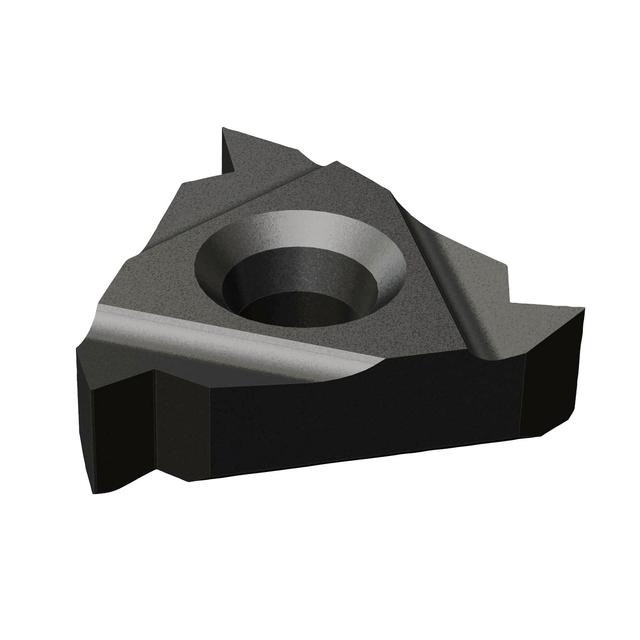
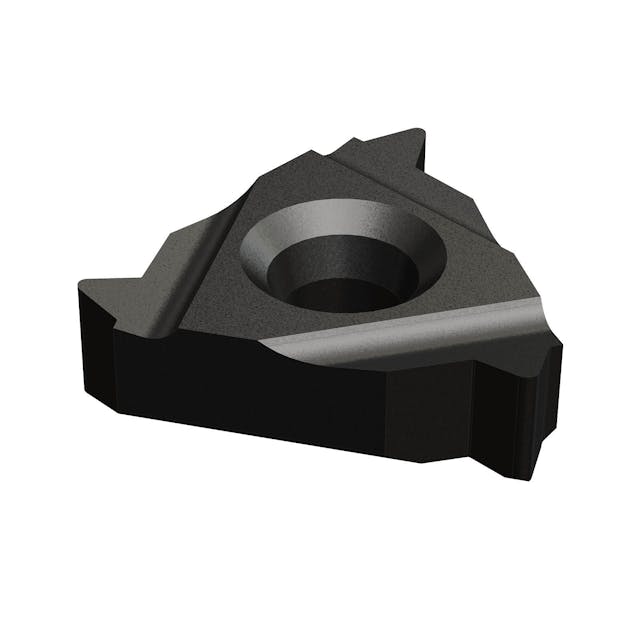
Posi-Thread is a specialist UK manufacturer and supplier of thread-turning inserts, threading holders & bespoke threading tooling that are based in Washington, Tyne & Wear.
The company designs and manufactures threading inserts for a comprehensive range of standard thread forms and also offers a bespoke design service for non-standard and special thread forms.
Posi-Thread's focus on threading alone (rather than general-purpose cutting tools) has established the brand as a trusted source for thread-turning solutions across general engineering, sub-contract machining, oil & gas and special-purpose applications where standard catalogue inserts are not suitable.
This page covers the full Posi-Thread thread-turning range.
It includes threading inserts for metric (ISO), unified (UN), Whitworth, BSPT, NPT, ACME, stub ACME and trapezoidal thread forms together with 60-degree and 55-degree partial-profile threading inserts and the matching threading holders.
Inserts are available in sizes 6, 8, 11, 16, 22 & 27 covering pitches from as fine as 0.25 mm through to 8 mm, including a range of multi-pitch inserts that cover a span of pitches in a single insert.
This makes the range suitable for everything from fine instrument threads to large power threads.
Thread turning is a machining process in which a single-point cutting tool (the threading insert) is fed along the rotating workpiece in a precise, synchronised path to cut a helical thread form into the surface.
The lathe spindle rotates the workpiece while the tool feeds axially at a rate matched to the spindle speed and the required thread pitch, producing the thread in a series of progressive passes.
Thread turning is the most common method for producing external and internal threads on a CNC lathe, and is used for metric, unified, Whitworth, ACME, trapezoidal and pipe threads, as well as special thread forms.
The threading insert defines the thread profile, so selecting the correct insert is critical to producing an accurate, functional thread.
The Posi-Thread range covers an extensive selection of thread forms:
Metric (ISO) threads are the standard for general engineering in the UK and Europe
Unified (UN) threads are the standard for North American and aerospace applications
Whitworth (BSW) and BSF threads are traditional British thread forms still found on legacy equipment and fittings
BSPT (British Standard Pipe Taper) and NPT (National Pipe Taper) are pipe threads used for fluid and gas connections
ACME and stub ACME threads are used for power-transmission lead screws and feed screws Trapezoidal (DIN 103) threads are the metric equivalent of ACME, used for power screws in Europe.
This breadth of coverage allows Posi-Thread to service virtually any thread-turning requirement.
A full-profile threading insert cuts the complete thread form (the major diameter, the flanks and the minor diameter (root)) in a single pass, producing a thread that fully conforms to the standard without any subsequent finishing required.
A partial-profile (also called partial-profile or V-profile) insert cuts only the thread flanks and the root, leaving the major diameter to be machined separately by another operation. Partial-profile inserts are available in 60-degree and 55-degree versions, which allows a single insert to cut a range of pitches within the same thread angle. For example, a 60-degree partial-profile insert can cut any metric or unified pitch within its range, making them versatile and economical.
Full-profile inserts give better thread quality and are preferred for production; partial-profile inserts offer flexibility and lower inventory costs.
The difference is the thread angle (the included angle between the two flanks of the thread):
A 60-degree partial-profile insert is suited to metric (ISO) and unified (UN) thread forms, both of which use a 60-degree included angle. A 55-degree partial-profile insert is suited to Whitworth (BSW, BSF) and BSPT pipe threads which use a 55-degree included angle.
Because partial-profile inserts only cut the flanks and root, a single 60-degree insert can cover a range of metric or unified pitches and a single 55-degree insert can cover a range of Whitworth pitches.
This makes partial-profile inserts a cost-effective choice for shops that produce multiple pitches within one thread family.
These numbers refer to the physical size of the threading insert, more specifically the cutting edge length which determines the maximum thread length that can be cut in a single pass and the size of the holder required.
Size 6 is the smallest, suitable for fine pitches and small internal threads where access is limited.
Size 11 & 16 are the most commonly used general-purpose sizes, covering the majority of external and internal thread-turning applications.
Size 22 & 27 are larger, suitable for bigger threads, longer thread lengths and heavier cuts.
The insert size must match the corresponding holder, so selecting the correct size is a matter of considering the thread pitch, thread length, bore size (for internal threads) and the machine's available holders.
The Posi-Thread range covers an extensive spread of pitches from very fine threads at 0.25 mm pitch (used on small instrument and optical components) through the common general-purpose pitches (0.5 mm, 0.75 mm, 1.0 mm, 1.5 mm, 2.0 mm) up to coarse power-thread pitches of 6 mm and 8 mm (used on large lead screws and feed screws).
In addition to single-pitch inserts the range includes multi-pitch inserts that cover a span (for example 0.50–1.50 mm, 0.50–3.00 mm, 1.75–3.00 mm, 3.50–5.00 mm and 5.50–8.00 mm.)
Multi-pitch partial-profile inserts are particularly useful for reducing tooling inventory where a variety of pitches within a range are produced.
R Max refers to the maximum root radius (the radius at the bottom (the root or minor diameter) of the thread form). The root radius is important because a sharp-cornered root acts as a stress raiser, significantly reducing the fatigue strength of the threaded component.
Thread standards specify a minimum & maximum root radius and the threading insert must produce a root within that range. Posi-Thread inserts are available with a variety of R Max values to suit different thread standards and component requirements, for example, a larger root radius for high-fatigue-duty aerospace or power-transmission threads and a smaller radius for general-purpose work.
The R Max value must be selected to comply with the relevant thread specification.
ACME threads are a trapezoidal thread form with a 29-degree included angle used primarily for power transmission (lead screws, feed screws and motion-control screws where a nut moves along the screw to transmit force or position).
The ACME form is stronger and easier to manufacture than a square thread and allows the use of split nuts for engagement and disengagement.
Stub ACME is a shorter-depth version of the full ACME form with a shallower thread depth.
Stub ACME is used where the full ACME depth is unnecessary. For example, where the screw is not heavily loaded, where a shallower thread allows a larger minor diameter for strength or where space is limited.
Posi-Thread offers both ACME and stub ACME threading inserts.
Trapezoidal threads (DIN 103) are the metric equivalent of ACME threads with a 30-degree included angle rather than 29 degrees. They are used for the same power-transmission applications (lead screws, feed screws and motion-control screws) and are the standard power-thread form in Europe and the UK metric market.
Trapezoidal threads offer similar strength and manufacturing characteristics to ACME and Posi-Thread produces threading inserts for the full range of standard trapezoidal pitches.
As with ACME, the insert must produce the correct thread form and root radius to ensure the nut engages correctly and the screw transmits force efficiently without excessive backlash.
BSPT (British Standard Pipe Taper) and NPT (National Pipe Taper) are tapered pipe threads used for fluid and gas connections. The taper means the thread diameter increases along the thread length so that as the male and female threads are tightened together, the flanks wedge against each other to form a pressure-tight seal without (or in addition to) a sealant.
BSPT uses a 55-degree thread angle and is the standard in the UK and Commonwealth; NPT uses a 60-degree angle and is the standard in North America. Taper thread-turning requires the lathe to cut the thread at a slight angle to the axis (a taper), which is achieved by the machine's taper attachment or by offsetting the tailstock or using a CNC taper-cutting cycle.
Posi-Thread offers BSPT and NPT threading inserts.
Yes. One of Posi-Thread's particular strengths is the ability to design and manufacture bespoke inserts and tooling for special and non-standard thread forms and grooves.
If a standard catalogue insert does not meet your requirement (for example, a non-standard pitch, a modified thread angle, a special root radius, a bespoke thread form for a proprietary application, or a thread to a customer-specific drawing) Posi-Thread can produce a made-to-order insert.
This service is valuable for manufacturers of legacy or specialist equipment, OEMs with proprietary thread forms and applications where standard threads do not meet the functional requirement.
Contact us with your thread specification and we will arrange a bespoke insert.
Selecting the correct insert requires knowing the thread form (metric, UN, Whitworth, ACME, etc.), the pitch or threads-per-inch, whether you need a full-profile or partial-profile insert, the insert size that matches your holder (6, 8, 11, 16, 22 or 27), and the correct R Max root radius for the thread standard.
For internal threads, the bore size must accommodate the insert and holder. The material being machined also influences the insert grade and coating.
For standard threads, the catalogue inserts cover most requirements; for non-standard or special threads, Posi-Thread offers a bespoke design service.
Our engineers can help you identify the correct insert and grade based on your thread specification, material and machine.