




MPA Tools
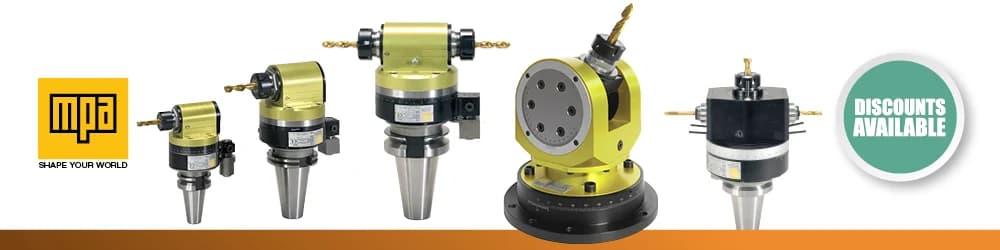
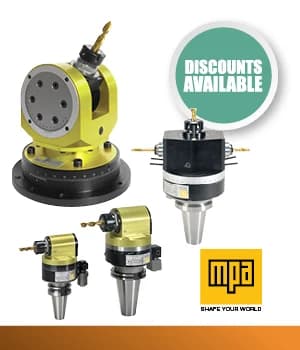
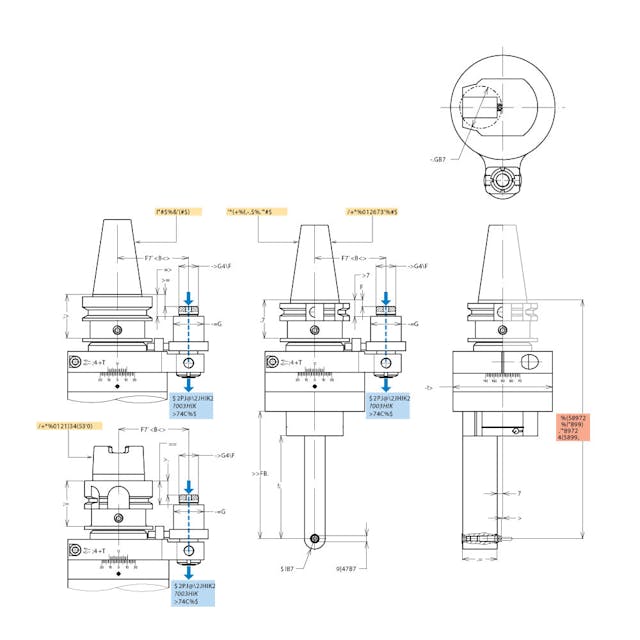
90° ANGLE HEAD TYPE A5-SK40-S218 - OUTPUT - 6023E COLLET - DRILLING CAPACITY Ø3 MAX
£5239.00 excl. VAT
£6286.80 incl. VAT
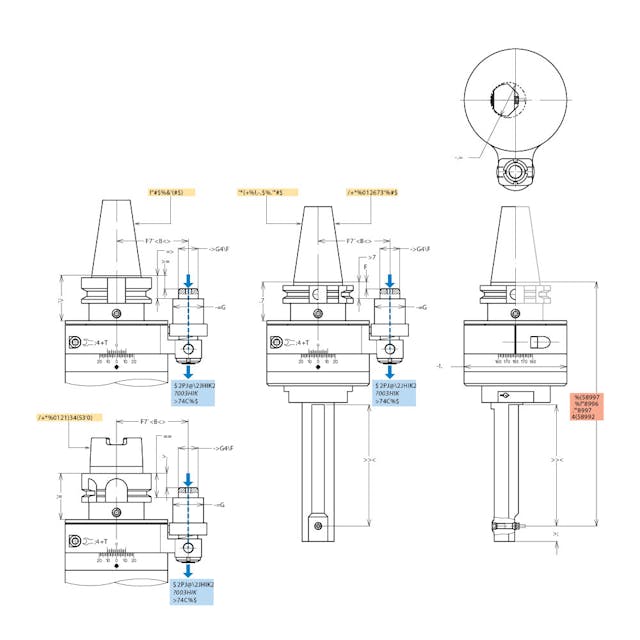
90° ANGLE HEAD TYPE A5-SK40-S221 - OUTPUT - 6023E COLLET - DRILLING CAPACITY Ø3 MAX
£5139.00 excl. VAT
£6166.80 incl. VAT
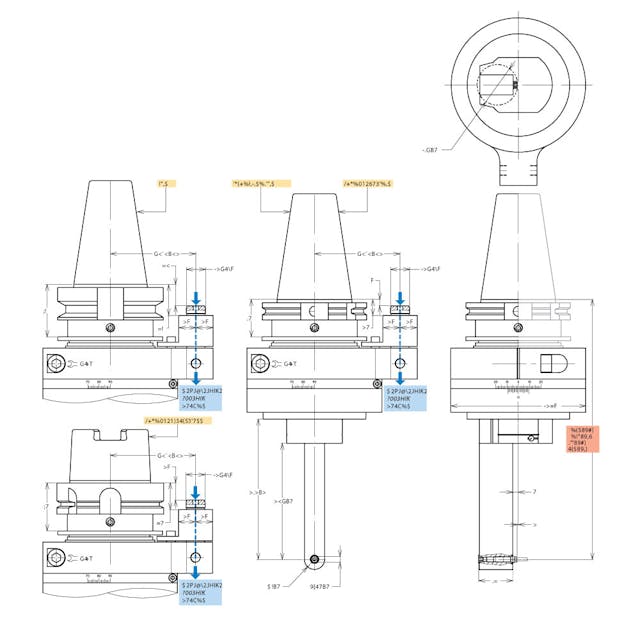
90° ANGLE HEAD TYPE A5-SK50-S243 - OUTPUT - 6023E COLLET - DRILLING CAPACITY Ø3 MAX
£5879.00 excl. VAT
£7054.80 incl. VAT
90° ANGLE HEAD TYPE A5-BT40-S223 - OUTPUT - 6023E COLLET - DRILLING CAPACITY Ø3 MAX
£5239.00 excl. VAT
£6286.80 incl. VAT
90° ANGLE HEAD TYPE A5-BT40-S227 - OUTPUT - 6023E COLLET - DRILLING CAPACITY Ø3 MAX
£5139.00 excl. VAT
£6166.80 incl. VAT
90° ANGLE HEAD TYPE A5-BT50-S257 - OUTPUT - 6023E COLLET - DRILLING CAPACITY Ø3 MAX
£5879.00 excl. VAT
£7054.80 incl. VAT
90° ANGLE HEAD TYPE A5-CAT40-S218 - OUTPUT - 6023E COLLET - DRILLING CAPACITY Ø3 MAX
£5239.00 excl. VAT
£6286.80 incl. VAT
90° ANGLE HEAD TYPE A5-CAT40-S221 - OUTPUT - 6023E COLLET - DRILLING CAPACITY Ø3 MAX
£5139.00 excl. VAT
£6166.80 incl. VAT
90° ANGLE HEAD TYPE A5-CAT50-S243 - OUTPUT - 6023E COLLET - DRILLING CAPACITY Ø3 MAX
£5879.00 excl. VAT
£7054.80 incl. VAT
90° ANGLE HEAD TYPE A5-HSK63-S225 - OUTPUT - 6023E COLLET - DRILLING CAPACITY Ø3 MAX
£5239.00 excl. VAT
£6286.80 incl. VAT
90° ANGLE HEAD TYPE A5-HSK63-S228 - OUTPUT - 6023E COLLET - DRILLING CAPACITY Ø3 MAX
£5139.00 excl. VAT
£6166.80 incl. VAT
90° ANGLE HEAD TYPE A5-HSK100-S253 - OUTPUT - 6023E COLLET - DRILLING CAPACITY Ø3 MAX
£5879.00 excl. VAT
£7054.80 incl. VAT
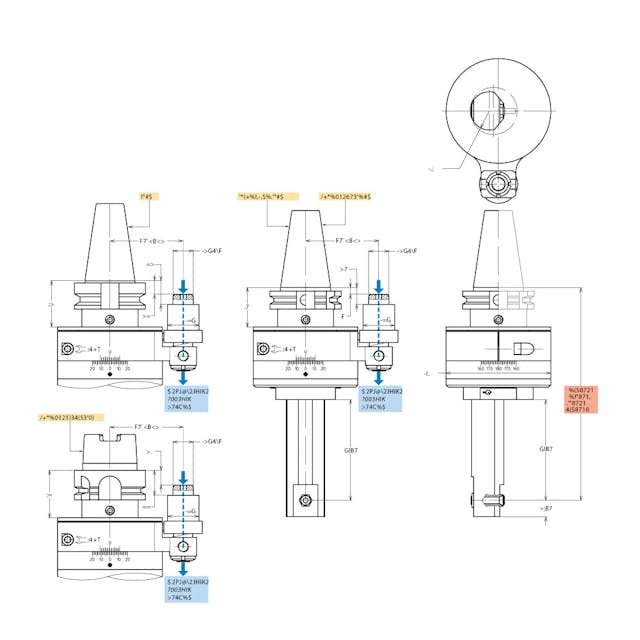
90° ANGLE HEAD TYPE AP6-SK40-S189 - OUTPUT - SCHAUBLIN P6 COLLET - DRILLING CAPACITY Ø4,5 MAX
£5199.00 excl. VAT
£6238.80 incl. VAT
90° ANGLE HEAD TYPE AP6-BT40-S195 - OUTPUT - SCHAUBLIN P6 COLLET - DRILLING CAPACITY Ø4,5 MAX
£5199.00 excl. VAT
£6238.80 incl. VAT
90° ANGLE HEAD TYPE AP6-CAT40-S189 - OUTPUT - SCHAUBLIN P6 COLLET - DRILLING CAPACITY Ø4,5 MAX
£5199.00 excl. VAT
£6238.80 incl. VAT
90° ANGLE HEAD TYPE AP6-HSK63-S196 - OUTPUT - SCHAUBLIN P6 COLLET - DRILLING CAPACITY Ø4,5 MAX
£5199.00 excl. VAT
£6238.80 incl. VAT
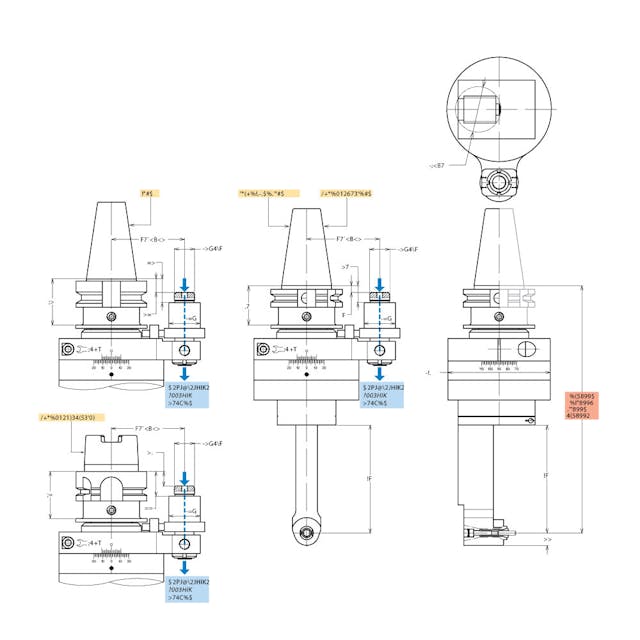
90° ANGLE HEAD TYPE AP6-SK40-S220 - OUTPUT - SCHAUBLIN P6 COLLET - DRILLING CAPACITY Ø4,5 MAX
£5349.00 excl. VAT
£6418.80 incl. VAT

90° ANGLE HEAD TYPE AP6-BT40-S226 - OUTPUT - SCHAUBLIN P6 COLLET - DRILLING CAPACITY Ø4,5 MAX
£5349.00 excl. VAT
£6418.80 incl. VAT
90° ANGLE HEAD TYPE AP6-CAT40-S220 - OUTPUT - SCHAUBLIN P6 COLLET - DRILLING CAPACITY Ø4,5 MAX
£5349.00 excl. VAT
£6418.80 incl. VAT
90° ANGLE HEAD TYPE AP6-HSK63-S227 - OUTPUT - SCHAUBLIN P6 COLLET - DRILLING CAPACITY Ø4,5 MAX
£5349.00 excl. VAT
£6418.80 incl. VAT
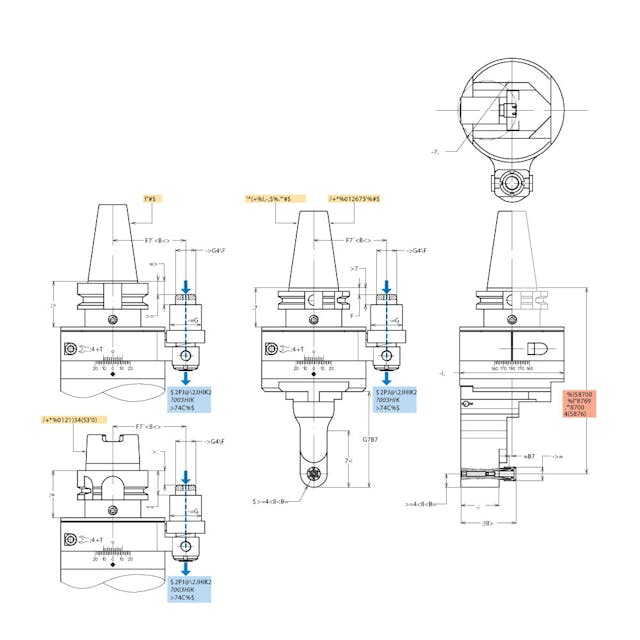
90° ANGLE HEAD TYPE A8-SK40-S166 - OUTPUT - ER8 COLLET DIN 6499/B - CAPACITY Ø5 - M4
£4549.00 excl. VAT
£5458.80 incl. VAT
90° ANGLE HEAD TYPE A8-BT40-S172 - OUTPUT - ER8 COLLET DIN 6499/B - CAPACITY Ø5 - M4
£4549.00 excl. VAT
£5458.80 incl. VAT
90° ANGLE HEAD TYPE A8-CAT40-S166 - OUTPUT - ER8 COLLET DIN 6499/B - CAPACITY Ø5 - M4
£4549.00 excl. VAT
£5458.80 incl. VAT
90° ANGLE HEAD TYPE A8-HSK63-S173 - OUTPUT - ER8 COLLET DIN 6499/B - CAPACITY Ø5 - M4
£4549.00 excl. VAT
£5458.80 incl. VAT
Frequently Asked Questions
An angle head mounts into the spindle of a machining centre and turns the tool through an angle (most commonly 90°) so the cutter drills, mills or taps on a side face, an underside, or around a corner that the vertical spindle cannot reach. It extends what a 3-axis machine can do without a second set-up, which is where its value lies.
The classic use is machining features on the side of a part, or on the underside of a component, that would otherwise demand re-clamping or a 5-axis machine. With an angle head, a vertical machining centre can produce bores, slots and threads on faces perpendicular to the spindle in a single fixturing which saves set-up time and improves the positional accuracy between features cut on different faces.
MPA are a respected manufacturer of precision angle heads, known for build quality and a genuinely broad range covering almost every side-machining need. The range in this category spans slim, compact, extended, double-headed, offset, heavy duty, 45-degree, multi-way and adjustable angle heads so there is a configuration to suit virtually any feature you need to reach.
The range is built around the common spindle interfaces (SK (DIN 69871), BT (JIS B 6339), CAT (ANSI) and HSK) in the 40 and 50 sizes, with HSK63 and HSK100 variants. That means an MPA head can be specified to match almost any modern machining centre, with the output side carrying a collet (typically 6023E or Schaublin P6) sized to the tooling you intend to drive.
The head must match your spindle taper exactly, there is no useful workaround for a mismatch!
The taper interface on the head is specified in the SKU: SK40, SK50, BT40, BT50, CAT40, CAT50, HSK63 and HSK100 are the options across the range. Identify your spindle taper first, then filter the range to that interface.
A mismatched taper will not seat or drive correctly and forcing one risks damage to the spindle and the head. If you are uncertain of your spindle interface, check the machine specification or the existing toolholder drawer (the taper is marked on every holder).
Our in-house engineers can confirm the correct interface from your machine model if you are unsure.
These describe the body form and the choice is driven by access. A slim angle head has a narrow body so it can reach into confined pockets and between features where a bulkier head would foul the part. A compact head keeps the overall length short for rigidity, suited to general side work where reach is not the issue.
An extended angle head carries the output further from the spindle, allowing the cutter to reach deep into a cavity or across a wide face. Reach trades against rigidity, the further out you go the more carefully you must manage speeds, feeds and overhang to avoid chatter.
Match the head form to the access your job actually demands.
A double-headed angle head carries two outputs (typically opposing one another at 90° to the spindle) so the head can machine features on two faces without being re-indexed between operations. That is valuable on multi-face parts where positional accuracy between opposing features matters, because both are cut from the same head position.
An offset angle head moves the output to one side of the spindle centre line, which lets the cutter reach past an obstruction or machine a feature offset from the spindle axis.
Both are specialist configurations that earn their place when the geometry of the part rules out a standard single-output head.
A heavy duty angle head is built to take heavier cuts with; larger gears, a more robust housing and a bigger output bearing allow it to transmit more torque and absorb the loads of milling as well as drilling and tapping.
A standard or slim head is fine for lighter drilling and tapping but productive side-milling and larger drilling capacities call for a head rated for the work.
The drilling capacity figures stated on each product (the maximum drill diameter the head is rated to drive) give a clear indication of the head’s capability.
Choose a head whose rated capacity comfortably exceeds the tool you intend to run; running a head at its limit shortens bearing life and risks the head.
A 90-degree head turns the output perpendicular to the spindle, machining on a face at right angles.
A 45-degree head sets the output at a compound angle, allowing features cut at 45° to the spindle or combined with machine rotation, a wider range of compound angles than a fixed 90° head allows.
It is the head of choice when the part has features on a 45° face or when you need to generate a compound angle without re-fixturing.
As with any fixed-angle head, the angle is set by the head geometry; an adjustable head gives you a continuous range where a fixed 45° head gives you one precise, repeatable angle.
A multi-way angle head can index its output through several positions around the spindle axis, meaning the same head can machine features on several faces around a part by indexing between operations, without being removed from the spindle. That collapses set-up time on multi-face work, because the head stays put and re-orients.
It earns its place on complex parts where features on multiple faces must be machined in one set-up and where the positional relationship between those features must be held tightly.
For a single side feature a standard head is simpler and cheaper however for a part bristling with features on several faces, a multi-way head is the productive choice.
An adjustable angle head lets you set the output angle continuously through a range, rather than being locked to a single angle like 90° or 45°. That means one head can produce features at any angle within its range, which is ideal for prototype work, compound-angle features and one-off parts where buying a dedicated head per angle would be uneconomic.
The trade-off is that a continuously adjustable head is generally less rigid than a fixed-angle head of similar size, because the clamping joint that holds the angle introduces a little compliance.
For production work at a fixed angle, a dedicated head is stiffer, however for varied and one-off work, an adjustable head is the flexible answer.
The output side of an MPA angle head carries a collet that grips the shank of the tool you are driving, typically a 6023E collet on the smaller, higher-speed heads and a Schaublin P6 collet on the larger ones, as you can see in the product SKUs in this category. The collet size governs the maximum tool shank the head will accept.
Collets are interchangeable within their system, so a head with a 6023E output will take the full range of 6023E collets to suit different shank sizes.
Match the collet to the tool shank you intend to run and keep a set of collets covering your common shank sizes so the head is always ready to take the next tool.
The drilling capacity stated on each product (for example Ø3 or Ø4.5 max) is the maximum drill diameter the head is rated to drive at its output. It is a clear, honest indication of the head’s torque and bearing capability, set conservatively so the head gives a long service life at its rated load.
Treat it as a ceiling, not a target.
A head rated to Ø3 will drive a Ø3 drill, but if your work regularly calls for that capacity you may be better served by the next head up because running a head continuously at its limit is harder on bearings and gears than running a larger head well within its capacity.
For tapping and side-milling, check the rated capacities rather than assuming the drilling figure covers every operation.
The output of an angle head runs at the spindle speed multiplied by the head’s gear ratio and the ratio varies by head, so you must know it to set the actual output speed.
A 1:1 head turns the output at spindle speed but be aware that a geared head may step the output up or down, which changes the surface speed at the cutter for a given RPM.
Always work back to the cutter’s required surface speed and set the spindle accordingly.
Be conservative on a head you are running for the first time because the gears and bearings take time to warm and bed in and a heavy cut on a cold head is harder on it than the same cut once it has run in.
Manage overhang & deflection and ease off if the head runs hot or noisy as both are early signs that the cut is too aggressive for the set-up.
Most MPA heads are designed to run with through-coolant supplied from the machine spindle, which routes coolant through the head to the cutting tool, cooling the edge and flushing swarf from the cut. Through-coolant is particularly valuable on blind holes and side-milling, where swarf clearance is difficult and heat builds quickly.
Check that your machine can supply coolant at the pressure the head is rated for and that the head’s coolant routing matches the spindle’s delivery. Running a head dry when it is designed for coolant shortens bearing and gear life and leaves you to manage heat and swarf by hand.
If your machine has no through-coolant, external flood coolant is the fallback, though it is less effective at the tool point.
Keep the head clean and dry when not in use and store it in its case or on a dedicated rack rather than loose on the bench. The spindle taper and output collet must be clean and free of swarf before every use as a dirty taper or collet seat is the most common cause of a head running out of true or vibrating under load.
Run the head within its rated capacity, let it warm up before heavy cuts and listen for changes in sound, a gear whine that develops or a bearing rumble that was not there before is an early warning that the head wants a service.
Have the head serviced at the recommended interval rather than waiting for a failure because a serviced head runs true for years, a neglected one fails in use and takes the job with it.
Start with the access and the feature.
Decide which face the feature is on, how far from the spindle it sits and what angle it is cut at. That tells you the head form (slim, compact, extended, offset) and the angle (fixed 90° or 45°, multi-way, or adjustable). Then match the spindle taper to your machine and check the output collet and drilling capacity against the tool you intend to run.
If the job is a one-off at an unusual angle, an adjustable head is the flexible choice; if it is production work at a fixed angle, a dedicated fixed-angle head is stiffer and more repeatable.
For heavy side-milling or large drilling, step up to a heavy duty head.
Tell us the machine, the feature and the material and our experienced, in-house engineers will specify the correct MPA head and collet set for the job.