




Rippers, Milling Cutters for Roughing
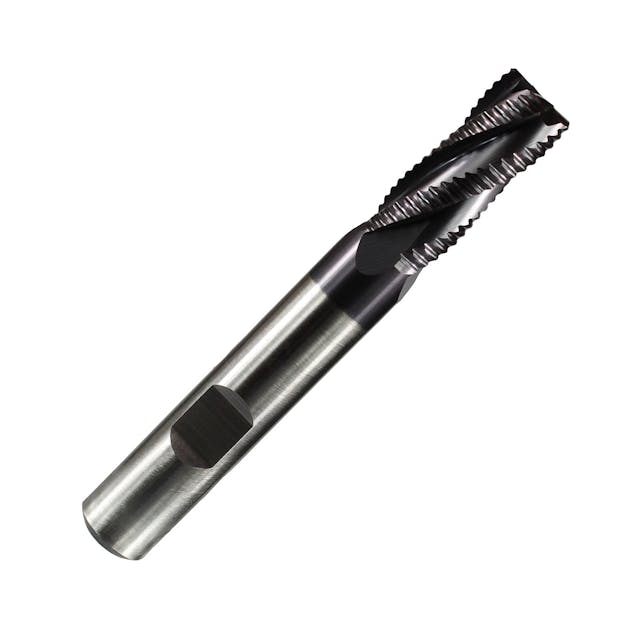
HSCR Series Tialn Coated Fine Pitch Roughing HSS Milling Cutters
- 3 & 4 flute HSSE end mill ripper
- HSS 8% Cobalt gives improved tool life and performance in comparison to conventional HSS
- 1st choice for economical machining
- TIALN coated for increased tool life
£21.46 excl. VAT
£25.75 incl. VAT
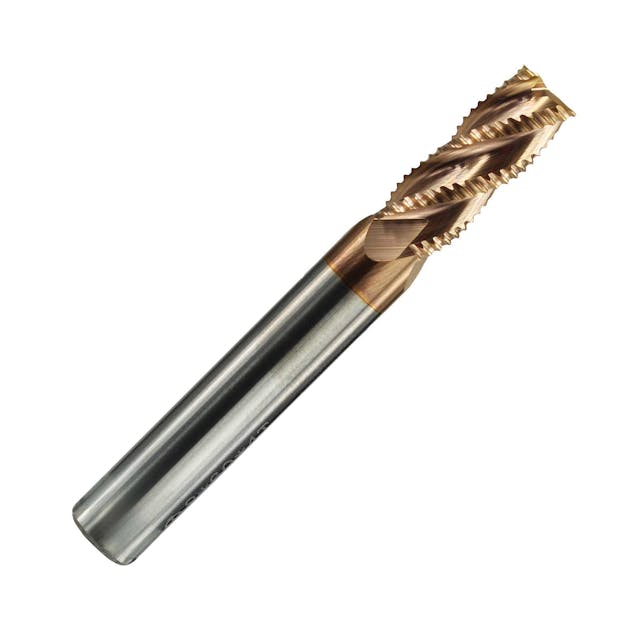
STARKE Coated Carbide 4 Flute Roughing End Mill
- Cut up to 55 HRC
- Can be used wet or dry to increase tool life.
- Micrograin carbide
- Available diameter sizes between 6mm and 20mm
£15.85 excl. VAT
£19.02 incl. VAT
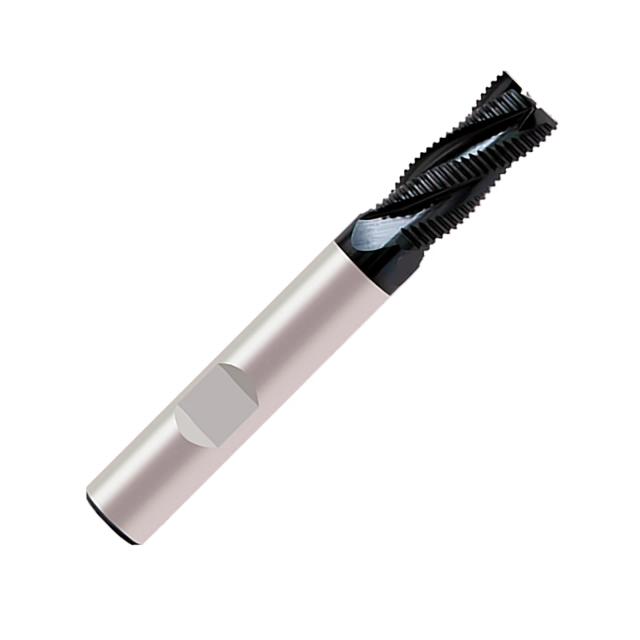
Powder Metal Flute Short Length Fine Pitch End Mill Weldon Shank (Europa)
Powder Metal Flute Short Length Fine Pitch End Mill Weldon Shank (Europa)
- Sabre coating for increased wear resistance at high speeds.
- Designed for steels, stainless steels and cast iron.
- Suitable for use on difficult to cut materials
- Fine pitch
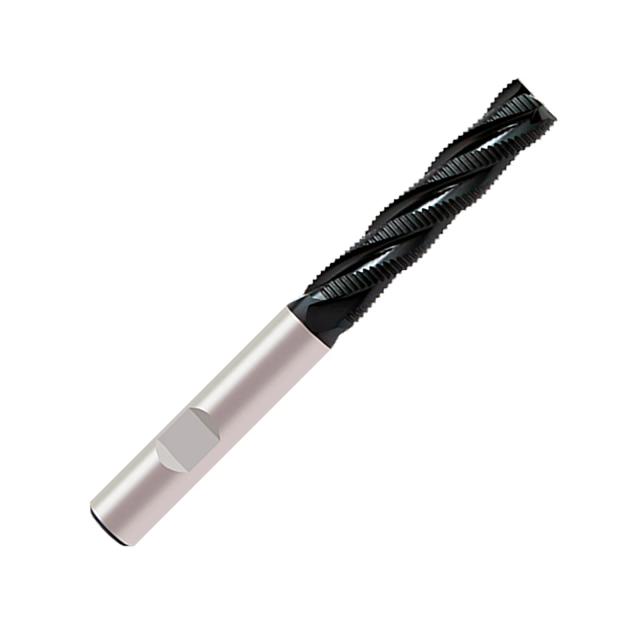
Powder Metal Long Length Fine Pitch End Mill Weldon Shank (Europa)
Powder Metal Long Length Fine Pitch End Mill Weldon Shank (Europa)
- Sabre coating for increased wear resistance at high speeds.
- Designed for steels, stainless steels and cast iron.
- Suitable for use on difficult to cut materials
- Fine pitch
£29.48 excl. VAT
£35.38 incl. VAT
£27.94excl. VAT
£33.53incl. VAT
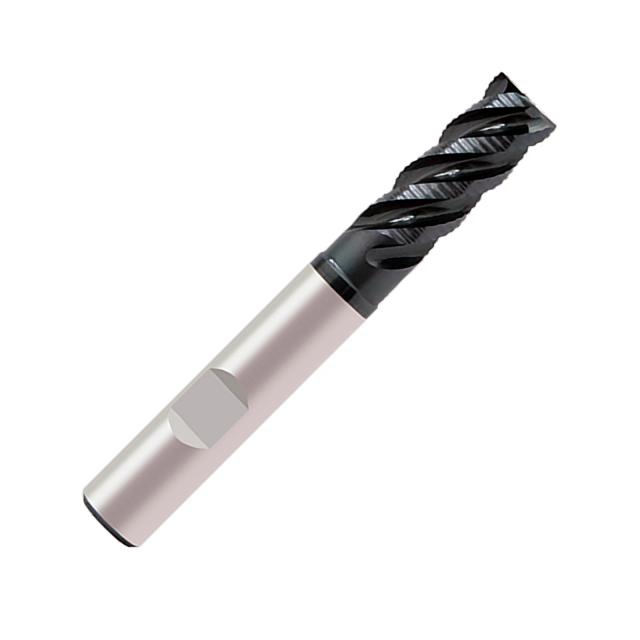
Powder Metal Extended Neck Fine Pitch End Mill Weldon Shank (Europa)
Powder Metal Extended Neck Fine Pitch End Mill Weldon Shank (Europa)
- Sabre coating for increased wear resistance at high speeds.
- Designed for steels, stainless steels and cast iron.
- Suitable for use on difficult to cut materials
- Fine pitch
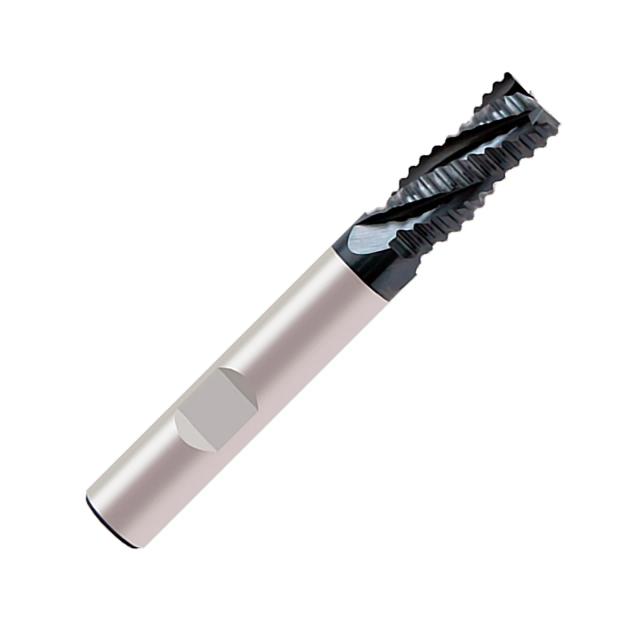
Powder Metal Short Length Coarse Pitch End Mill Weldon Shank (Europa)
Powder Metal Short Length Coarse Pitch End Mill Weldon Shank (Europa)
- Sabre coating for increased wear resistance at high speeds.
- Designed for steels, stainless steels and cast iron.
- Suitable for use on difficult to cut materials
- Coarse pitch
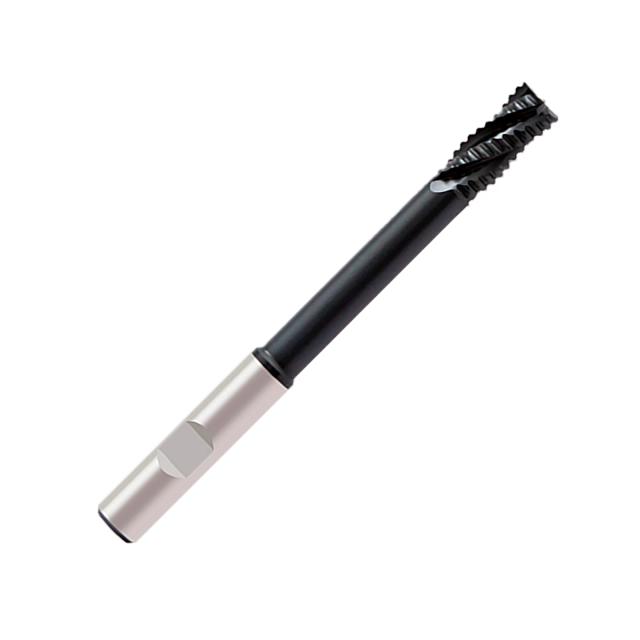
Powder Metal Extended Neck Coarse Pitch Ripper (Europa)
Powder Metal Extended Neck Coarse Pitch Ripper (Europa)
- Sabre coating for increased wear resistance at high speeds.
- Designed for steels, stainless steels and cast iron.
- Suitable for use on difficult to cut materials
- Coarse pitch
Frequently Asked Questions
A rougher (often called a ripper) is an end mill designed for heavy stock removal rather than a fine finish. The telling feature is the fluting: a rougher has a serrated or notched edge along the cutting flutes, so the cut is broken into a series of small chips rather than one continuous ribbon. Those broken chips clear the cut freely, the heat is carried away with the chips and the edge takes a far heavier cut than a smooth-flute finisher could without stalling or chattering.
A standard finishing end mill, by contrast, has a smooth, continuous edge that produces a clean surface but is limited in how much it can take per pass. A rougher is the first-operation tool; you hog the bulk of the material out with the rougher, then take a light finishing pass with a smooth end mill to leave the size and the finish.
The two are a pair and most milling jobs use both in sequence.
The pitch is the spacing of the serrations along the flute. A fine-pitch rougher has many small notches close together, producing a finer chip and a better surface meaning the cut is gentler, the finish is closer, and the tool runs quieter. A coarse-pitch rougher has fewer, deeper notches, producing a larger chip and a heavier removal rate, but a rougher finish and a more aggressive cut.
The fine-pitch rougher is the everyday choice in this category and is the reason the HSCR and the Europa powder-metal ranges are listed as fine pitch: it gives a high removal rate without the harsh, chattery cut of the coarse-pitch form and leaves a surface that needs only a light finish pass.
Coarse pitch earns its place on the very heavy hogging on a rigid machine where finish is not the concern; for most general work, the fine pitch is the better balance of removal and surface.
Roughing is about material removal rate. A rougher takes a deep axial cut and a wide radial cut, removing the bulk of the stock in a fraction of the time a finishing pass would need, because the serrated edge breaks the chip and clears it before it can pack the flutes. A finisher forced to take the same depth of cut would either stall, rub or produce a long chip that wraps the tool and ruins the surface.
On any job with more than a few millimetres of stock to remove, roughing first and finishing second is faster, kinder to the tool, and better for the part.
The rougher takes the cut down to a small finishing allowance (typically a few tenths to half a millimetre on the side) and the finisher then takes one light, clean pass to the size.
The combination is quicker than trying to do it all with a finisher and the finish is better, because the finishing tool is cutting sound stock rather than fighting a heavy load.
Three substrates appear in this category and each suits a different level of work.
HSSE (high-speed steel with 8% cobalt) is the economical baseline; it is tough, forgiving, and the first choice for the lighter roughing and the less abrasive materials, where the cost-per-edge matters
Powder metal (PM) is a step up: a powder-metallurgy high-speed steel that holds a hotter edge and resists wear better than conventional HSSE, giving longer life in the steels, stainless and cast iron it is designed for.
Solid carbide is the highest-performance substrate because it is rigid, heat-resistant and capable of the heaviest cuts and the highest speeds but less tolerant of shock and chatter than the steel-based tools.
Choose HSSE for the economical general roughing, powder metal for the longer runs in steel and stainless and carbide for the heaviest hogging and the higher-hardness work (the STARKE PR554 carbide ripper, for example, is rated to 55 HRC).
The substrate sets the speed and the depth of cut the tool will take, so, the harder the substrate, the faster and the deeper you can run, provided the machine and the set-up are rigid enough to support it.
The flute count sets the balance between chip space and edge strength.
A 3-flute rougher has the largest flute gullets for its diameter, so it clears chips best in the softer materials and the deeper cuts such as aluminium, the gummy stainless and the full-width slots.
A 4-flute is the general-purpose compromise, with enough chip space for most roughing and enough edges for a good feed rate in steel and cast iron.
The 5- and 6-flute roughers have smaller chip spaces but more edges in the cut, so they carry a higher feed per revolution and suit the harder, more brittle materials and the lighter-per-tooth cuts where chip evacuation is less of a problem.
As a rule we advise going for fewer flutes for the gummy and the deep-cut, more flutes for the hard and the shallow.
The 4-flute is the most common in this category and the safest default; drop to 3 flutes for the deep slotting in aluminium or stainless and go to 5 or 6 flutes for the harder steels and the cast iron where the feed rate and the edge count matter more than the chip space.
A coating is a thin, hard layer deposited on the cutting edge that resists heat, friction & oxidation.
On a rougher, which is taking heavy cuts at high speeds, the coating is where most of the wear resistance comes from. The HSCR series carries a TiAlN (titanium aluminium nitride) coating, a general-purpose high-temperature coating that lets the tool run faster and last longer than an uncoated equivalent, especially in the dry cutting where the heat stays in the tool.
The Europa powder-metal range carries a Sabre coating, a high-performance coating tuned for the steels, stainless and cast iron it is designed for, giving increased wear resistance at the higher speeds.
On a rougher the coating is almost always worth it, because the heavy cuts generate the heat and the wear that a coating is there to manage. The coated tools in this category are the ones to reach for when the job is more than the occasional light cut; the uncoated tools are for the simplest, slowest work where the coating would not pay back its premium.
Both.
The STARKE PR554 carbide ripper, for example, is explicitly rated to run wet or dry and the choice depends on the substrate, the coating and the cut. Carbide roughers, particularly the coated ones, are often run dry at high speed because the coating handles the heat and the dry cut avoids the thermal shock that coolant can impose on a hot carbide edge, which is a common cause of edge cracking. Powder-metal and HSSE roughers are more often run with coolant, which helps with chip evacuation and keeps the temperature down on the longer cuts.
The practical rule is to run carbide dry or with through-tool coolant (not flood on a hot edge) and the steel-based tools with flood coolant if the cut is deep and the material is tough.
Whichever you choose, be consistent because cycling a hot carbide tool in and out of coolant is what cracks the edge. If in doubt, follow the cutting-data sheet for the specific tool, which gives the speed, feed and coolant recommendation for each material.
Plunging straight down with a rougher is generally to be avoided. The serrated edge that makes a rougher so good at side milling produces an interrupted, chattering cut in a pure plunge, because the notches are not designed to cut on the end face the way a centre-cutting end mill does. Many roughers are not centre-cutting at all and those that are will still plunge poorly compared with a smooth end mill.
The right way to enter a pocket or a slot with a rougher is to ramp or helical-interpolate in and feed the tool down into the cut at an angle, or take a circular path that drops the tool gradually, so the serrated edges are side-cutting as they were designed to.
A ramp angle of a few degrees is usually enough and the helical entry into a blind pocket is the smoothest method.
Once at depth, the rougher side-mills the stock out efficiently.
Plunging is the one entry a rougher is not built for.
The length is the reach of the cutting flutes and the projection of the tool. A standard-length rougher has the flutes and the projection sized for general work, meaning is has enough reach for most pockets and profiles, with the rigidity for a heavy cut.
A long-length rougher extends the flutes and the projection for the deeper pockets and the taller walls, at the cost of more deflection and a greater tendency to chatter. A reduced-neck rougher has the shank turned down just behind the flutes, so the tool can reach past a wall or a shoulder without the shank rubbing, while keeping the rigidity of a full-diameter body for most of the length.
Choose standard for the everyday work, long for the deep pockets where a standard tool will not reach and reduced-neck for the shouldered pockets and the profiling past an obstruction.
The reduced neck is the specialist that solves the clearance problem without the flex of a long tool; it is the choice when you need reach and rigidity together.
Our advice is to always use the shortest tool that will do the job, because projection is the single biggest factor in chatter.
A Weldon shank is a plain cylindrical shank with a single flat machined along one side.
The flat is what a Weldon-side-lock holder grips where a set screw bears on the flat, locking the tool against the axial pull-out that a heavy roughing cut generates. This is why the Weldon shank is so common on roughers: a rougher, taking a deep cut, is the tool most likely to be pulled out of a plain collet chuck under the cutting load and the side-lock on the flat prevents it.
The Europa powder-metal roughers in our category here are listed with Weldon shanks for exactly this reason.
If your holder is a Weldon-side-lock collet chuck or end mill holder, the flat on the shank is the security against pull-out; if your holder is a plain collet chuck without side-lock, you are relying on friction alone, which is risky on a heavy roughing cut. For the serious hogging, a side-lock holder and a Weldon-shank rougher are the matched pair.
Our category covers the three common work materials (steel, stainless steel and cast iron) across the HSSE, powder-metal and carbide substrates.
The HSCR HSSE ripper is the economical first choice for the general steel and the lighter stainless work. The Europa powder-metal range is designed specifically for steels, stainless steels and cast iron and is noted as suitable for the difficult-to-cut materials (the tougher stainless, the alloy steels) where the PM substrate and the Sabre coating earn their keep. The STARKE PR554 carbide ripper takes the harder work, rated to 55 HRC, covering the hardened steels and the tougher cast irons that the steel-based tools will not touch.
For the softer and the gummy materials (aluminium, the free-machining brasses) a rougher is less often the right tool, because the chip is already easy to break and the serrated edge is not needed; a coarse-pitch or a polished-flute end mill is usually better.
The roughers we carry in this category are the steel, stainless & cast-iron tools and the choice within the category is the substrate and the coating matched to the hardness and the toughness of the specific work.
The HSCR series is the Clarkson HSSE 8% cobalt rougher which is a fine-pitch, TiAlN-coated HSS ripper in 3- and 4-flute forms, the economical general-purpose rougher for the steel and the stainless work.
The PR554 is the STARKE coated-carbide 4-flute roughing end mill that is a micrograin carbide ripper rated to 55 HRC, for the harder steels and the heavier cuts where the HSS tool will not keep up.
The Europa 190140 & 191140 are the powder-metal fine-pitch roughers; the short and the long lengths respectively, Sabre-coated, Weldon-shanked, for the steels, stainless and cast iron and the difficult-to-cut materials.
The three ranges cover the three substrates and the three price-and-performance points:
HSCR for the economical HSSE work
Europa for the longer-life powder-metal work
PR554 for the top-end carbide work.
Most shops will use all three, matched to the job; the HSCR for the everyday, the Europa for the longer runs, the PR554 for the hard and the heavy.
A rougher runs at a different balance of speed and feed than a finisher. Because the serrated edge breaks the chip and carries the heat away, a rougher can take a much deeper axial cut and a wider radial cut (typically a large percentage of the diameter radially, and several diameters axially) at a moderate surface speed and a healthy feed per tooth. The finisher, by contrast, runs a lighter cut at a higher speed for the surface finish.
The exact figures come from the cutting-data sheet for the specific tool and material.
The STARKE PR554, for example, has a downloadable cutting-data sheet and the Europa and HSCR ranges are similarly documented.
As a starting point, run the HSS roughers at the lower end of the surface-speed range for the material, the carbide at the higher end, and set the feed per tooth for the chip thickness the serrations are designed to produce.
Always start conservative and bring the cut up, watching the spindle load and the chip formation, rather than starting fast and backing off after a chipped edge.
Start with the 4-flute HSCR HSSE ripper in the two or three diameters you use most (10 mm, 12 mm and 16 mm cover the bulk of general work) and a Weldon-side-lock holder to suit.
The HSCR is the economical all-rounder that will teach you the feel of roughing and the coating gives it a life worth the price. Add a PR554 carbide ripper in the 12 mm or 16 mm for the harder work and the heavier cuts once you have a feel for it.
From there, build the set as the work demands:
A 3-flute for the deeper slotting, a reduced-neck for the shouldered pockets
A long-length for the deep walls
A Europa powder-metal for the longer runs in the tougher stainless.
The rougher is one of the most used tools in the rack, so a small set across the common diameters pays back quickly.
Tell us the machine, the materials and the depth of cut you take and one of our in-house, time-served engineers will put together the starter set that fits straight in.